

Maddy summaryHR 8290, the Foreign Grant Reporting Act, requires certain tax-exempt organizations (501(c) groups) to report specific details about grants they provide to foreign entities when filing their annual IRS returns. Organizations must disclose the foreign recipient's name and address, the total grant amount, and whether the recipient qualifies as a foreign charity, a US 501(c)(3) organization, or meets other specified criteria. This applies to direct and indirect grants to any foreign entity (defined as an organization created outside the United States). The requirement applies only to organizations already mandated to file annual IRS returns under Section 6033, effective for returns filed after the bill's enactment.
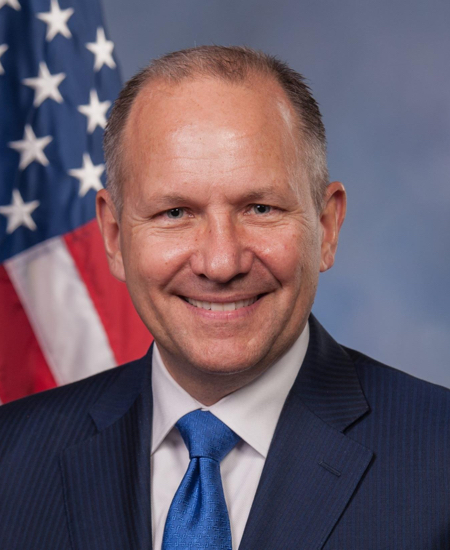
Rep. Lloyd Smucker
Sponsored bills
Religious Exemptions for Social Security and Healthcare Taxes Act This bill allows taxpayers who have a religious objection to participation in the Social Security system a credit or refund of employment taxes deducted to fund benefits under such system.
Maddy summaryHR 537 authorizes a Congressional Gold Medal to honor 60 diplomats who saved Jewish lives during the Holocaust by issuing visas and passports against their governments' orders, risking expulsion and personal danger. The medal will be presented to the next of kin of these diplomats, alongside representatives from their home countries, and permanently displayed at the United States Holocaust Memorial Museum. The bill also permits the sale of bronze duplicates to cover production costs, with proceeds going to the U.S. Mint. This legislation recognizes the diplomats' humanitarian actions without creating new government programs or altering existing laws.
Maddy summaryHJRES 166 is a joint resolution seeking congressional disapproval of a Department of Labor rule that would have changed overtime exemption standards for certain salaried workers. The rule, published in April 2024, aimed to redefine how executive, administrative, professional, outside sales, and computer employees are classified for overtime pay under federal law. If enacted, this resolution would block the rule from taking effect, preserving the existing classification system for these workers.
Maddy summaryThis bill amends the Law Enforcement Officers Safety Act (LEOSA) to expand where current and retired law enforcement officers can carry concealed firearms. It specifically allows qualified officers to carry in Federal facilities like post offices and courthouses (previously restricted), clarifies they may carry on public property and transportation, and updates firearms training requirements to accept certification from any state-certified instructor. The key change requires officers to meet recent firearms training standards (using flexible state-based criteria), rather than relying solely on their former agency's standards. This directly affects retired officers seeking to carry in more public spaces and federal buildings without needing prior agency certification.
Interstate Milk Freedom Act of 2024 This bill prohibits federal regulation of the interstate traffic of unpasteurized milk or milk products packaged for direct human consumption under specified circumstances. Specifically, the prohibition applies if such products (1) would be considered in violation of federal law solely because they are unpasteurized; (2) are allowed by the state of origin to be distributed for direct human consumption by any means; (3) are produced, packaged, and moved in compliance with the laws of such state; and (4) are moved from the state of origin with the intent to transport them to another state that allows the distribution of such products for direct human consumption.
Maddy summaryHouse Joint Resolution 147 seeks to disapprove an Occupational Safety and Health Administration (OSHA) rule that would have established a process for workers to designate a representative to accompany OSHA inspectors during workplace safety inspections. The rule, published in the Federal Register on April 1, 2024, aimed to formalize this "walkaround" representative process during inspections. Under a federal disapproval procedure (Chapter 8 of Title 5, U.S. Code), this resolution would invalidate the rule if passed. As a result, the designated representative process would not take effect, meaning OSHA inspections would proceed without this specific worker representation mechanism.
Maddy summaryHR 8372, the Debt Per Taxpayer Information Act, requires the President's annual budget and congressional budget resolutions to include annual estimates of the pro rata share of federal debt per individual income tax filer. It also mandates that the IRS include specific federal debt information on employees' W-2 forms, listing total revenue, outlays, deficit, gross debt, and the estimated per-taxpayer debt amount for the prior fiscal year. This directly affects all individual income tax filers by providing them with this debt information annually on their W-2s, starting with forms for remuneration paid after December 31, 2023. The bill focuses on making federal debt data more visible to taxpayers through existing government documents without changing tax law or fiscal policy.
Maddy summaryThis bill strengthens oversight of administrative spending actions by requiring the Director to submit detailed waiver explanations and budgetary impact estimates to congressional Budget Committees for any executive branch action exempting spending from budget neutrality rules. It modifies the threshold for such exemptions to apply only to actions increasing direct spending by $1 billion over 10 years or $100 million in any single year. The bill also clarifies that the purpose of the administrative PAYGO rules is to maintain budget neutrality for discretionary spending decisions. These changes apply directly to federal agencies making administrative spending decisions that exceed the new thresholds. The bill repeals a sunset provision and adds new reporting requirements for budget submissions.
Maddy summaryHJRES 143 is a congressional resolution seeking to block a Department of Labor rule that would amend specific exemptions for retirement investment transactions. The bill targets a rule (published April 25, 2024) that would change how retirement funds can invest, particularly affecting retirement plan providers and fiduciaries managing employee savings. It directs Congress to disapprove the rule under a specific federal law, meaning the rule would not take effect if passed. This is a procedural step to halt the rule's implementation, not a new policy change.