

Maddy summaryHR 8292, the Taxpayer Data Protection Act, increases penalties for unauthorized disclosures of taxpayer information under the Internal Revenue Code. It raises fines from $5,000 to $250,000 per violation and increases potential jail time from 5 to 10 years for those who disclose such data. The bill also specifies that if a single disclosure affects multiple taxpayers, each affected person counts as a separate violation, potentially increasing penalties. This law directly affects IRS employees and government workers handling taxpayer data, applying to disclosures made after the bill's enactment.
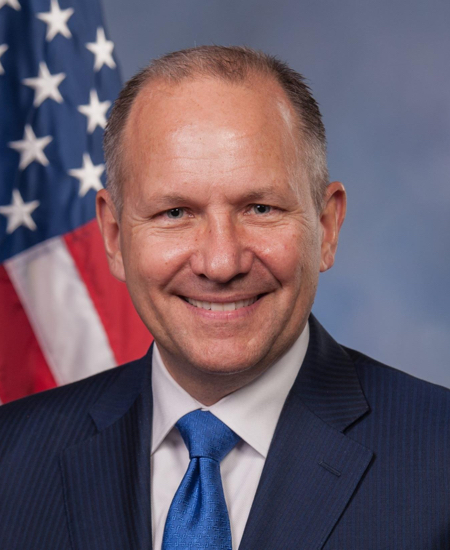
Rep. Lloyd Smucker
Sponsored bills
Maddy summaryThis bill directs the Joint Committee on the Library to procure a statue of Benjamin Franklin and place it in the U.S. Capitol. The committee must secure the statue within two years of the bill's enactment and install it in a public-accessible location by January 1, 2026, for viewing during Capitol Visitor Center guided tours. It is a procedural measure with no policy changes or direct impact on constituents or legislation.
Maddy summaryThis bill modifies Medicaid and CHIP rules to let eligible out-of-state healthcare providers enroll without extra state screening. It applies to providers already in Medicare or their home state program, with low fraud risk, serving children under 21 with complex medical conditions. Providers would receive 5 years of enrollment under this streamlined process, eliminating state-level barriers. The change directly affects children seeking specialized care across state lines and the providers who serve them.
Maddy summaryHR 9614, the ENABLE Act, permanently extends key tax benefits for ABLE accounts, which help people with disabilities save money without losing government benefits. The bill removes an expiration date (previously set for January 1, 2026) for higher contribution limits and the savers credit for ABLE accounts, and allows permanent rollovers of funds from 529 college savings plans into ABLE accounts. These changes directly affect individuals with disabilities and their families who use ABLE accounts for savings. The bill makes these provisions permanent, applying to future taxable years and distributions after enactment.
Maddy summaryThe NO FAKES Act of 2024 establishes legal rights for individuals (living or deceased) to control how their voice and visual likeness are used in digital replicas (highly realistic computer-generated representations that are readily identifiable as the individual). It requires authorization from the individual or their designated right holder for any digital replica, with specific rules for licenses (including 10-year limits for living individuals, 5-year limits for minors, and post-mortem rights for 10 years with possible 5-year renewals). The bill creates civil liability for unauthorized production or distribution of digital replicas, with exceptions for news, documentaries, commentary, and other protected uses. Online services are provided safe harbors if they follow notice-and-takedown procedures for unauthorized digital replicas after receiving proper notifications. The law preempts some state laws but leaves others in place, and applies to conduct occurring after the bill's enactment date.
Maddy summaryHR 9304, the Stomach Cancer Prevention and Early Detection Act, requires the National Cancer Institute (NCI) to conduct a comprehensive review of stomach cancer incidence, risk factors, screening effectiveness, and current awareness efforts in the U.S. The review will specifically examine high-risk populations, the role of H. pylori infection, endoscopic screening methods, and public and provider education. Within 18 months of enactment, the NCI must submit a report to Congress with recommendations for defining high-risk groups, improving detection methods for precancerous conditions, establishing screening guidelines, and enhancing research and prevention efforts. This bill directly affects public health systems, healthcare providers, and individuals at higher risk for stomach cancer by aiming to inform future prevention strategies and screening protocols.
Maddy summaryThis bill makes it a federal crime to steal packages that have been delivered by private carriers (like FedEx or UPS) but not yet received by the recipient. It directly affects package recipients, carriers, and thieves who target unclaimed deliveries left on porches or in mailboxes. The key provision amends federal law to include these delivered-but-unclaimed packages under the same legal protections as mail in transit. This changes the law to treat stolen packages at the delivery stage as a federal offense, similar to theft of postal mail. The bill does not create new penalties but expands existing theft statutes to cover this specific scenario.
Maddy summaryHJRES 165 is a congressional resolution seeking to block a Department of Education rule issued in April 2024 that updated protections against sex discrimination in schools receiving federal funding. The resolution aims to disapprove this specific rule (published as 89 Fed. Reg. 33474), which would have required schools to address sex-based discrimination in educational programs. If passed, the rule would no longer be in effect, meaning schools would not need to comply with its requirements. This resolution directly affects all schools and educational programs receiving federal financial assistance, as it targets the implementation of the new nondiscrimination standard.
Maddy summaryThis bill designates the U.S. Postal Service facility at 521 Thorn Street in Sewickley, Pennsylvania, as the "Mary Elizabeth 'Bettie' Cole Post Office Building." It updates all official references in federal documents, maps, and records to use this new name, with no changes to postal services or operations. The bill is purely procedural and honors Mary Elizabeth "Bettie" Cole through a naming convention.
Maddy summaryThis bill (HR 2365, Public Law 118-66) directs the U.S. Department of Health and Human Services (HHS) to establish the National Parkinson’s Project. It requires HHS to create and update a coordinated national plan for preventing, diagnosing, treating, and researching Parkinson’s disease and related disorders (including multiple system atrophy and progressive supranuclear palsy), while coordinating federal research and care efforts across agencies like the NIH, CDC, and VA. The law mandates annual progress assessments, an advisory council with patient advocates and diverse experts, and annual reports to Congress on federal Parkinson’s programs and recommendations for improvement. It affects federal agencies managing Parkinson’s-related programs and aims to improve care coordination and research efficiency for patients and caregivers, with the law sunsetting in 2035.