

Maddy summaryThe Long-Term Care Transparency Act requires the federal government to annually collect and summarize reports from state long-term care ombudsman programs and submit this summary to Congress. Specifically, the Assistant Secretary must aggregate all state reports and provide a summary of findings to the Senate Health, Education, Labor, and Pensions Committee, the Senate Special Committee on Aging, and the House Education and Workforce Committee each year. This bill does not change state program operations but mandates a new federal reporting requirement to increase transparency about long-term care issues. The direct effect is on the federal reporting process, with state programs providing the underlying data for the annual congressional summary.
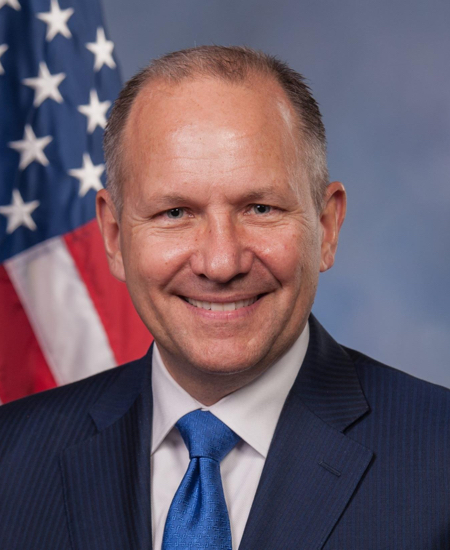
Rep. Lloyd Smucker
Sponsored bills
Maddy summaryThis bill amends the tax code to exclude non-punitive damages from gross income for survivors who receive compensation related to sexual acts or contact. It directly affects survivors of sexual violence who receive court-ordered or agreed-upon compensation (excluding punitive damages) for physical injuries stemming from such acts. The key provision removes the requirement for medical records to prove the connection between the damages and the sexual violence, allowing compensation to be accepted if the legal agreement or judgment states it is for that purpose. The tax exclusion applies to judgments made or agreements entered into after the bill's enactment, with special rules for payment timing. The bill also requires the Treasury to promote public awareness of this tax exclusion.
Maddy summaryHR 9920 (the BE GONE Act) amends the Immigration and Nationality Act to expand the definition of "aggravated felonies" by adding "sexual assault and aggravated sexual violence" as a specific category. This change directly affects non-citizens convicted of these offenses, as it triggers mandatory deportation under existing immigration law. The bill does not create new penalties or enforcement procedures but alters the legal definition that determines deportation eligibility. It is a definitional amendment to existing immigration law, not a new enforcement measure.
Maddy summaryHR 7032, the Congressional Budget Office Data Sharing Act, amends the 1974 Congressional Budget Act to give the Congressional Budget Office (CBO) clearer authority to quickly obtain data from executive branch agencies. The bill removes barriers to CBO requests by allowing data sharing "with or without written agreement," while requiring the CBO to maintain required confidentiality levels. It also prevents future laws from limiting this authority unless specifically referenced. The law directly affects the CBO and federal agencies that provide budget-related data, aiming to improve the CBO's ability to analyze government spending.
Maddy summaryHR 9777 requires the Congressional Budget Office (CBO) to include per-citizen cost estimates in its budget analyses for all bills and resolutions. Specifically, the CBO must calculate and display the pro rata share of total federal spending and debt changes that would affect each U.S. citizen if the bill is enacted. This change applies to every bill requiring a CBO cost estimate, directly affecting lawmakers who rely on these analyses during the legislative process. The bill aims to provide clearer, more transparent data on the nationwide financial impact of proposed legislation.
Maddy summaryHR 3433, the "Give Kids a Chance Act of 2024," requires pharmaceutical companies developing certain cancer drugs to conduct pediatric studies if the drugs target molecular pathways relevant to childhood cancers. It directly affects drug manufacturers submitting new applications for cancer treatments, particularly those combining previously approved adult cancer drugs or containing a single new active ingredient. The bill amends FDA regulations to mandate these pediatric investigations only when specific conditions are met, such as when a drug's molecular target is relevant to pediatric cancer growth. The FDA must issue implementing guidance within 12 months, and reports to Congress will track implementation and effectiveness starting 2 years after enactment.
Maddy summaryHRES 1458 is a commemorative resolution designating September 16-20, 2024, as "Medical Research Week" to honor medical research contributions. It recognizes the National Institutes of Health (NIH)’s role in advancing treatments for diseases like cancer, Alzheimer’s, and heart disease, while highlighting how NIH funding supports over 400,000 jobs and $93 billion in economic activity. The resolution has no binding effect - it does not change laws, funding, or policies, but simply urges the House to support the designation and acknowledge medical research’s national impact. It directly affects public awareness, not specific individuals or entities, and serves only as a symbolic observance.
Maddy summaryHR 6319 (the 911 SAVES Act of 2023) requires the Office of Management and Budget to reclassify public safety telecommunicators as "Protective Service Occupations" within 30 days of enactment. This change corrects their current misclassification in the federal Standard Occupational Classification (SOC) system, which is used for statistical data on jobs. The bill directly affects how these professionals - critical in emergency calls involving missing children, active threats, and officer safety - are officially categorized in government workforce data. It does not create new benefits or funding but aims to better recognize their lifesaving role through accurate federal job classification.
Maddy summaryThis bill creates a new occupational category (code 31-1123) within the federal Standard Occupational Classification system specifically for direct support professionals (DSPs) who assist people with intellectual or developmental disabilities. It directly affects DSPs, state agencies, and federal data collectors by reclassifying their work - currently grouped under home health aides - into a distinct category. The key mechanism is revising the SOC system to better track DSP workforce data, address high turnover rates (43% nationally), and recognize their unique role in promoting clients' independence and community inclusion. This change aims to improve data accuracy for addressing staffing challenges, without altering service delivery or benefits.
Maddy summaryThis bill (HJRES 163) is a congressional disapproval resolution targeting an Environmental Protection Agency (EPA) rule finalized on May 9, 2024. The EPA rule established new emissions standards for greenhouse gases from fossil fuel power plants (both new and existing) and repealed a previous rule called the Affordable Clean Energy Rule. The resolution would block this EPA rule from taking effect by invoking the Congressional Review Act (Chapter 8 of Title 5, U.S. Code). If passed, it would prevent the EPA rule from being enforced, directly affecting fossil fuel power plant operators and the EPA’s regulatory authority over emissions.