Maddy summaryThis bill ensures Medicare coverage for new medical devices designated as "breakthrough devices" during a 4-year period after FDA approval. To qualify, devices must meet specific criteria, including FDA priority review, clinical data from Medicare beneficiaries, and a safety review showing benefits outweigh risks. Medicare must finalize coverage decisions within 6 months of manufacturer applications and before the 4-year period ends. The law appropriates $10 million annually (2025-2030) for Medicare to administer this process.
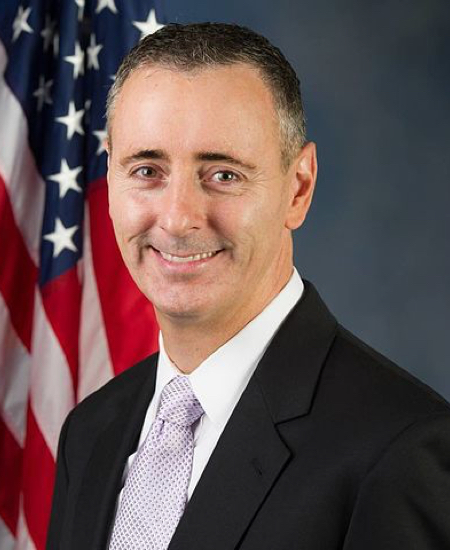
Rep. Brian K. Fitzpatrick
Sponsored bills
Maddy summaryThe Food Farmacy Act of 2025 authorizes $10 million annually (2026-2030) in federal grants to fund "healthy food pharmacies" that provide free nutritious food and nutrition guidance from qualified health professionals to low-income, rural, or food-insecure communities. These pharmacies must serve Medicaid/SNAP recipients at no cost and align with the Department of Health and Human Services' "Food is Medicine" initiative. Grants cover construction, equipment, staffing, and food acquisition, with recipients required to report annual data on patrons served, health outcomes, and program effectiveness. The bill directly supports communities facing food insecurity by integrating grocery access with healthcare services, targeting non-profits, local governments, and tribal organizations.
Maddy summaryThis bill permanently bans nitazenes and all structurally related synthetic opioids under federal law, creating a broad definition that covers numerous chemical variations designed to evade current restrictions. It directly affects anyone manufacturing, distributing, or possessing these substances without authorization, including illicit drug producers and users. The key mechanism is a class-wide Schedule I classification that includes specific structural features (like modified benzimidazole rings) and excludes new analogs from legal loopholes. This approach aims to prevent new nitazene variants from entering the illegal market and addresses their role in overdose deaths. Substances previously temporarily banned under similar rules will now be permanently prohibited as of the bill's enactment.
Maddy summaryHR 5401, the Pay Our Troops Act of 2026, ensures military personnel, civilian Defense workers, and supporting contractors receive pay during government funding gaps in fiscal year 2026. It appropriates emergency funds for active-duty service members, reserves, and their supporting personnel (including Coast Guard staff under DHS) if regular appropriations aren't enacted by the end of the fiscal year. The bill provides necessary pay and allowances during any period when full-year funding is unavailable, covering both active service and support roles. Funding expires when regular appropriations are passed, a funding resolution is enacted, or January 1, 2027, whichever comes first. This is a procedural measure to prevent pay delays for military and support staff during fiscal year 2026 funding lapses.
Maddy summaryHR 5403, the Enhancing COPS Hiring Program Grants for Local Law Enforcement Act, amends federal law to allow local law enforcement agencies facing officer recruitment shortages or high turnover to use COPS Program grants for recruitment and retention bonuses. The bill specifically adds a new provision (25) to the grant program, enabling agencies to fund bonuses for hiring or keeping officers when they experience declining recruitment or elevated retirements/resignations. This change directly affects eligible local police departments seeking to address staffing challenges through existing federal funding. The key mechanism expands the permitted uses of COPS grants to include performance-based bonuses, without creating new funding streams. The bill focuses on practical tools for agencies struggling to maintain staffing levels.
Maddy summaryThe Bipartisan Bulletproof Vest Partnership Program Expansion Act increases federal funding for law enforcement bulletproof vests by raising the grant share from 50% to 60% for state and local agencies. It also authorizes $60 million annually for the program from fiscal years 2026 through 2030. This change reduces the cost burden on participating agencies, requiring them to cover only 40% of vest costs instead of 50%. The bill directly affects state and local law enforcement agencies that apply for these grants to purchase protective gear.
Equal COLA Act This bill applies a cost-of-living adjustment (COLA) for annuities paid under the Federal Employees Retirement System that is equal to the increase in inflation, regardless of the amount of the increase. Specifically, for any year in which the Consumer Price Index (CPI) has increased over the previous year, the COLA amount shall be increased by the change in the CPI from the previous year. Current law applies an adjustment equal to the change in CPI only if the change is 2% or less. If the change is between 2% and 3%, the adjustment is limited to 2%. If the change is more than 3%, the adjustment is limited to 1% less than the change.
Saving the Civil Service Act This bill generally prohibits changes to the classification of positions in the competitive service and excepted service unless certain conditions are met. (Competitive service positions are subject to competitive examination while excepted service positions are appointed under one of five schedules. Competitive service positions have notice and appeal requirements for adverse actions that are not applicable to most excepted positions, including those of a confidential, policy-determining, policy-making, or policy-advocating character under Schedule C.) On October 21, 2020, President Donald Trump issued an executive order that placed executive agency positions that are of a confidential, policy-determining, policy-making, or policy-advocating character, and that are not normally subject to change as a result of a presidential transition, under a new Schedule F in the excepted service. The order was subsequently revoked by President Joe Biden. The bill prohibits executive agency positions in the competitive service from being placed in the excepted service, unless such positions are placed in a schedule in the excepted service as in effect on September 30, 2020. The bill also prohibits positions in the excepted service from being placed in any schedule other than the aforementioned schedules. Additionally, agencies may not (1) transfer occupied positions from the competitive or excepted service into Schedule C without the consent of the Office of Personnel Management, or (2) transfer employees in the excepted service to another schedule or transfer employees in the competitive service to the excepted service without employee consent.

Federal Adjustment of Income Rates Act or the FAIR Act This bill modifies pay rates for federal employees in 2026. Specifically, the bill increases rates under the statutory pay systems and for prevailing rate employees by 3.3% and increases locality pay by 1%.
Maddy summaryHRES 714 is a resolution expressing the House of Representatives' support for designating the week of September 14-20, 2025, as "National Adult Education and Family Literacy Week." It aims to raise public awareness about the importance of adult education, workforce skills, and family literacy programs. The resolution highlights statistics showing millions of U.S. adults lack basic literacy, numeracy, or English-language skills, which impact employment, health, and educational outcomes for families. It encourages public support for these programs but does not create new policies or direct funding.