

Maddy summaryHRES 708 is a symbolic resolution designating September 15-19, 2025, as "Medical Research Week" to honor the contributions of medical research. It recognizes the National Institutes of Health (NIH) for driving health breakthroughs, supporting over 400,000 jobs, and boosting economic growth through research on diseases like cancer and Alzheimer’s. The resolution contains no policy changes or funding provisions - it solely encourages public acknowledgment of medical research’s role in improving health and the economy. As a non-binding House resolution, it does not alter laws or budgets.
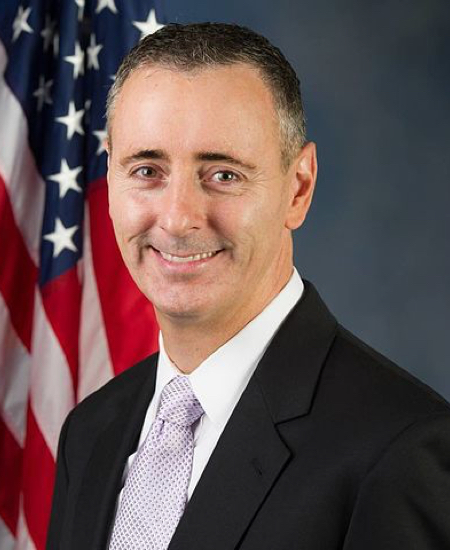
Rep. Brian K. Fitzpatrick
Sponsored bills
Maddy summaryThis bill extends federal funding authorization for Great Lakes fisheries research and monitoring programs. It amends existing law to change the expiration date from 2025 to 2030, ensuring continued support for these programs. The key provision directly affects federal research initiatives focused on assessing and managing fish populations in the Great Lakes Basin. This is a procedural reauthorization, not a new policy, maintaining current funding levels through 2030.
Maddy summaryThis bill establishes advance funding for key tribal programs starting in fiscal year 2026. It requires the Department of the Interior and Indian Health Service to include in each year's budget request sufficient funding for the *next* fiscal year's operations, specifically for accounts like "Operation of Indian Programs," "Contract Support Costs," and "Indian Health Services." The bill mandates annual reports by July 31 each year, assessing resource sufficiency and including workload estimates for the following fiscal year. These changes directly affect tribal programs administered by the Bureau of Indian Affairs, Bureau of Indian Education, and Indian Health Service, ensuring funding for future needs is planned and requested in advance.
Maddy summaryThe PARTNERS Act would provide federal funding to states to support regional industry partnerships that connect small and medium-sized businesses with workers through registered apprenticeships and other work-based learning programs. These partnerships would help businesses develop training programs while offering workers paid on-the-job training with classroom instruction, particularly targeting in-demand industry sectors. The bill requires partnerships to serve workers with barriers to employment and provide at least 12 months of support services, including job placement assistance and retention support. States would allocate funds to local partnerships that must track performance metrics related to program participation and outcomes, with specific reporting requirements for different demographic groups. The legislation aims to expand access to quality training pathways while connecting businesses with skilled workers in targeted industries.
Maddy summaryHR 5309, the Congressional Tribute to Constance Baker Motley Act of 2025, authorizes a posthumous Congressional gold medal for Constance Baker Motley, a pioneering civil rights attorney and judge. The bill directs the Treasury Secretary to strike the medal with her image and name, to be presented to her son, Joel W. Motley III, and her niece, Constance Royster. It also permits the sale of bronze duplicates at cost to cover expenses, with proceeds going to the U.S. Mint fund. This is a commemorative measure with no substantive policy changes, honoring Motley’s legacy as the first African-American woman appointed to a federal judgeship.
Maddy summaryThis bill requires pension plan administrators to locate and notify beneficiaries of unclaimed retirement funds ($50 or more) before transferring them to state unclaimed property programs. Administrators must first attempt to update contact information through databases and send a clear notice explaining the transfer process, unless no updated contact can be found. It establishes a national clearinghouse for states to manage these transfers and mandates regular reports to the Labor Secretary about unclaimed funds, including beneficiary details. The law protects administrators from liability if they follow these procedures, ensuring forgotten retirement savings can be recovered by rightful owners through state programs.
Maddy summaryHRES 697 is a symbolic House resolution recognizing suicide as a preventable public health issue and supporting the designation of September as "National Suicide Prevention Month" and September 10, 2025, as "World Suicide Prevention Day." It does not create new laws or allocate funds but formally expresses congressional support for these designations to raise awareness. The resolution cites statistics showing suicide as a leading cause of death across age groups, including among veterans and adolescents, and emphasizes mental health as equally important as physical health. It acknowledges the need for diverse prevention strategies without specifying new policies or programs. This resolution is purely declarative, aiming to bolster public awareness rather than enact concrete changes.
Maddy summaryHR 5272, the *Protect Elections from Deceptive AI Act*, prohibits the intentional distribution of AI-generated audio or video that falsely represents a federal candidate’s appearance, speech, or conduct in a way that would mislead voters during an election. It directly affects candidates for federal office, political committees, and entities distributing such content with the intent to influence elections or solicit funds. The bill includes key exceptions for news organizations (with clear authenticity disclosures), publications (with explicit statements), and satire. Victims can seek court injunctions or damages for violations, with the burden of proof requiring "clear and convincing evidence." This law aims to prevent AI-generated disinformation from distorting election outcomes.
Maddy summaryThis bill reauthorizes the existing program providing support and treatment services for law enforcement officers experiencing mental health crises. It extends the funding authorization period from 2020-2024 to 2025-2029 under the Omnibus Crime Control and Safe Streets Act of 1968. The bill directly affects law enforcement officers who access these crisis support services through participating state and local programs. It makes no new policy changes but ensures the current program continues operating without interruption for five additional years.
Maddy summaryThis bill (HR 5287, China Advanced Technology Monitoring Act) requires the U.S. Secretary of Defense to submit annual reports to Congress starting in 2026, assessing China's semiconductor manufacturing capabilities - including both advanced and standard chips - and related policies. The reports must analyze China's industrial strategies, technological progress, international partnerships, and the effectiveness of U.S. export controls on semiconductor equipment. They will also evaluate how China's semiconductor development impacts U.S. competitiveness, national security, and economic interests. The reports will include unclassified summaries for public release, with classified annexes for congressional review.