

Maddy summaryHRES 742 is a ceremonial resolution recognizing the 250th anniversary of the U.S. Navy's founding on October 13, 1775, when the Continental Congress established the first U.S. naval force. It formally acknowledges the Navy's historical role in protecting American interests and its current global presence (over 290 ships, 3,700 aircraft, and 500,000 personnel). The resolution expresses appreciation for Navy personnel past and present and reaffirms congressional support for the Navy as a key element of national defense and global stability. As a commemorative resolution, it has no policy or funding impact - it serves only to honor the Navy's legacy.
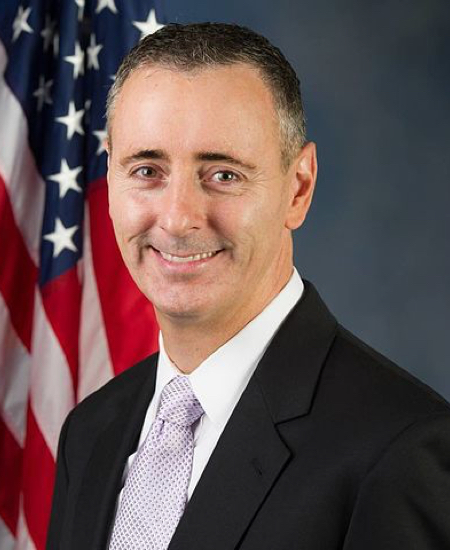
Rep. Brian K. Fitzpatrick
Sponsored bills
Maddy summaryThis bill amends the federal tax code to exclude certain overtime pay from taxable income. It directly affects workers who earn overtime under the Fair Labor Standards Act (FLSA) or through specific employer-employee agreements meeting defined conditions (like exceeding 40 hours per week or railway work standards). The key provision defines "qualified overtime compensation" to exclude this pay from federal income tax calculations. The change applies to tax returns filed for 2025 and later. This creates a concrete tax exemption for qualifying overtime earnings.
Maddy summaryThis bill, the Protect Adoptees and American Families Act (PAAF Act), automatically grants U.S. citizenship to certain internationally adopted children who meet specific criteria. It directly affects children adopted by U.S. citizen parents before age 18, who were living in the U.S. under legal custody before turning 18, and who were not already U.S. citizens. The key mechanism provides automatic citizenship for those already residing in the U.S. on the bill's effective date, and for those outside the U.S. upon lawful entry, subject to a criminal background check for visa issuance. It clarifies citizenship eligibility under immigration law without requiring additional naturalization steps for qualifying adoptees.
Maddy summaryThis bill allocates $5 million annually (2026-2030) to states for collecting de-identified stillbirth data through existing health systems, including risk factor analysis. It also provides $1 million yearly to develop standardized guidelines for healthcare providers and public educational materials about stillbirths, requiring consultation with medical professionals, bereavement organizations, and affected families. The bill mandates that all data collection complies with privacy laws and requires the Department of Health and Human Services to publish a public report on stillbirth guidelines within five years. It directly affects state health departments, healthcare providers, and families experiencing stillbirth by improving data quality and access to resources.
Maddy summaryHR 5476, the PARA Educators Act, provides federal grants to states to help recruit and retain school support staff (paraprofessionals) in public elementary, secondary, and preschool programs. It allocates funds based on previous Title I education funding, requiring states to prioritize schools serving high numbers of low-income students or those meeting specific poverty criteria. States can use the funds for proven programs like mentoring for paraprofessionals, professional development, helping staff earn credentials (e.g., special education or English learner certificates), and increasing wages or offering retention bonuses. The law mandates annual reporting on wage baselines, paraprofessional employment, and program outcomes. This bill directly affects paraprofessionals and the schools they support, particularly in high-poverty communities.
Maddy summaryHRES 730 is a procedural resolution allowing the U.S. House of Representatives to immediately consider H.J.Res. 4, a proposed constitutional amendment. This resolution waives typical procedural delays, sets one hour of debate (split equally between supporters and opponents), and specifies that the amendment must be voted on without further amendments. It does not change Senate rules itself but enables the House to advance H.J.Res. 4, which would require 60 senators (three-fifths) to end debate on legislation in the Senate - a change to the Constitution. The resolution affects only the House's process for handling this specific constitutional proposal.
Maddy summaryH.R. 155 would require states to allow voters not affiliated with any political party (unaffiliated voters) to participate in primary elections for federal offices, such as U.S. Senate or House races. Currently, many states restrict primary voting to registered party members only, but this bill would mandate that unaffiliated voters gain access to these primaries. It directly affects state election laws and unaffiliated voters, expanding their voting rights in federal primary elections. The policy change aims to broaden participation by removing party affiliation barriers in the primary voting process.
Maddy summaryHRES 732 is a symbolic resolution designating September 30, 2025, as "Rare Cancer Day" to raise public awareness about rare cancers. It directly affects patients with rare cancers, healthcare providers, and advocacy groups by highlighting challenges like delayed diagnosis, lower survival rates, and limited treatment options. The resolution urges increased awareness of rare cancer symptoms to improve early detection and supports partnerships to advance research and funding for better treatments. It does not create new laws or allocate funds but formally expresses congressional support for these efforts. The resolution was introduced by Representatives Kelly, Wasserman Schultz, Fitzpatrick, and Dingell and referred to the Energy and Commerce Committee.
Maddy summaryHRES 729 is a symbolic resolution designating September 17, 2025, as "Constitution Day" to honor the 250th anniversary of the U.S. Constitution's signing (September 17, 1787). It does not create new laws or affect any specific group; instead, it urges the American public to observe the day with ceremonies and activities. The resolution emphasizes the Constitution's historical significance and its role in establishing American democracy. As a commemorative measure, it has no binding effect on policy or governance.
Maddy summaryThis bill requires the 988 Suicide Prevention Lifeline to establish a dedicated "Press 3" option (via IVR) for LGBTQ+ youth seeking crisis support, directly affecting LGBTQ+ youth who face a four times higher suicide risk than peers. It mandates that at least 9% of funds allocated for the lifeline's services be reserved specifically for these specialized LGBTQ+ youth services. The bill amends existing law to formalize this dedicated resource, building on current services that handled over 1.5 million contacts from LGBTQ+ youth in 2025. This creates a concrete policy change for accessing tailored crisis support without altering other lifeline operations.