

Maddy summaryThis bill amends federal water storage grant programs under the Infrastructure Investment and Jobs Act to expand eligibility for projects. It sets specific capacity limits: surface water projects must store 200-30,000 acre-feet, while groundwater projects must average 200-150,000 acre-feet annually. Eligible projects must increase storage, convey water to/from storage, or stabilize groundwater levels. The bill also increases the number of annual grants from 5 to 10 and explicitly states it does not override state water laws, federal water rights, or water rights protections.
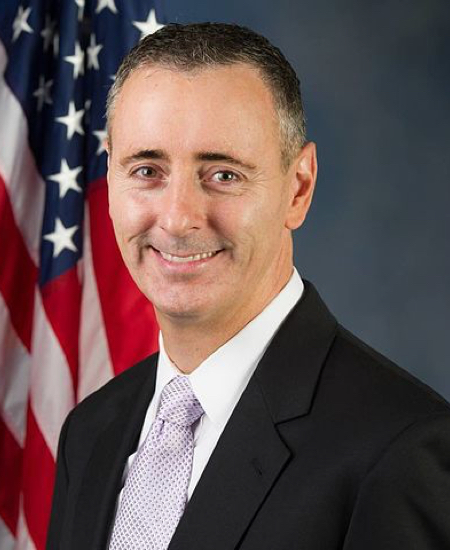
Rep. Brian K. Fitzpatrick
Sponsored bills
Maddy summaryHR 6104, the Dark Web Interdiction Act of 2025, creates a new federal offense for knowingly distributing controlled substances via the dark web and establishes the Joint Criminal Opioid and Darknet Enforcement Task Force. The bill mandates a 2-level sentencing increase for such violations and directs the new task force - comprising agencies like the FBI, DEA, and Customs - to disrupt dark web drug marketplaces through coordinated investigations, forensic training, and international collaboration. It requires annual reports on the task force’s activities and a separate report on virtual currency use in drug trafficking. The law applies directly to law enforcement agencies and targets individuals operating or using dark web marketplaces for illicit drug sales, with a 5-year sunset provision.
Maddy summaryHR 6120, the SROS Act, exempts retirement income from taxable income for qualifying school resource officers. It directly affects retired military members or law enforcement officers who later work as school resource officers, provided they meet background checks and state training requirements. The bill excludes pension, annuity, or retirement plan payments from taxable income during their employment as school resource officers. Additionally, officers with 10+ years of service in this role receive a lifetime exemption for all retirement income after leaving the position. The tax change applies to taxable years beginning after the bill's enactment.
Maddy summaryHRES 885 is a symbolic resolution designating November 15, 2025, as "America Recycles Day" to raise public awareness about recycling and promote national discussion on advancing a circular economy. It does not create new laws or funding but formally expresses congressional support for recycling efforts and acknowledges the sector's economic impact (contributing $168 billion and supporting 500,000 jobs). The resolution encourages Americans to "reduce, reuse, and recycle" while highlighting recycling's benefits for environmental sustainability, job creation, and supply chain resilience. It directly affects the public, recycling stakeholders (including communities, businesses, and governments), and the broader recycling industry by elevating public engagement with existing practices.
Maddy summaryThis bill expands a tax credit for companies building facilities that manufacture semiconductors, semiconductor equipment, or semiconductor materials. It clarifies which materials count as qualifying (including direct materials like chip substrates and indirect materials like cleaning chemicals used in production) and extends the credit's deadline from 2026 to 2031. The changes directly affect semiconductor manufacturers investing in new facilities or equipment by making the tax credit more broadly applicable and longer-lasting.
Maddy summaryThe Elijah E. Cummings Family Asthma Act authorizes $70 million over five years (2025-2029) to expand the CDC’s National Asthma Control Program. It requires the CDC to collaborate with state health departments to develop state asthma control plans, collect and publish annual data on asthma hospitalizations, emergency visits, and mortality rates disaggregated by race, ethnicity, age, and sex, and identify disparities affecting Black Americans, Native individuals, Puerto Ricans, and low-income populations. The law mandates biennial congressional reports with recommendations to reduce asthma-related hospitalizations, mortality, and economic costs, including strategies to improve care access and address environmental triggers. This bill focuses on enhancing public health surveillance and targeted interventions to reduce asthma’s burden, particularly for disproportionately impacted communities.
Maddy summaryThe Farm to School Act of 2025 updates federal programs to connect schools and early childhood programs with local farms. It expands eligibility to include more institutions (beyond just schools) and requires projects to include activities like planting gardens, buying from nearby farmers, or teaching about food/nutrition. The bill increases annual funding to $10 million and sets a $500,000 cap per grant, while prioritizing projects serving socially disadvantaged communities and incorporating tribal foods and traditional practices. It also mandates a review every three years to identify and address barriers for small farmers, tribal producers, and schools trying to implement these programs.
Maddy summaryHR 6054, the Fairness to Kids with Cancer Act of 2025, requires federal cancer research funding to allocate pediatric research dollars proportionally based on the U.S. child population. Specifically, for fiscal years 2026 and beyond, the percentage of cancer research funds dedicated to pediatric cancer must match the ratio of children under 18 to the total U.S. population, as determined by the Census Bureau. This directly affects how federal cancer research dollars are distributed, ensuring pediatric cancer research receives funding aligned with the proportion of young patients. The bill mandates this calculation annually, shifting funding allocation toward pediatric research without specifying new programs or budget increases.
Maddy summaryHR 6032, the Headstones for Honor Act, expands eligibility for Department of Veterans Affairs (VA) headstones, markers, or medallions to two specific groups: enslaved individuals who accompanied military personnel during service, and people who performed military functions despite legal bans based on race, gender, or ethnicity. The bill requires VA regulations to define "military function" and accept evidence like pay records, diaries, or family bibles to verify eligibility. For those who served with the Confederate States, headstones must include language noting they were "forced to support their own enslavement." Requests for headstones must be made by direct descendants or authorized representatives, with VA regulations due within one year of enactment.
Maddy summaryHR 6026 requires the Secretaries of Veterans Affairs and Education to jointly submit a report to Congress within 180 days of enactment, focusing on childcare availability, accessibility, and affordability for veteran families. The report must assess current childcare options, identify gaps in services, and evaluate specific barriers like cost, geographic distance, and eligibility requirements. This procedural bill does not create new benefits or mandates but aims to gather data to inform future policy decisions for veteran families.