

Maddy summaryHR 3965, the PEARL Act, requires U.S. Customs and Border Protection (CBP) to establish a 3-year pilot program adopting dogs from local animal shelters to train as support dogs for CBP’s existing Support Canine Program. The program must begin within 60 days of the bill’s enactment and will terminate three years after its start date. This bill directly affects CBP by creating a new mechanism to source and train support dogs from animal shelters, rather than purchasing or acquiring them through other means. The legislation focuses solely on implementing this specific pilot program with no additional policy changes.
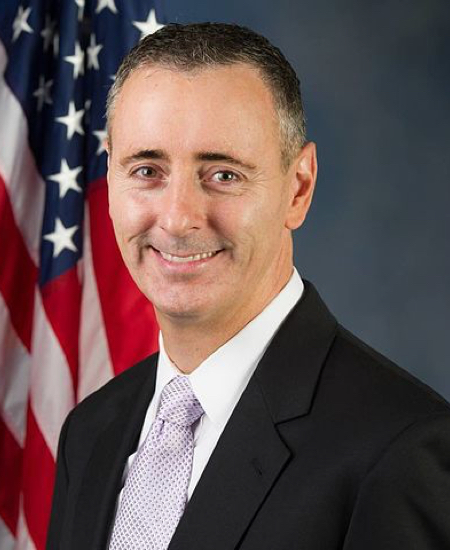
Rep. Brian K. Fitzpatrick
Sponsored bills
Maddy summaryHR 2259 requires the Secretary of Homeland Security to develop a national strategy for securing K-12 schools against terrorism within one year of enactment. This strategy must coordinate existing federal programs, identify security vulnerabilities in schools, and outline actions to address them, while avoiding duplication with current efforts. The Secretary must annually update the strategy through 2033 and report to relevant congressional committees, including certification if no updates are made. The bill directly affects federal agencies (Homeland Security, Education, and others) responsible for school security coordination, but does not create new funding or alter school operations.
Maddy summaryThis bill establishes fairer pay and retirement benefits for federal firefighters. It requires that overtime hours worked during a firefighter's regular schedule be included in retirement calculations, improving retirement payouts. The bill also sets a maximum 60-hour regular workweek for federal firefighters, to be defined by the Office of Personnel Management within one year. These changes directly affect federal firefighters by addressing pay disparities with municipal firefighters and enhancing recruitment and retention.
Maddy summaryHR 6126 authorizes the minting of commemorative coins to mark the 100th anniversary of the U.S. Foreign Service (established in 1924). It specifies three coin types: up to 50,000 $5 gold coins (90% gold), 400,000 $1 silver coins (90% silver), and 750,000 half-dollar coins, all to be sold during 2029. A surcharge of $35 per gold coin, $10 per silver coin, and $5 per half-dollar is added to the sale price, with all surcharge funds directed to the Association for Diplomatic Studies and Training to support its diplomatic history preservation work. The coins must include standard inscriptions (e.g., "Liberty," "United States of America") and will be legal tender, but the bill does not create new policy or affect government operations.
Maddy summaryHR 6137 would create a new separate job code for "direct support professionals" (DSPs) within the federal Standard Occupational Classification system. This change aims to better recognize DSPs - who provide daily support for people with intellectual and developmental disabilities (like helping with daily living, community participation, and goal-setting) - as distinct from other roles like home health aides. The bill requires the Office of Management and Budget to consider this revision during the next system update, without authorizing new funding. It addresses data gaps caused by high turnover rates (39% nationally) in DSP hiring and retention.
Maddy summaryThis bill establishes a pilot program requiring the Secretary of Defense to partner with certified nonprofit diaper banks to provide free diapers and diapering supplies to military families in need. Covered diaper banks must be nonprofit members of the National Diaper Bank Network with at least five years of experience distributing diapers at no cost. The program will connect these banks directly with military installations to address diaper access gaps, with the National Diaper Bank Network providing technical support and evaluating the pilot's effectiveness. It directly affects military families facing financial barriers to basic necessities like diapers, creating a new federal partnership mechanism for support.
Maddy summaryThe Increasing Access to Mental Health in Schools Act creates a federal grant program to increase the number of mental health professionals (counselors, social workers, and psychologists) in low-income public schools. It provides funding for partnerships between schools serving high percentages of low-income students and graduate institutions that train mental health professionals, aiming to reach recommended staff-to-student ratios (such as 1 counselor per 250 students). The bill also establishes a student loan repayment program for mental health professionals working in these schools, offering up to $200,000 in total repayment over five years. This legislation directly affects low-income school districts and mental health professionals working in those schools, with the goal of improving mental health support for students facing challenges like poverty, homelessness, or trauma.
Maddy summaryHR 6123, the "Promoting Diplomacy with Australia Act," requires the U.S. Assistant Secretary of State for East Asia and Pacific Affairs to submit a report within 30 days of enactment on the capacity of the U.S. diplomatic mission in Australia. The report must detail current staffing and operations, planned growth for 2025-2030, interagency expansion, necessary support systems, resource gaps affecting U.S. objectives (including the Australia-U.S. alliance and AUKUS partnership), and recommendations for additional facilities, staffing, and funding. This procedural bill mandates a comprehensive analysis to address potential shortfalls but does not enact new policy or funding.
Maddy summaryThe Global Respect Act (HR 6151) requires the U.S. President to publicly list foreign officials responsible for severe human rights violations against LGBTQI individuals, including torture, prolonged detention, or violence based on sexual orientation or gender identity. It mandates denying visas and entry to listed individuals and requires annual reports on the list's updates and impacts. The bill also directs the State Department to track global violence against LGBTQI people and update annual human rights reports to include discrimination based on sexual orientation or gender identity. These provisions directly affect foreign government officials and entities implicated in such abuses, aiming to increase accountability through U.S. visa restrictions.
Maddy summaryThis bill reauthorizes and permanently funds the Wildlife Road Crossings Program through fiscal years 2026-2031, allocating $200 million annually for projects that build wildlife crossings (like overpasses or underpasses) to reduce animal-vehicle collisions. It directly affects state and tribal governments, local agencies, and conservation groups that design and build these crossings, with specific provisions ensuring 100% federal cost coverage for tribal projects. Key mechanisms include dedicated annual funding, streamlined application assistance for tribes, and rules allowing unobligated funds to roll over for future use. The bill removes "pilot" language from prior law, making the program permanent and expanding tribal participation.