

Maddy summaryHRES 898 is a non-binding resolution recognizing November 2025 as "National Family Caregivers Month" in the U.S. It directly acknowledges the work of approximately 63 million family caregivers who provide unpaid care worth an estimated $600 billion annually. The resolution encourages federal agencies, states, and the private sector to support existing efforts like the 2022 National Strategy to Support Family Caregivers, and urges policies such as tax credits, paid leave, respite care, and home-based services. It does not create new laws or funding but aims to raise awareness and advocate for caregiver support. This is a symbolic recognition measure, not a legislative change.
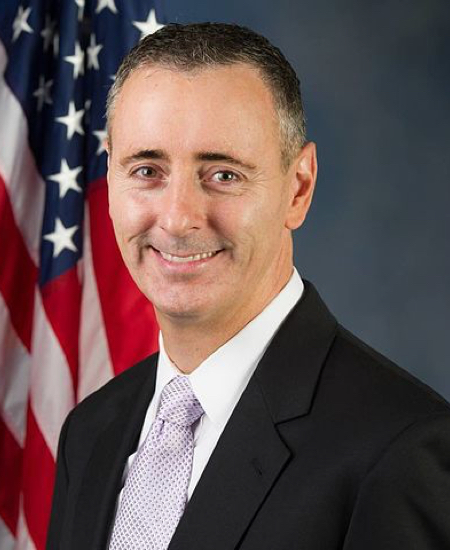
Rep. Brian K. Fitzpatrick
Sponsored bills
Maddy summaryThe PLAY Act establishes a federal task force led by the Health and Human Services and Interior Departments to coordinate efforts improving access to safe, community-based play spaces for children under 18. The task force will identify barriers to playground access, develop recommendations for agencies to collaborate on child wellness infrastructure (like playgrounds and outdoor learning areas), and report findings to Congress within one year. It does not fund new playgrounds but focuses on interagency coordination and evidence-based strategies to promote physical activity and health through existing public lands and community spaces. This bill directly affects federal agencies with jurisdiction over public lands, parks, and community health programs.
Maddy summaryThis bill prevents the Secretary of Commerce from ending cloud storage contracts for NOAA data without meeting specific requirements. It directly affects the Secretary of Commerce and NOAA's data storage contracts with cloud providers. The law requires the Secretary to create a plan for transitioning data to another cloud provider and to work with NOAA's Administrator to maintain continuous data protection. This ensures NOAA's critical environmental and oceanographic data remains accessible and secure during any contract changes.
Maddy summaryThe Kidney Care Access Protection Act (HR 6214) improves access to innovative kidney treatments for Medicare beneficiaries with end-stage renal disease. It extends transitional payment adjustments for new renal dialysis drugs and devices for at least three years, then establishes permanent payment adjustments based on actual utilization and costs. The bill also expands Medicare's annual wellness benefit to include kidney disease screening and increases access to kidney disease education services through renal dialysis facilities. These changes apply to Medicare beneficiaries, renal dialysis facilities, and healthcare providers, with key provisions effective January 1, 2026.
Maddy summaryHR 6204 extends funding authorization for large-scale water recycling projects by changing the Infrastructure Investment and Jobs Act's Section 40905(k) from a 5-year to a 10-year period. This procedural bill directly affects existing water recycling projects currently funded under the Infrastructure Investment and Jobs Act (Public Law 117-58). The key provision is simply the extension of the authorization period, providing longer-term stability for these projects without creating new programs or altering eligibility.
Maddy summaryThe HOPE Act extends enhanced premium tax credits through 2027, providing income-based subsidies for individuals with household incomes up to 935% of poverty level who purchase health insurance through ACA marketplaces. It imposes civil penalties of $10,000-$50,000 (and criminal penalties) for agents or brokers who provide false enrollment information. The bill requires new verification processes for agent-assisted enrollments, including documentation of consent and delayed commission payments, and mandates quarterly checks to remove deceased individuals from health insurance plans. These changes directly affect subsidy recipients and insurance agents/brokers operating in healthcare marketplaces.
Maddy summaryHR 6212, the Good Samaritan Menstrual Products Act, protects donors and nonprofits from liability when providing menstrual products in good faith. It shields people, manufacturers, distributors, and nonprofits from civil or criminal liability for the condition of "apparently usable" donated products (those meeting all safety standards but not necessarily marketable). The law applies to products like tampons, cups, and liners distributed to individuals in need through nonprofits. Liability protection does not apply if gross negligence or intentional misconduct causes injury or death.
Increasing Access to Lung Cancer Screening Act This bill provides for coverage without prior authorization requirements of annual lung cancer screenings under Medicaid, Medicare, and private health insurance for individuals for whom screenings are recommended under U.S. Preventive Services Task Force guidelines. It also expands Medicaid coverage of counseling and pharmacotherapy for cessation of tobacco use to all individuals, rather than only pregnant women. The Department of Health and Human Services must conduct outreach on the importance of lung cancer screenings and who should be screened, and the Government Accountability Office must report on the demographics of those diagnosed with lung cancer and recommend ways the federal government can improve screenings.
Maddy summaryHR 6231 extends and enhances the Work Opportunity Tax Credit (WOTC), a federal tax credit for employers hiring from specific target groups like veterans, SNAP recipients, and summer youth workers. The bill extends the program through 2030 (from 2025), increases the credit rate to 50% for certain wages (up from 40%), adds automatic inflation adjustments to the $6,000 wage cap, and expands eligibility to include military spouses and removes age limits for SNAP recipients. Key provisions also modify credit calculations for veterans, agricultural workers, and long-term assistance recipients, while requiring federal agencies to promote hiring from target groups in critical sectors like healthcare and construction. This bill directly affects employers who hire from these designated groups, making the tax credit more valuable and accessible.
Maddy summaryThis bill amends U.S. Customs and Border Protection (CBP) authority to allow CBP officers to conduct joint operations with foreign governments to monitor and disrupt international drug trafficking, human smuggling, and other threats (like terrorism) entering the U.S. It directly affects CBP personnel operating abroad and partner governments. Key provisions include authorizing CBP to provide support like threat monitoring, emergency humanitarian aid (e.g., search and rescue), and law enforcement training in foreign countries, while establishing a claims process for incidents involving CBP operations overseas. Claims must be filed within two years of an incident, and the authority to pay such claims expires five years after the bill’s enactment.