

Maddy summaryThe Scratch Cooked Meals for Students Act establishes a pilot program to provide competitive grants to school food authorities for preparing meals using unprocessed or minimally processed ingredients. These grants, which cover costs such as equipment upgrades, staff training, and technology systems, are available for a two-year period and are prioritized for schools serving high numbers of students eligible for free or reduced-price lunches. To support implementation, the bill requires recipients to collaborate with a designated technical assistance center to create strategic plans and mandates a final report detailing changes in ingredient usage and menu preparation methods. The program is funded with up to $20 million annually from fiscal years 2027 through 2031, with a portion reserved for administrative and technical assistance expenses.
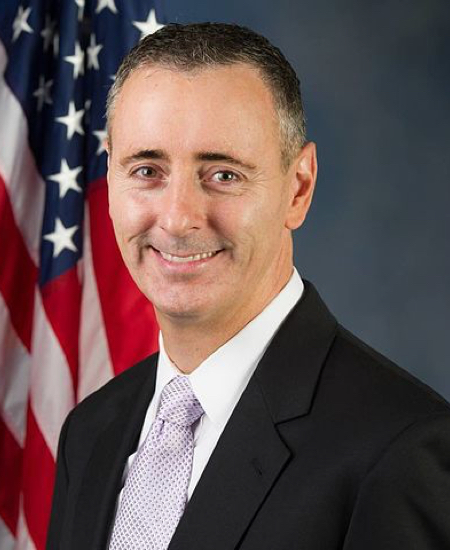
Rep. Brian K. Fitzpatrick
Sponsored bills
Maddy summaryThe Stop the Doxx Act makes it a federal crime to publicly share personal information, such as home addresses or phone numbers, about law enforcement officers, prosecutors, judges, or their immediate family members with the intent to threaten or intimidate them. Under this law, individuals found guilty face prison sentences of up to 10 years for a first offense, with penalties increasing to 20 years for repeat offenses or up to 40 years if the act results in injury or death. The bill also allows victims to sue for damages and requires the Attorney General to create a free, annual training program to help these public servants protect their personal data online.
Maddy summaryThis bill directs the Department of Defense to connect military recruits who cannot enlist with the Job Corps program for training in skilled industrial jobs within the defense industry. It expands specific workforce incentives to include Job Corps centers and gives local operators more flexibility to hire staff, partner with educational institutions, and manage their programs without waiting for federal approval. The legislation also updates rules to allow Job Corps centers to accept cash donations and grants more easily while streamlining enrollment for veterans and active-duty service members. Overall, the act aims to reduce shortages of skilled workers in defense manufacturing by aligning Job Corps training with the needs of the defense industrial base.
Maddy summaryThis bill, known as the U.S. Customs and Border Protection Officer Retirement Technical Corrections Act, corrects retirement benefits for specific officers who were offered jobs before July 6, 2008, but started working on or after that date. It ensures these officers are treated as if they were already serving on July 6, 2008, granting them a minimum annuity amount and an exemption from mandatory retirement age. To implement these changes, the Department of Homeland Security must create a list of affected individuals, notify them of their new benefits, and work with the Office of Personnel Management to apply retroactive adjustments. Additionally, the bill requires the Government Accountability Office to review hiring practices related to these benefits and submit a report to Congress within 18 months.
Maddy summaryThis bill reauthorizes and strengthens the Civil Rights Cold Case Records Collection program. It establishes that all federal, state, and local government records related to historical civil rights cases must carry a presumption of immediate public disclosure, with full access intended for public understanding. Key provisions include allowing the Review Board to reimburse state/local governments for digitizing or copying records to add to the national collection, removing an exception that previously blocked state records from being included, and extending the Review Board's term from 7 to 11 years. The bill directly affects government agencies holding these records and the public seeking historical transparency about civil rights cases.
Streamlining Thermal Energy through Advanced Mechanisms Act or the STEAM Act This bill expedites the environmental review of certain geothermal energy activities under the National Environmental Policy Act of 1969 (NEPA). Specifically, the bill expands the Energy Policy Act of 2005 to include certain geothermal exploration or development activities in an existing categorical exclusion from NEPA for certain oil or gas activities. A categorical exclusion applies to a class of actions that do not require an environmental assessment nor an environmental impact statement under NEPA. The categorical exclusion established by the bill applies to drilling a geothermal well (1) in an area where drilling has occurred previously within the five years prior to the date when drilling begins; or (2) within a developed field for which an approved land use plan or environmental document prepared under NEPA determined drilling to be a reasonably foreseeable activity, so long as the plan or document was approved within the five years prior to the date when drilling begins.
Maddy summaryThe AVERT Future Violence Act of 2026 authorizes the Attorney General to conduct a study and fund a grant program aimed at addressing animal cruelty as a potential predictor of future human violence. The bill defines animal cruelty to include intentional harm, neglect, and specific abusive acts while explicitly excluding standard veterinary care, hunting, and food slaughter. It establishes a $2 million grant program for eligible entities, such as law enforcement agencies and animal welfare organizations, to train professionals and develop early intervention strategies for offenders. Additionally, the legislation allocates $2 million for a three-year study to analyze the link between animal cruelty and future violent crimes, with the goal of creating evidence-based policies to prevent such violence.
Maddy summaryThe Investing in All of America Act of 2025 amends the Small Business Investment Act of 1958 to adjust leverage rules for Small Business Investment Companies (SBICs), which provide capital to small businesses. It lowers the maximum allowable leverage ratio from 300% to 200% and expands eligible investments to include companies in rural areas, critical technology sectors, and small manufacturers. The bill caps excluded leverage at $125 million or 50% of a company’s private capital, whichever is lower, and requires annual inflation adjustments to these dollar amounts. These changes directly affect SBICs, private investment firms that support small business growth nationwide.
Maddy summaryThe Build to Scale Reauthorization Act of 2026 extends funding and updates rules for the Regional Technology and Innovation Hub Program, which supports economic development in specific geographic areas. The bill defines eligible organizations as state or nonprofit groups that provide direct financing, commercialization services, and entrepreneurial support to local businesses. It mandates that the federal government cover up to 90 percent of project costs and requires outreach to rural communities and areas facing economic hardship. Additionally, the legislation authorizes $50 million annually from 2026 to 2030 and allows the use of previously unspent funds to continue the program.
Maddy summaryThe Lainie Jones Comprehensive Cancer Survivorship Act of 2026 establishes a new Office of Cancer Survivorship within the National Cancer Institute to coordinate research and education focused on the long-term health needs of the approximately 18 million Americans living with or beyond a cancer diagnosis. The bill mandates that Medicare and Medicaid cover specific services, including the creation of personalized care plans at key transition points and fertility preservation treatments for survivors facing treatment-related infertility. Additionally, the legislation creates a grant program to support cancer survivors and their families with employment assistance and establishes a new payment model designed to improve the quality and coordination of long-term survivorship care.