

Maddy summaryThe Tuskegee Airmen Memorial Act of 2026 authorizes the organization Tuskegee Airmen, Inc. to build a commemorative monument on federal land in Washington, D.C., honoring the original Tuskegee Airmen who served in World War II. This legislation allows the group to accept private donations and cover all costs for the project without using federal funds, while requiring any leftover money to be deposited into specific government accounts. The bill also mandates that the memorial be constructed in compliance with existing federal standards for commemorative works.
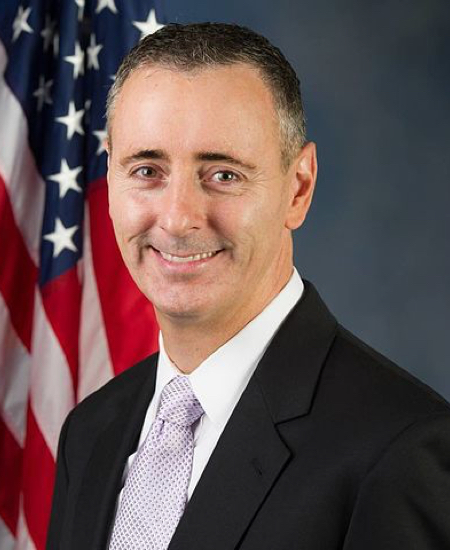
Rep. Brian K. Fitzpatrick
Sponsored bills
Maddy summaryThe Public Safety Officers' Benefits Enhancement Act of 2026 modifies how public safety officers can claim federal benefits related to line-of-duty injuries. It simplifies the claims process by removing a requirement that injuries must be caused by factors other than pre-existing cardiovascular risks and extends the time limit for reporting certain incidents from 24 to 72 hours. These changes apply to any benefit claims that are pending or filed after the law is enacted. The bill directly affects public safety officers seeking compensation for work-related injuries.
Maddy summaryThe 988 Lifeline Location Improvement Act of 2026 directs the Federal Communications Commission to study how to require callers to the 988 Suicide and Crisis Lifeline to send their precise location information to emergency responders. This requirement would primarily affect telecommunications companies, 911 service providers, and crisis centers that currently handle calls from users who may not be able to verbally state their address. The bill also asks the Government Accountability Office to produce a report on the legal, technical, and financial challenges of implementing such a system, including considerations for privacy and accessibility for users with hearing loss. By mandating these studies, the legislation aims to gather necessary data before deciding on a policy to ensure callers can be routed to local help more effectively.
Maddy summaryThis bill reauthorizes and updates the American Battlefield Protection Program through 2036, extending funding for battlefield preservation grants. It increases the maximum grant percentage for battlefield interpretation projects from 50% to 75% and sets $2 million annually for battlefield restoration grants through 2036. The bill also requires the National Park Service to study French and Indian War (1754-1763) and Mexican-American War (1846-1848) sites across the U.S., assessing their significance, threats, and preservation options. These studies must involve state governors, tribal governments, local officials, and historic preservation groups, with a final report due to Congress within two years of funding. The program directly affects federal, state, tribal, and local entities managing historic battlefields.
Maddy summaryThe Whale CHARTS Act of 2026 establishes a program to protect migratory whales and other large cetaceans through improved mapping, monitoring, and mitigation measures. It requires the creation of detailed, high-resolution maps of whale habitats, including calving grounds and migration routes, which will be integrated into vessel navigation systems to prevent collisions. The bill authorizes $8 million annually through 2030 for mapping, surveys, and a $10 million grant program to fund new detection technologies that reduce harmful interactions between whales and ocean users. It also mandates regular reporting to Congress on the program's effectiveness and progress in filling knowledge gaps about whale habitats.
Maddy summaryThe NIH IMPROVE Act (HR 6238) establishes a new NIH research initiative focused on improving maternal health outcomes in the U.S. It directly affects pregnant and postpartum women, particularly those in communities experiencing health disparities linked to higher maternal mortality and severe maternal morbidity. The bill authorizes $73.4 million annually (2026-2031) for NIH to fund research targeting preventable causes of maternal deaths, reduce health disparities, and evaluate community-based interventions. Key provisions require NIH to advance evidence-based solutions through grants and studies on biological, behavioral, and regional factors affecting maternal health before, during, and after pregnancy.
Maddy summaryThis bill reauthorizes funding for the C.W. Bill Young Cell Transplantation Program, setting $31 million for fiscal year 2025 and $33 million annually for fiscal years 2027-2031. It also extends the deadline for the national cord blood inventory program from 2026 to 2031. The legislation directly affects stem cell research programs and cord blood banks by maintaining federal funding levels and prolonging the inventory program’s timeline. These provisions ensure continuity for existing research infrastructure and blood bank operations without introducing new policy changes.
Maddy summaryThis bill reauthorizes federal programs focused on preventing and responding to tick-borne diseases through 2026-2030, extending existing efforts beyond their previous expiration. It updates the National Strategy for Vector-Borne Diseases to emphasize identifying, reporting, preventing, and responding to these illnesses. The bill modifies two sections of the Public Health Service Act to continue funding for health departments working on vector-borne disease control. It directly affects public health programs and state/local health departments managing tick-borne disease prevention and response.
Maddy summaryThe AADAPT Act reauthorizes and expands Project ECHO grants to improve Alzheimer’s and dementia care through technology-enabled training. It specifically funds grants for healthcare providers in rural, frontier, or medically underserved areas to enhance early diagnosis, quality care, and provider retention for dementia patients. The bill authorizes $1 million annually (2027-2032) for these dementia-focused training programs, requiring funds to supplement - not replace - existing resources. This directly supports primary care providers licensed to serve underserved communities, using collaborative online learning to address care gaps.
Maddy summaryThis bill reauthorizes the National Earthquake Hazards Reduction Program through fiscal year 2030, providing $83.4 million annually with $30 million each year dedicated to completing the Advanced National Seismic System. It expands the program to include Tribal governments, updates standards to cover building design, evaluation, and post-earthquake recovery (such as minimizing downtime for critical infrastructure), and requires better coordination between federal agencies like the USGS, Federal Communications Commission, and FEMA for earthquake early warnings. The bill mandates that early warning alerts be broadcast in the predominant languages of affected regions and includes new provisions for tsunami response coordination and data sharing.