

Surface Transportation Research and Development Act of 202 1 This bill addresses provisions related to surface transportation research, development, and deployment programs of the Department of Transportation (DOT). Among other provisions, the bill reauthorizes through FY2026 DOT highway research and development programs, including highway safety, technology and innovation deployment, training and education, and intelligent transportation systems; sets forth a program to provide awards to institutions of higher education or nonprofit research organizations to establish regional road weather research and development centers; reauthorizes through FY2026 the University Transportation Centers Program, the Bureau of Transportation Statistics, the public transportation research and development program, the National Cooperative Rail Research Program, the hazardous materials research and development program, and the National Cooperative Freight Transportation Research Program; establishes Centers of Excellence to advance research and development that improves the resilience of regions of the United States to natural disasters, extreme weather, and the effects of climate change on modal and multimodal transportation and infrastructure; directs DOT to carry out and publish the results of a study for the purpose of informing land use and transportation planning for accessible health, food, education, and other essential services and activities; and requires DOT to establish a multimodal national cooperative freight transportation research program, a Heavy Freight Automated Trucking Research Initiative, and an Advanced Transportation Research and Innovation Program.
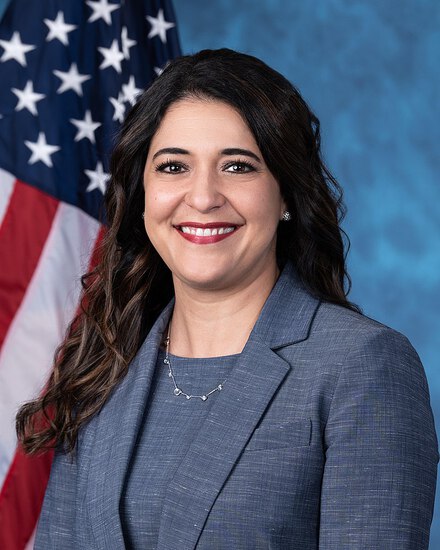
Rep. Stephanie I. Bice
Sponsored bills
This concurrent resolution establishes the Joint Select Committee on the Events and Activities Surrounding China's Handling of the 2019 Novel Coronavirus to investigate and report to Congress and the executive branch specified information related to the coronavirus (i.e., the virus that causes COVID-19) pandemic. This report must include the origins and causes of the coronavirus; certain coronavirus-related policies, decisions, and activities by the government of China; accountability for policies, decisions, and activities related to influencing the World Health Organization's response to the coronavirus outbreak; vulnerabilities of the U.S. domestic and global supply chain to a global pandemic due to reliance on Chinese manufacturing; information related to lessons learned from China's handling of the coronavirus; and recommended actions the federal government should take in response to China's handling of the coronavirus.
This resolution calls on the people of the United States to observe Memorial Day to honor the men and women who died in the pursuit of freedom and peace.
Military Spouse Student Loan Deferment Act This bill allows certain military spouses to defer payment on their federal student loans for 90 days. Specifically, borrowers are eligible to receive this deferment if (1) their spouse is an active duty service member of the Armed Forces, (2) they have lost their employment due to a permanent change in duty station of their spouse, and (3) they provide certain documentation to the Department of Education. Loan interest shall not accrue during the deferment period.
United States Army Rangers Veterans of World War II Congressional Gold Medal Act This bill provides for the award of a single Congressional Gold Medal to the U.S. Army Rangers Veterans of World War II in recognition of their dedicated service during World War II.
Midwives for Maximizing Optimal Maternity Services Act of 2021 or the Midwives for MOMS Act of 2021 This bill establishes grants within the Health Resources and Services Administration (HRSA) for establishing or expanding midwifery programs at institutions of higher education and nursing schools. HRSA may prioritize funding for institutions that focus on increasing the number of midwife professionals from underrepresented groups and that promote practicing in areas with limited access to professional health care.
Ghost Army Congressional Gold Medal Act This bill directs the Speaker of the House of Representatives and the President pro tempore of the Senate to award a Congressional Gold Medal to the 23rd Headquarters Special Troops and the 3133d Signal Service Company, known as the Ghost Army , collectively, in recognition of its service during World War II.
Rural STEM Education Research Act This bill specifies federal scientific research and development efforts towards STEM (science, technology, engineering, and mathematics, including computer science) workforce development and rural STEM education. (Sec. 3) The bill amends the objectives of the Manufacturing Extension Partnership program to include the provision to secondary schools of information about the job skills needed in manufacturing companies, and the promotion and expansion of certification systems offered through local high schools. The activities of a manufacturing extension center are expanded to include local high schools in the facilitation of collaborations and partnerships between manufacturing companies and schools to help those entities better understand the specific needs of manufacturers and to help manufacturers better understand the skill sets that students learn in school programs. The National Institute of Standards and Technology (NIST) must award prizes to stimulate research and development of creative technologies in order to deploy affordable and reliable broadband connectivity to underserved rural communities. NIST may award not more than a total of $5 million in prizes. (Sec. 4) The Office of Science and Technology Policy must establish a broadband research and development working group to address national research challenges and opportunities for improving broadband access and adoption across the United States. (Sec. 5) The National Science Foundation (NSF) shall enter into an agreement with the National Academy of Sciences under which the National Academy of Sciences agrees to evaluate aspects of STEM education and workforce development in rural areas. (Sec. 6) The Government Accountability Office shall conduct a study on the engagement of rural populations in federal STEM programs. (Sec. 7) Experimental Program to Stimulate Competitive Research (EPSCoR) programs shall consider modifications to award structures to increase the capacity of rural communities to provide quality STEM education and STEM workforce development programming to students and teachers. (Sec. 8) The NSF must award grants to institutions of higher education or nonprofit organizations for (1) research and development to advance innovative approaches to support and sustain high-quality STEM teaching in rural schools, (2) research and development of programming to identify the barriers rural students face in accessing high-quality STEM education, (3) development of innovative solutions to improve the participation and advancement of rural students in grades Pre-K through 12 in STEM studies, and (4) research on online STEM education courses for rural communities. The NSF may establish a pilot program of regional cohorts in rural areas to provide peer support, mentoring, and hands-on research experiences for rural STEM educators of students in grades Pre-K through 12 in order to build an ecosystem of cooperation among educators, researchers, academia, and local industry.
Supporting Early-Career Researchers Act This bill authorizes the National Science Foundation to establish a two-year pilot program to award grants to highly qualified early-career investigators to carry out an independent research program at the institution of higher education chosen by such investigator, to last for a period not greater than two years. The NSF shall select grantees from among citizens, nationals, and lawfully admitted permanent resident aliens of the United States. The NSF shall conduct program outreach to recruit fellowship applicants (1) from all regions of the country; (2) from historically underrepresented populations in the fields of science, technology, engineering, and mathematics (STEM); and (3) who graduate from or intend to carry out research at a variety of types of institutions of higher education, including Historically Black Colleges and Universities.
This resolution expresses support for the designation of National CASA/GAL Volunteers Day to commend the work of court-appointed special advocate (CASA) and guardian ad litem (GAL) volunteers.