

Expanding Veterans' Options for Long Term Care Act This bill requires the Department of Veterans Affairs (VA) to implement a three-year pilot program to assess the effectiveness of providing assisted living services to eligible veterans, including by assessing the satisfaction of veterans participating in the pilot program. Eligible veterans are those who (1) are eligible for assisted living services as determined by the VA; and (2) are already receiving nursing home level care paid for by the VA, are eligible for such care from the VA, or exceed the requirements for domiciliary care paid for by the VA but do not meet the requirements for nursing home level care paid for by the VA. The Inspector General of the VA must report to Congress on the pilot program, and the VA must submit a follow-up plan to address any deficiencies that are identified in the report.
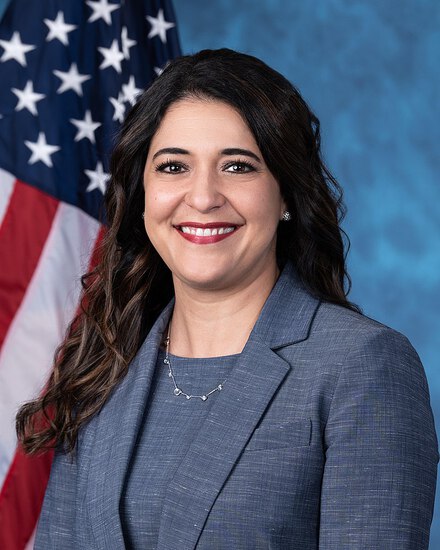
Rep. Stephanie I. Bice
Sponsored bills
Protecting the Permian Basin Act of 2022 This bill eliminates a program administered by the Environmental Protection Agency (EPA) that provides incentives for petroleum and natural gas systems to reduce their emissions of methane and other greenhouse gases. It also repeals a charge on methane emissions from specific types of facilities that are required to report their greenhouse gas emissions to the EPA's Greenhouse Gas Emissions Reporting Program.
Harriet Tubman Bicentennial Commemorative Coin Act This bill directs the Department of the Treasury to mint and issue 50,000 $5 gold coins, 400,000 $1 silver coins, and 750,000 half-dollar clad coins emblematic of the legacy of Harriet Tubman as an abolitionist. The Secretary may issue coins under this bill only during the period of January 1, 2024, through December 31, 2024. All surcharges received by Treasury from the sale of such coins must be paid equally to the National Underground Railroad Freedom Center in Cincinnati, Ohio, and The Harriet Tubman Home, Inc. in Auburn, New York, for the purpose of accomplishing and advancing their missions.
This bill establishes the Department of Defense Military Housing Readiness Council to review and make recommendations to the Department of Defense (DOD) regarding policies for privatized military housing. The council must also monitor compliance by DOD with statutory improvements to policies for privatized military housing and make recommendations to improve collaboration, awareness, and promotion of accurate and timely information about privatized military housing, accommodations available through the Exceptional Family Member Program, and other support services among policymakers, service providers, and targeted beneficiaries. The council must make all documents publicly available until the council ceases to exist.
Preserving Access to Home Health Act of 2022 This bill restricts the Centers for Medicare & Medicaid Services (CMS) from decreasing payments for Medicare home health services based on certain adjustments until 2026. Current law requires the CMS to make certain permanent and temporary payment adjustments under the Medicare prospective payment system for home health services based on behavioral assumptions for 2020 through 2026. The bill restricts the CMS from making adjustments that decrease payments until 2026; the CMS must also ensure that any such necessary decreases are made before 2032.
Save America’s Valuable Energy Act or the SAVE Act This bill directs the Department of Energy (DOE) to prohibit the sale of petroleum products (e.g., crude oil) from the Strategic Petroleum Reserve (SPR) to certain entities. Specifically, DOE must prohibit the sale of petroleum products from the SPR to entities headquartered in Russia. Further, DOE must prohibit the sale of petroleum products from the SPR to entities headquartered in countries (Belarus, Burma, China, Cuba, Iran, North Korea, Syria, and Venezuela) that are subject to certain prohibitions concerning exports of defense articles and services under the Department of State's International Traffic in Arms Regulations.
National Plan to End Parkinson's Act This bill requires the Department of Health and Human Services (HHS) to carry out a project to prevent and cure Parkinson's disease (a progressive brain disorder that causes unintended or uncontrollable movements) and related conditions. Among other components of the project, HHS must (1) implement and periodically update a national plan to coordinate and guide efforts to prevent and cure the disease; (2) improve diagnosis, treatment, and care of those with the disease; and (3) address health and other disparities related to the disease. HHS must also conduct annual assessments on the preparation for and response to the increased burden of Parkinson's disease. In addition, the bill establishes a council, comprised of federal and nonfederal stakeholders, to advise HHS on and make recommendations concerning the prevention and cure of Parkinson's disease. The bill's provisions terminate at the end of calendar year 2035.
Safeguarding Military Bonuses Act This bill requires the military departments to grant to certain members of the Armed Forces (i.e., those who were involuntarily separated based on the refusal to receive a COVID-19 vaccination) an exception to the requirement that they must repay a bonus, incentive pay, or similar benefit that is contingent on the member's satisfaction of certain service or eligibility requirements. Specifically, this exception applies for such members if the bonus, incentive pay, or similar benefit was made before August 24, 2021.
Securing and Enabling Commerce Using Remote and Electronic Notarization Act of 2022 or the SECURE Notarization Act of 2022 This bill allows a notary public commissioned under state law to remotely notarize electronic records and perform notarizations for remotely located individuals. The bill provides technical requirements for such notarizations, including the creation and retention of video and audio recordings and the use of communication technologies (i.e., video chat). Additionally, the bill requires U.S. courts and states to recognize notarizations—including remote notarizations of electronic records and notarizations of remotely-located individuals—that occur in or affect interstate commerce and are performed by a notary public commissioned under the laws of other states. The bill also allows a notary public to remotely notarize electronic records involving an individual located outside of the United States, subject to certain requirements.
Access to Safe Contraception Act of 2022 This bill prohibits states from banning any form of contraception that is approved by the Food and Drug Administration. The bill does not preempt state laws that protect the right of any entity to opt out of providing contraception due to the entity's religious or moral beliefs.