

Nonprofit Security Grant Program Improvement Act of 2022 This bill modifies the Nonprofit Security Grant Program of the Department of Homeland Security and reauthorizes appropriations for such program through FY2028. The Federal Emergency Management Agency (FEMA) must establish an office, headed by a senior FEMA official, to administer the program. Office responsibilities include those related to outreach, engagement, education, and technical assistance. FEMA must also publish grant guidelines and may prohibit states from closing application processes before the publication of the guidelines. FEMA must seek to enter into a contract or other agreement with an independent research organization for the conduct of a study that analyzes and reports on (1) the effectiveness of the program for preparedness against terrorism and other threats; (2) the risk-based formula and allocations under the program; and (3) the risk profile of and any identifiable factors leading to the low participation of traditionally underrepresented groups and states under the program.
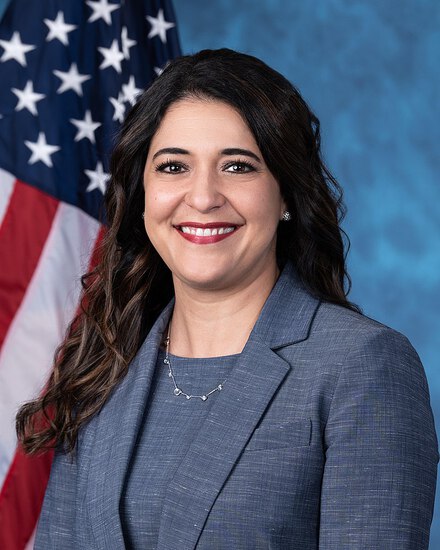
Rep. Stephanie I. Bice
Sponsored bills
Invest to Protect Act of 2022 This bill directs the Office of Community Oriented Policing Services within the Department of Justice to award grants to local and tribal governments that employ fewer than 125 law enforcement officers. Grant funds may be used for various activities, including to provide de-escalation training and improve recruitment and retention.
Fresh Start Act of 2021 This bill authorizes the Department of Justice to award grants for states to implement automatic expungement laws (i.e., laws that provide for the automatic expungement or sealing of an individual's criminal records).
Clean Slate Act of 2021 This bill establishes a framework for sealing records related to certain federal criminal offenses. Courts must automatically seal records related to (1) a conviction for simple possession of a controlled substance or for any nonviolent offense involving marijuana, or (2) an arrest for an offense that does not result in a conviction. Additionally, an individual who meets certain criteria may petition to seal records related to a conviction for other nonviolent offenses.
Social Security Fairness Act of 2021 This bill repeals provisions that reduce Social Security benefits for individuals who receive other benefits, such as a pension from a state or local government. The bill eliminates the government pension offset , which in various instances reduces Social Security benefits for spouses, widows, and widowers who also receive government pensions of their own. The bill also eliminates the windfall elimination provision , which in some instances reduces Social Security benefits for individuals who also receive a pension or disability benefit from an employer that did not withhold Social Security taxes. These changes are effective for benefits payable after December 2021.
This resolution applauds and expresses support for the continued cooperation between the United States and the European Union in thwarting Hezbollah's terrorist activities. It also urges the European Union to designate Hezbollah in its entirety as a terrorist organization.
TCJA Permanency Act This bill makes permanent provisions affecting individual and business taxpayers that were enacted in 2017 by the Tax Cuts and Jobs Act and are scheduled to expire at the end of 2025. The bill makes permanent reductions in individual and capital gain tax rates. The bill increases the standard tax deduction for individual taxpayers. It also increases and modifies the child tax credit and raises the contribution base for the tax deduction for charitable contributions. The bill allows additional contributions to ABLE accounts (tax-exempt accounts designed to enable individuals with disabilities to save and pay for disability-related expenses). It exempts from taxation combat zone benefits of members of the Armed Forces serving in the Sinai Peninsula of Egypt and limits the deduction for moving expenses to active duty members of the Armed Forces. Additionally, the bill expands the types of elementary and secondary school expenses eligible for payment from qualified tuition programs (529 programs); lowers to $750,000 the amount of mortgage debt eligible for an interest expense tax deduction; reinstates after 2023 the exclusion of income from the gross income of student loan borrowers for loan debt discharged due to death or total and permanent disability; makes permanent the limitation on the tax deduction for state and local taxes and denies a deduction for foreign real property taxes; makes permanent the tax deduction of the income of certain pass-through business entities; repeals the tax deduction for personal tax exemptions and the exclusion of employer-provided bicycle commuter fringe benefits; terminates certain miscellaneous itemized tax deductions; doubles the estate and gift tax exemption amount; and makes permanent the increase of the alternative minimum tax exemption amount for individual taxpayers.
Biologics Competition Act of 2022 This bill requires the Food and Drug Administration (FDA) to evaluate (1) the differences between the requirements that apply to interchangeable biologics and the requirements that apply to therapeutically equivalent ratings for generic drugs, and (2) the effects of these differences on the approval of interchangeable biologics. The FDA must update the Purple Book with changes that better align the ways these requirements are communicated while still maintaining each distinct approval pathway. The Purple Book is an FDA publication that lists approved biological products, including biosimilars and interchangeable biologics. Interchangeable biologics are biologics that may be substituted for the original product without consulting the prescriber, similar to how generic drugs may be substituted for brand-name drugs based on therapeutic equivalence.
Patient Advocate Tracker Act This act requires the Office of Patient Advocacy within the Veterans Health Administration to establish an information technology system that allows veterans or their representatives to electronically file a complaint with a patient advocate and review the status of a filed complaint.
Improving Seniors' Timely Access to Care Act of 2022 This bill establishes several requirements and standards relating to prior authorization processes under Medicare Advantage (MA) plans. Specifically, MA plans must (1) establish an electronic prior authorization program that meets specified standards, including the ability to provide real-time decisions in response to requests for items and services that are routinely approved; (2) annually publish specified prior authorization information, including the percentage of requests approved and the average response time; and (3) meet other standards, as set by the Centers for Medicare & Medicaid Services, relating to the quality and timeliness of prior authorization determinations.