

Maddy summaryHR 803, the PROTECT Taiwan Act, requires U.S. financial regulators to bar representatives of China from participating in key international financial organizations (like the G20, Bank for International Settlements, and Financial Stability Board) within 10 days of the President notifying Congress about a threat to Taiwan's security or economy from China. The exclusion applies to meetings and activities of these specific groups, triggered by a presidential declaration under the Taiwan Relations Act. The President may waive this requirement with a report explaining the national interest, and the law automatically expires after 5 years or if the President declares termination. This bill directly affects China's representation in global financial governance when the U.S. declares a Taiwan-related threat.
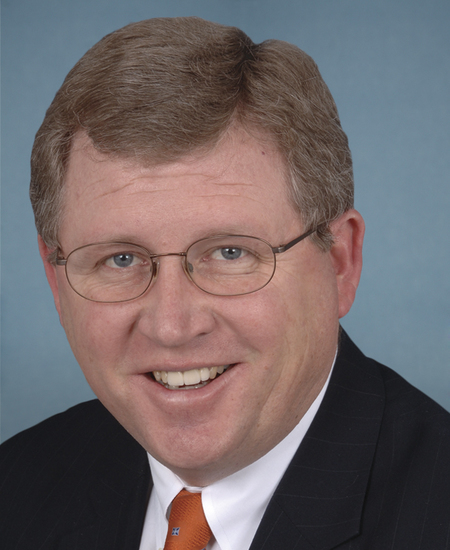
Rep. Frank D. Lucas
Sponsored bills
Maddy summaryHRES 955 is a resolution commending Taiwan for its democratic election history and supporting Taiwan's democratic institutions. It recognizes Taiwan's transition to democracy since the late 1980s, including 7 presidential and 9 legislative elections held since then, all deemed free and fair. The resolution specifically expresses support for Taiwan's upcoming January 13, 2024, elections and condemns interference by the Chinese Communist Party. It affirms U.S. commitment to a strong partnership with Taiwan across multiple domains and supports Taiwan's self-defense and liberty. As a procedural resolution, it does not create new law but formally expresses congressional support for Taiwan's democratic development.
Maddy summaryThe TRANQ Research Act of 2023 requires the National Institute of Standards and Technology (NIST) to coordinate research on illicit drugs containing xylazine, novel synthetic opioids, and other concerning substances. The bill mandates NIST to develop faster detection methods, create data tools for identifying these substances, and consult with agencies like the DEA, CDC, and National Institute on Drug Abuse to establish safe handling practices. NIST must also form partnerships with universities, federal labs, and the private sector to improve detection capabilities. Within one year, NIST must report to Congress on its implementation, and the Comptroller General must conduct a study on federal capabilities to respond to new psychoactive substances, reporting within two years.
Maddy summaryHR 1147, the Whole Milk for Healthy Kids Act of 2023, allows schools participating in the National School Lunch Program to offer whole milk as an option during lunch. It amends the school lunch law to explicitly permit schools to serve flavored and unflavored whole milk alongside reduced-fat, low-fat, and fat-free milk choices for students. The bill also requires the Secretary of Agriculture to adjust meal regulations to account for saturated fat from whole milk, ensuring it doesn't count against meal fat limits. This change directly affects participating schools and the students who receive school lunches, expanding their milk beverage options.
Maddy summaryHR 3063, the Retirement Fairness for Charities and Educational Institutions Act of 2023, modifies securities laws to clarify exemptions for certain retirement plans. It expands the definition of exempt retirement plans under the Investment Company Act, Securities Act of 1933, and Securities Exchange Act of 1934 to include 403(b) plans used by charities and educational institutions. These plans must meet specific conditions, such as being subject to ERISA or having employers act as fiduciaries for investment choices. The bill directly affects eligible organizations by reducing regulatory barriers for offering retirement benefits to their employees. This change simplifies compliance without altering the core structure of retirement plans.
Maddy summaryThis bill requires the Department of Energy (DOE) and Department of Agriculture (USDA) to coordinate joint research projects on shared priorities like biofuels, AI for farming, energy-water systems, and carbon storage. It mandates a formal agreement between the departments to fund collaborative projects through competitive grants open to universities, labs, and industry. The departments must report to Congress within two years on their coordination efforts, research achievements, and future opportunities. This affects how DOE and USDA manage their research partnerships, not direct public policy or regulations.
Maddy summaryHR 6131, the Commercial Space Act of 2023, establishes a new certification system for U.S. commercial space companies to operate spacecraft, replacing some existing licensing requirements. The bill requires companies to submit space debris mitigation plans and liability insurance as part of their certification application, with the Department of Commerce's Office of Space Commerce handling the process within 60 days. The law aims to reduce regulatory burdens while maintaining U.S. compliance with international space law obligations. This certification system directly affects commercial entities seeking to launch or operate spacecraft in outer space.
Maddy summaryThe SHIP Act imposes sanctions on foreign entities that knowingly handle Iranian petroleum, targeting those involved in port operations, transportation, refining, or ship-to-ship transfers of Iranian oil. Starting 90 days after enactment, the President must block assets, deny visas, and impose penalties on individuals or companies engaging in these activities, including family members or owners of sanctioned entities. It requires annual reports tracking Iran's oil exports, revenues, and key players like shipping companies and ports. The sanctions terminate if the President certifies Iran has stopped supporting terrorism and dismantled weapons programs.
Maddy summaryHRES 771 is a non-binding resolution expressing the U.S. House of Representatives' support for Israel following Hamas' October 7, 2023, attack. It condemns Hamas' actions, affirms Israel's right to self-defense, and calls for the immediate release of hostages. The resolution also urges enforcement of existing laws restricting aid to terrorists and sanctions against Iran for supporting Hamas. It does not create new policies or allocate funds, as it is a symbolic statement of congressional support.
Maddy summaryHRES 768 is a symbolic House Resolution expressing congressional support for Israel following Hamas' October 7, 2023 attacks. It condemns Hamas' actions, reaffirms Israel's right to self-defense, and calls for the immediate release of hostages. The resolution references the U.S. commitment to Israel's security through existing military aid programs, including the 2016 U.S.-Israel Memorandum of Understanding, and emphasizes enforcement of laws like the Taylor Force Act to prevent U.S. aid from reaching terrorist groups. As a symbolic resolution, it does not create new policy but serves as a statement of congressional support for Israel.