

Maddy summaryThis bill updates the National Construction Safety Team Act by replacing "building" with "structure" throughout the law and adjusting related terminology. It ensures investigations cover a broader range of infrastructure, including bridges, dams, and other structures, not just traditional buildings. Key provisions clarify that investigations may defer to other federal agencies when appropriate and update references to "engineering standards, practices, and building codes." The bill does not change funding levels, maintaining the $5 million annual appropriation for the National Institute of Standards and Technology through 2027. It focuses on modernizing the law's language to reflect current infrastructure safety needs without introducing new requirements.
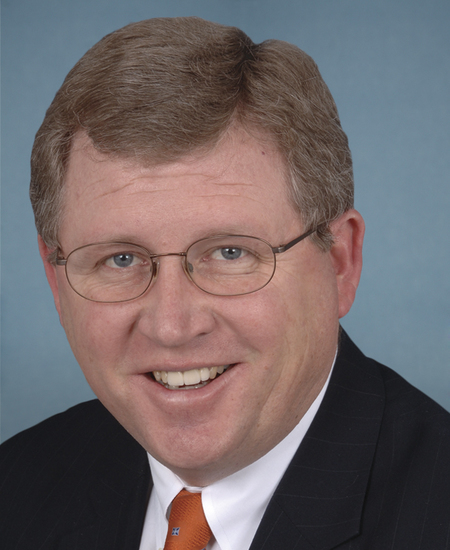
Rep. Frank D. Lucas
Sponsored bills
Maddy summaryHR 8255 requires the Securities and Exchange Commission (SEC) to provide a minimum 60-day public comment period for most proposed rules, or 30 days if the rule addresses imminent investor harm. This applies to all SEC rulemaking where a public comment period is already required under federal law. The bill specifies that federal holidays do not count toward the comment period, and the clock starts when the proposed rule is published in the Federal Register. The legislation directly affects the SEC and entities submitting proposed rules, ensuring a standardized minimum timeframe for public input.
Maddy summaryThe Weather Act Reauthorization Act of 2023 reauthorizes and updates the Weather Research and Forecasting Innovation Act of 2017, focusing on improving weather forecasting capabilities across multiple domains. It authorizes annual funding for research and development in tornado, hurricane, and atmospheric river forecasting, with specific provisions for enhancing data collection from commercial sources and improving public communication of weather warnings. The bill establishes programs to improve data assimilation practices, support agricultural and water management applications, and enhance the National Oceanic and Atmospheric Administration's computing resources for weather modeling. This legislation directly affects the National Oceanic and Atmospheric Administration, its partners in the weather enterprise, and the public who rely on weather forecasts and warnings for safety and planning.
Maddy summaryHR 1069, the Clean Energy Demonstration Transparency Act of 2023, requires the Department of Energy to provide detailed reports to specific congressional committees every six months about federally funded clean energy demonstration projects. The reports must include copies of initial contracts, a list of completed or missed milestones, and any major changes to project scope, schedule, or funding. This applies to projects administered under the Infrastructure Investments and Jobs Act and directly affects the Department of Energy and the project recipients receiving federal funding. The bill aims to increase transparency for congressional oversight without changing funding levels or project requirements.
Maddy summaryHR 8061, the Crime Victims Fund Stabilization Act of 2024, ensures stable funding for the Crime Victims Fund by directing certain False Claims Act collections into it from 2024 through 2029. Specifically, it adds a provision requiring that amounts collected under the False Claims Act (excluding whistleblower rewards and government reimbursement for damages) be deposited into the fund during this period. This directly affects crime victims who rely on the fund for services like counseling and emergency aid, as it prevents potential shortfalls in funding. The bill makes a concrete policy change by redirecting specific federal civil penalties into the fund, rather than altering the fund's existing purposes or eligibility rules.
Maddy summaryThis is a ceremonial resolution (HRES 1122) honoring General Thomas P. Stafford, a retired U.S. Air Force officer and NASA astronaut. It recognizes his career achievements, including commanding Apollo 10, piloting the first Gemini rendezvous in space, contributing to the development of stealth aircraft (like the F-117A and B-2 bomber), and leading the Apollo-Soyuz international space mission. The resolution has no legislative effect - it simply expresses the House's tribute to his service and legacy. It does not create new policies, affect any individuals or groups, or alter government programs.
Maddy summaryThis resolution (HRES 1086) is a symbolic gesture expressing the House's support for designating March 19, 2024, as "National Agriculture Day." It does not create new laws or policies, but instead formally recognizes agriculture as a vital industry in the U.S. economy. The resolution celebrates agriculture's broad economic impact without imposing any requirements or changes on farmers, consumers, or government programs. It is a commemorative statement, not a substantive legislative action.
This joint resolution nullifies the final rule issued by the Animal and Plant Health Inspection Service (APHIS) titled Importation of Fresh Beef From Paraguay and published on November 14, 2023. The final rule allows for the importation of fresh (chilled or frozen) beef from Paraguay into the United States under certain conditions. The United States prohibits or restricts the importation of certain animals and animal products to prevent the introduction of various animal diseases, including foot-and-mouth disease (FMD). In response to a request from Paraguay to allow the importation of fresh beef from Paraguay into the United States, APHIS conducted a risk analysis. APHIS concluded that fresh beef could be safely imported from Paraguay, provided that certain conditions are met. These conditions include that (1) FMD has not been diagnosed in the exporting region within the previous 12 months; (2) the meat originated from premises where FMD has not been present during the lifetime of any bovines slaughtered for U.S. meat export; and (3) APHIS may periodically conduct on-site evaluations and subsequent inspections of the slaughter facilities, records, and operations.
Maddy summaryThis bill restricts how credit reporting companies share homebuyers' credit reports during mortgage applications. It prevents companies from sending these reports to third parties (like marketers) just because a lender requested them for a mortgage. Only specific entities can receive the reports: the mortgage lender who originated the loan, the company servicing the loan, or the bank holding the homebuyer's account. This directly protects homebuyers' privacy by limiting unauthorized sharing of their financial data.
Maddy summaryThis bill maintains the existing minimum wage rate for H-2A agricultural workers in each state as it stood on December 31, 2023, through December 31, 2025. It directly affects farms that hire H-2A visa workers by requiring the Department of Labor to use these state-specific rates for wage calculations during this period. The bill also clarifies that wage determinations for these workers must consider their primary job duties, especially when workers perform multiple tasks. This provides stability for farms relying on seasonal agricultural labor without changing the current wage structure.