

Maddy summaryHJRES 29 is a procedural resolution seeking congressional disapproval of a U.S. Fish and Wildlife Service (FWS) rule that designated the northern lesser prairie-chicken population as "threatened" and the southern population as "endangered" under the Endangered Species Act. If passed, this resolution would prevent the FWS rule from taking effect, meaning the southern population would not be officially listed as endangered and the northern population would not be listed as threatened. The bill directly affects landowners, ranchers, and developers in states like Texas, Oklahoma, and New Mexico where the prairie-chicken habitat overlaps with agricultural or energy development. It uses the Congressional Review Act (Chapter 8 of Title 5, U.S. Code) to block implementation of the FWS rule without changing wildlife protection laws.
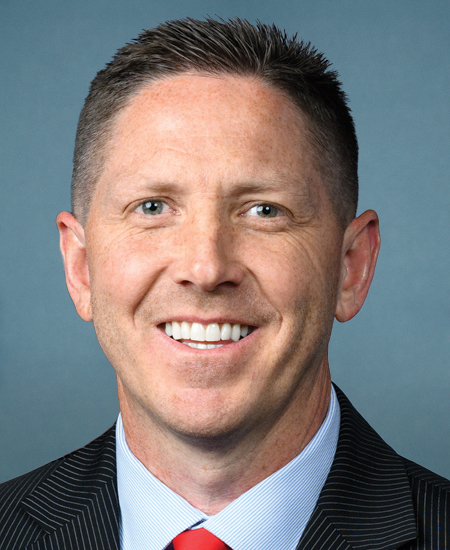
Rep. Josh Brecheen
Sponsored bills
This resolution declares that the life of each human person begins at fertilization and calls upon Congress to enact legislation to enforce the Fourteenth Amendment's guarantee of equal protection for unborn children nationwide.
Maddy summaryThis bill prohibits the use of Department of Defense funds for adult cabaret performances. It bans the Defense Department from hosting, advertising, or supporting such events, which are defined as performances featuring topless dancers, strippers, exotic dances, or male/female impersonators appealing to prurient interest. The restriction applies to all Defense Department funds and facilities, preventing their use for these specific types of entertainment.
Maddy summaryHR 3212, the "Shall Not Be Infringed Act of 2023," repeals or prevents funding for numerous gun control measures across federal agencies. The bill eliminates funding for Bureau of Alcohol, Tobacco, Firearms and Explosives (ATF) modernization efforts, blocks Department of Veterans Affairs programs related to firearm storage, and prohibits CDC and NIH from funding research on firearm injury prevention. It also repeals specific provisions from the Bipartisan Safer Communities Act related to background checks and domestic violence restrictions, and prevents the use of federal funds for red flag laws or gun registries. The bill directly affects federal agencies and programs that implement gun control measures, including ATF, VA, HHS, CDC, NIH, and the Department of Education.
Maddy summaryHR 3740, the Federal Employee Student Debt Transparency Act, requires certain high-level federal employees to publicly disclose their student loan debt. Specifically, it applies to Senior Executive Service (SES) employees and Schedule C appointees (political appointees in policy roles), mandating they report their full student loan balances (including federal loans under the Higher Education Act) within 60 days of taking the position and annually by February 28. The Office of Government Ethics must then submit an annual report to Congress by May 1, detailing the total debt owed by all covered employees and identifying those who failed to report. This bill focuses solely on transparency, not debt relief or policy changes.
Maddy summaryHR 3176, the Veterans Health Care Freedom Act, creates a 3-year pilot program allowing eligible veterans (enrolled in VA care) to choose any provider within the VA healthcare system or approved non-VA facilities, removing prior location restrictions for VA care. Veterans can select primary and specialty care providers freely, with VA coordinating care through a designated primary provider. After the pilot, these expanded choices become permanent policy, requiring the VA to offer full provider selection without geographic or administrative barriers. The bill implements these changes using existing VA funding without new appropriations.
Maddy summaryHR 3712, the Digital Dollar Pilot Prevention Act, prohibits the Federal Reserve from testing or implementing a digital dollar without new congressional approval. The bill amends the Federal Reserve Act to explicitly block the Fed and its banks from launching any pilot program for a central bank digital currency (a digital form of U.S. dollars issued directly by the Federal Reserve) or partnering with private entities for such testing. This directly affects the Federal Reserve System, preventing it from moving forward with any digital dollar initiatives until Congress passes a separate law authorizing them. The law aims to halt potential development of a Fed-issued digital currency until lawmakers address its implications through new legislation.
United Nations Voting Accountability Act of 2023 This bill prohibits giving assistance, such as various types of economic support or military training, to countries that shared U.S. positions on less than 50% of the recorded votes in the most recent United Nations session. A country may be exempted if there has been a fundamental change in the country's leadership and policies and the Department of State determines that the country will no longer oppose U.S. positions.
Biden Time Act of 2023 This bill rescinds certain unobligated funds that were provided to address COVID-19 and for activities of the Internal Revenue Service (IRS). Specifically, the bill rescinds unobligated funds that were provided by the American Rescue Plan Act of 2021; the Coronavirus Preparedness and Response Supplemental Appropriations Act, 2020; the Families First Coronavirus Response Act; the Coronavirus Aid, Relief, and Economic Security Act (CARES Act); the Paycheck Protection Program and Health Care Enhancement Act; and Divisions M and N of the Consolidated Appropriations Act, 2021. The bill also rescinds specified unobligated funds that were provided for activities of the IRS by the Inflation Reduction Act of 2022.
Maddy summaryThis bill requires all non-profit organizations receiving federal funds to certify they comply with anti-human trafficking, anti-smuggling, and fraud laws, and have no convictions under immigration law (8 U.S.C. 1324). Nonprofits must submit this certification within 60-120 days of the law's enactment; failure to certify or violation of the law results in repayment of funds and potential loss of tax-exempt status. The Department of Homeland Security must create compliance guides and publish violation data, while the GAO will report annually on non-compliance. The law applies to all nonprofits with federal contracts, grants, or agreements, aiming to prevent federal funds from supporting entities involved in trafficking or smuggling.