

Maddy summaryHR 7032, the Congressional Budget Office Data Sharing Act, amends the 1974 Congressional Budget Act to give the Congressional Budget Office (CBO) clearer authority to quickly obtain data from executive branch agencies. The bill removes barriers to CBO requests by allowing data sharing "with or without written agreement," while requiring the CBO to maintain required confidentiality levels. It also prevents future laws from limiting this authority unless specifically referenced. The law directly affects the CBO and federal agencies that provide budget-related data, aiming to improve the CBO's ability to analyze government spending.
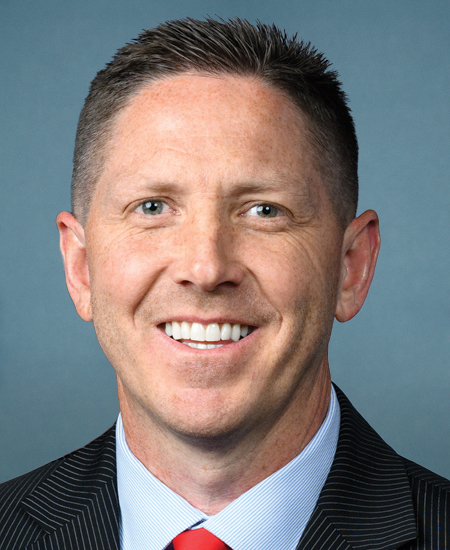
Rep. Josh Brecheen
Sponsored bills
Maddy summaryThis bill allows states to require certain Medicaid recipients to work or participate in job training to maintain coverage. Specifically, it permits states to impose work requirements on nondisabled, nonelderly, nonpregnant adults (excluding those with children under 6, pregnant women, or individuals under 19). States must implement these requirements 120 days after the bill's enactment, but must exempt pregnant individuals, parents of young children, and others meeting specific criteria. The policy changes Medicaid eligibility rules for this group, giving states an optional pathway to condition benefits on work activity.
Maddy summaryThis bill removes legal immunity for vaccine manufacturers by allowing individuals injured by vaccines to sue them directly in court after filing a claim with the federal vaccine injury compensation program (VICP). It eliminates time limits for filing VICP claims (previously 24-36 months) and explicitly excludes COVID-19 vaccines from the program's coverage. The changes affect people seeking compensation for vaccine injuries and vaccine manufacturers, who will no longer automatically avoid lawsuits. The bill also repeals provisions that previously restricted legal action after VICP claims.
Maddy summaryHR 9731, the Special Interest Alien Reporting Act of 2024, requires the Department of Homeland Security (DHS) to publish monthly reports on individuals classified as "special interest aliens" attempting unlawful entry into the U.S. These reports, due by the seventh day of each month, must detail the total number and nationalities of such individuals, broken down by geographic region and location of encounter (e.g., ports of entry, border areas, or interior). The reports must also identify if encounters involve individuals from "covered nations" (as defined in existing law). This bill mandates transparency for Congress and the public but does not change immigration law or enforcement practices.
Maddy summaryHR 9714, the CBO Oversight Act, requires the Congressional Budget Office (CBO) to provide testimony at two annual hearings before the House and Senate Budget Committees upon request by their chairs. This bill directly affects the CBO and the Budget Committees by mandating regular testimony sessions each year. The key provision adds a new section to the 1974 Budget Act, requiring the CBO Director to testify at these hearings, which can address any topic the committees choose, including reviewing the accuracy of the CBO's previous year's budget baseline projections. The bill does not change the CBO's analytical work but establishes a formalized process for congressional oversight of its budget estimates.
Maddy summaryHRES 1348 is a non-binding resolution urging Nigeria to immediately release Tigran Gambaryan, a U.S. citizen and former IRS agent detained since February 2024. The resolution cites his unlawful detention after legal deadlines expired, deteriorating health (including malaria), and poor conditions at Kuje Prison, where he was transferred despite a court order for hospital care. It calls for Nigeria to grant him medical access, consular support, and due process, while urging the U.S. government to use all resources to secure his release. The resolution highlights concerns that his detention appears linked to pressure on his employer, Binance, rather than legitimate legal grounds.
Maddy summaryHR 9777 requires the Congressional Budget Office (CBO) to include per-citizen cost estimates in its budget analyses for all bills and resolutions. Specifically, the CBO must calculate and display the pro rata share of total federal spending and debt changes that would affect each U.S. citizen if the bill is enacted. This change applies to every bill requiring a CBO cost estimate, directly affecting lawmakers who rely on these analyses during the legislative process. The bill aims to provide clearer, more transparent data on the nationwide financial impact of proposed legislation.
Maddy summaryHR 9757, the "No More Taxpayer Cash for the Taliban Act," bans U.S. federal funds from being used for direct cash assistance to individuals in Afghanistan or for providing U.S. currency to the United Nations to support such aid. The bill specifically prohibits federal agencies from funding direct cash payments to Afghans and stops the Federal Reserve from selling U.S. currency to the UN for this purpose. It aims to prevent billions of taxpayer dollars (as reported by SIGAR) from indirectly funding the Taliban through mechanisms like aid taxation and currency exchange fees at the Taliban-controlled central bank. The law applies directly to federal departments, the UN, and non-governmental organizations receiving U.S. funds for aid in Afghanistan.
Maddy summaryHJRES 144 is a congressional disapproval resolution targeting a specific rule issued by the Bureau of Alcohol, Tobacco, Firearms, and Explosives (ATF) on April 19, 2024. The resolution seeks to block the ATF's rule that redefined the term "engaged in the business" for firearm dealers, which would have affected how federal licensing requirements apply to certain sellers. If enacted, this resolution would nullify the rule, preventing it from taking effect under procedures in Title 5 of the U.S. Code. The bill directly impacts firearm dealers operating under the current regulatory framework and the ATF's enforcement authority.
Maddy summaryThis bill requires federal agencies to better assess how regulations impact small businesses by expanding the types of regulations that must be analyzed, requiring consideration of both negative and positive economic effects, and adding detailed analysis requirements. It expands the definition of "small entity" to include tribal organizations, adds requirements for analyzing land management plans and certain tax-related rules, and gives the Small Business Administration's Chief Counsel additional authority to review agency rules. The bill also includes a provision to waive fines for small businesses' first-time paperwork violations, aiming to make the regulatory process more responsive to small business needs.