

Maddy summaryHR 8785, the Tax Free Tips Act of 2024, reclassifies tips as gifts rather than taxable income for workers in service industries like restaurants and hospitality. It removes tips from income tax calculations, Social Security taxes, unemployment taxes, and wage withholding requirements. The bill repeals existing rules requiring employers to report tips (Section 6053) and eliminates related tax credits (Section 45B). Tips will no longer be counted as income for tax purposes, effective for tips received after the bill's enactment date. This directly affects tipped employees by eliminating tax obligations on their gratuities.
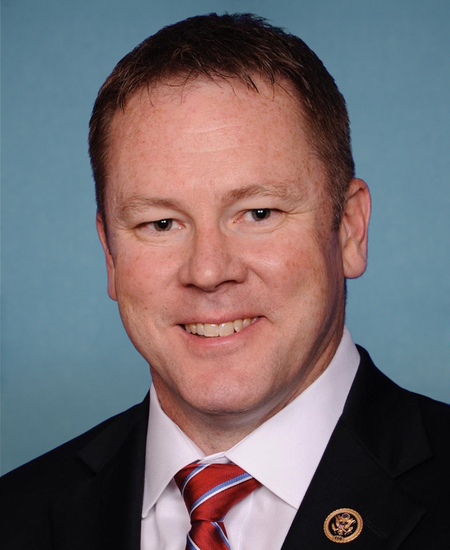
Rep. Warren Davidson
Sponsored bills
Maddy summaryThis bill rescinds unspent funds from specific federal programs. It targets leftover money from pandemic relief (like the CARES Act and American Rescue Plan) and certain infrastructure initiatives (including education stabilization funds and transportation programs like the Congestion Mitigation Program). The rescission is limited to amounts already allocated for Israel, Ukraine, and Indo-Pacific security supplements under recent appropriations. Unspent funds must be returned to the Treasury, with no new spending created.
Maddy summaryHR 4205, the "Drain the Intelligence Community Swamp Act of 2023," requires the immediate revocation of security clearances for 51 specific individuals who signed a 2020 public statement about Hunter Biden's laptop. The bill mandates that the Secretary of Defense and Attorney General investigate these individuals' roles in the Hunter Biden laptop matter and their connection to the Biden campaign. It directly affects only the named former intelligence officials, including former directors Jim Clapper and John Brennan, by stripping their security clearances within 24 hours of the bill's enactment. The bill is procedural, focusing solely on revoking clearances for these named individuals based on their past statement, not on broader intelligence community reforms.
Maddy summaryHR 8653 authorizes the posthumous award of a Congressional Gold Medal to Major Thomas D. Howie, a U.S. Army officer who died during the Battle of Normandy in WWII. The bill specifies the medal will be presented to his nephew, Tom Howie, or his next of kin, and then permanently displayed at The Citadel Museum. It also permits the U.S. Mint to produce and sell bronze duplicates to cover costs. This is a commemorative measure honoring Major Howie's military service and sacrifice, with no substantive policy changes.
Maddy summaryThis bill creates a presumption that certain health conditions (myocarditis, pericarditis, thrombosis with thrombocytopenia syndrome, Guillain-Barré Syndrome, and other diseases later determined by the VA) are connected to military service for veterans who received a COVID-19 vaccine under mandatory orders between August 24, 2021, and January 10, 2023. It directly affects veterans who developed these conditions after being required to get the vaccine during that period, streamlining their path to VA disability compensation by removing the need to prove a direct link to service. The bill requires the VA to report monthly on claim statuses and outcomes for four years, including approval rates and pending cases. This changes how the VA processes claims for these specific conditions, treating them as service-connected by default for affected veterans.
Maddy summaryHR 5403, the CBDC Anti-Surveillance State Act, prohibits the Federal Reserve from issuing or facilitating central bank digital currency (CBDC) directly or indirectly to individuals through financial institutions. It specifically bans Federal Reserve banks from offering digital products to individuals, maintaining individual accounts, or using CBDC for monetary policy implementation. The bill also clarifies that its restrictions do not apply to existing physical cash or private, permissionless digital payment systems. This bill directly affects the Federal Reserve's ability to develop or deploy a government-run digital dollar. The law aims to prevent the Federal Reserve from creating a digital currency that could enable transaction tracking or government oversight of personal financial activity.
Maddy summaryHJRES 146 is a congressional disapproval resolution targeting a Centers for Medicare & Medicaid Services (CMS) rule published on May 8, 2024, that would have clarified eligibility for health insurance subsidies under the Affordable Care Act for Deferred Action for Childhood Arrivals (DACA) recipients and certain other noncitizens. The rule aimed to allow these individuals to access premium tax credits, cost-sharing reductions, and basic health programs through health insurance marketplaces. If enacted, this resolution would block the CMS rule from taking effect, maintaining current restrictions that prevent DACA recipients from qualifying for these subsidies.
Maddy summaryHR 8519 prohibits federal departments and agencies from using government funds for three specific research programs: disinformation research grants, Secure and Trustworthy Cyberspace grants, and the National Science Foundation's Track F program focused on "Trust and Authenticity in Communications Systems." The bill directly affects federal agencies that administer research grants, preventing them from obligating or spending funds on these designated initiatives. It does not alter existing laws or regulations but restricts future funding allocations for these particular research areas. This is a procedural funding restriction, not a policy change affecting the public.
Interstate Milk Freedom Act of 2024 This bill prohibits federal regulation of the interstate traffic of unpasteurized milk or milk products packaged for direct human consumption under specified circumstances. Specifically, the prohibition applies if such products (1) would be considered in violation of federal law solely because they are unpasteurized; (2) are allowed by the state of origin to be distributed for direct human consumption by any means; (3) are produced, packaged, and moved in compliance with the laws of such state; and (4) are moved from the state of origin with the intent to transport them to another state that allows the distribution of such products for direct human consumption.
Maddy summaryThis bill exempts vessels transporting liquefied natural gas (LNG) from U.S. coastwise trade laws that typically require domestic shipping to be handled by U.S.-owned vessels. It directly affects LNG shipping companies seeking to operate domestically, allowing them to obtain required certificates for LNG transport without meeting standard U.S.-ownership rules. The key provision adds an exception to coastwise laws but explicitly excludes vessels owned by Russia/China, flagged by Russia/China, or crewed by Russian/Chinese nationals. This change enables U.S. LNG companies to use foreign-built vessels for domestic transport while blocking Russian and Chinese involvement in the sector.