

Maddy summaryThe HOUSE Act of 2024 withdraws a federal rule requiring new housing projects financed by HUD and USDA to meet specific energy efficiency standards. It prohibits federal agencies from using funds to implement or enforce this rule or similar rules, mandating a return to the previous energy efficiency standards for these housing programs. The bill also extends these restrictions to the Department of Veterans Affairs and the Federal Housing Finance Agency. Additionally, it amends a law to allow states with energy efficiency standards meeting or exceeding the previous federal requirements (if at least 26 states have adopted such standards) to be used instead of federal rules.
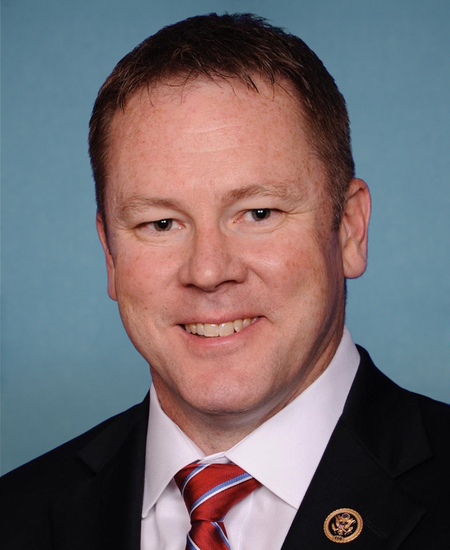
Rep. Warren Davidson
Sponsored bills
Maddy summaryHRES 1391 is a formal House resolution congratulating the American Motorcyclist Association (AMA) on its 100th anniversary. It recognizes the AMA's role since 1924 in promoting motorcycling, representing riders, sanctioning events, and preserving motorcycle heritage through its Hall of Fame in Ohio. This resolution has no legislative effect - it is a symbolic gesture of appreciation with no policy changes or direct impact on individuals or regulations.
Maddy summaryHRES 1377 is a procedural resolution requiring the Secretary of Homeland Security to provide the House of Representatives with all relevant documents, records, and communications about the July 13, 2024, attempted assassination of Donald J. Trump within 7 days of the resolution's adoption. It specifically mandates the transfer of Secret Service protection records, DHS-SS communications, and audio/video recordings related to Trump's Butler, Pennsylvania, campaign rally on that date. The resolution does not change policy but demands transparency by directing the executive branch to disclose existing materials. It directly affects the Department of Homeland Security and its Secretary, who must comply with the 7-day deadline.
Maddy summaryHR 2969 establishes a 4-year working group with Treasury, law enforcement agencies (like FBI and DHS), and industry representatives (fintech, blockchain, and financial institutions) to study how terrorists and criminals use digital financial technologies like cryptocurrencies. The group must research illicit financial activities, develop regulatory proposals to improve anti-money laundering efforts, and submit annual reports to Congress, including a final report before termination. It also requires a presidential report within 180 days detailing digital asset risks and a congressional briefing after two years. The bill defines key terms such as "digital asset" and "blockchain intelligence company" to guide this work.
Maddy summaryHJRES 164 is a congressional resolution seeking to block a rule issued by the Department of Commerce regarding firearms license requirements. It directly targets the rule published in the Federal Register (89 Fed. Reg. 34680), which would have revised licensing procedures for firearms dealers. If passed, the resolution would prevent this rule from taking effect by invoking the congressional disapproval process under federal law. The bill does not create new regulations but aims to halt an existing rule affecting gun license applicants and dealers.
Maddy summaryHR 4848, the Censorship Accountability Act, allows individuals to sue federal employees who, while acting in their official capacity, deny others their First Amendment rights (such as free speech or assembly). It directly affects federal employees (excluding the President/Vice President) who may restrict protected expression under federal law. Key provisions create a private right of action for victims to seek legal redress in court, with courts able to award attorney fees to the winning party. The bill explicitly excludes lawsuits against the federal government for employment-related conduct and clarifies that unconstitutional sections won’t invalidate the rest of the law.
Maddy summaryHRES 1343 is a resolution introduced by Rep. Davidson (July 9, 2024) that expresses the House's position opposing U.S. security commitments to Ukraine. It specifically targets the June 13, 2024, Bilateral Security Agreement between the U.S. and Ukraine, arguing the agreement bypasses constitutional requirements by not seeking Senate ratification. The resolution states the U.S. should not enter into any security guarantees or long-term assistance agreements with Ukraine without congressional approval, and declares the existing agreement has no legal force until submitted to the Senate. It does not create new law but formally opposes the administration’s approach to Ukraine security support.
Maddy summaryHJRES 171 is a joint resolution seeking congressional disapproval of a proposed rule by the Department of Health and Human Services (HHS) regarding the Unaccompanied Children Program. The rule, published in the Federal Register on April 30, 2024, aimed to update regulations governing the placement, care, and services for unaccompanied alien children (children entering the U.S. without a parent or guardian). This resolution would block the rule from taking effect, preserving existing regulations under the current program framework. It uses a standard congressional disapproval process under Title 5 of the U.S. Code to halt the rule without altering the program’s underlying policy.
Maddy summaryHJRES 170 is a resolution seeking congressional disapproval of a federal rule that would have required new housing projects financed by the Department of Housing and Urban Development (HUD) or the Department of Agriculture (USDA) to meet specific energy efficiency standards. The rule, published in April 2024, aimed to set these standards for new construction in federally subsidized housing. If passed, this resolution would block the rule under the Congressional Review Act, making it legally void. It directly affects developers and builders of HUD- and USDA-financed housing by removing the requirement to comply with these energy standards.
Maddy summaryHRES 1305 is a procedural resolution that formally rescinds subpoenas issued by the January 6th Select Committee to four individuals (Stephen Bannon, Mark Meadows, Daniel Scavino Jr., and Peter Navarro) and withdraws the committee’s recommendations finding them in contempt of Congress. The bill specifically cancels subpoenas from September 2021, October 2021, and February 2022, along with related contempt resolutions adopted in 2021-2022. It does not alter legal proceedings but withdraws the committee’s authority to enforce these actions. The resolution is supported by House members who argue the committee was partisan and illegitimate, though the bill itself only addresses the committee’s procedural actions.