

Maddy summaryHR 7109, the Equal Representation Act, requires the U.S. Census Bureau to add a citizenship status checkbox to the 2030 and future decennial censuses, asking respondents to identify if they are U.S. citizens, U.S. nationals, lawful residents, or unlawful residents. It then mandates excluding noncitizens (both lawful and unlawful residents) from the population count used to determine each state's number of congressional seats and electoral votes starting with the 2030 census. This bill directly affects how states are apportioned representation in Congress and presidential electoral votes, based solely on the citizen population. The key change is shifting the apportionment base from total population to citizen population alone, using the new census data.
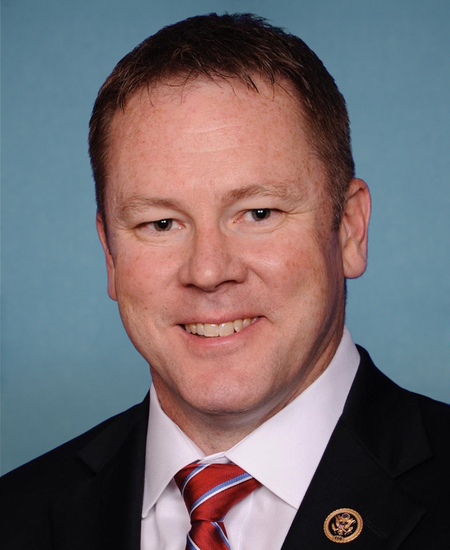
Rep. Warren Davidson
Sponsored bills
Maddy summaryHJRES 98 is a congressional resolution seeking to block a National Labor Relations Board (NLRB) rule that defined how businesses are considered "joint employers" for labor law purposes. The bill targets the NLRB's October 2023 rule (88 Fed. Reg. 73946), which would have changed how companies like franchisors or staffing agencies are held responsible for workers' rights. If passed, this resolution would cancel the rule, directly affecting businesses managing multiple employer relationships and labor organizations enforcing workplace standards. The measure uses a standard process under federal law to disapprove an agency rule, not creating new policy but reversing an existing regulation.
Payment Choice Act of 202 3 This bill requires retail businesses to accept cash as a form of payment for on-site sales of $500 or less, and it prohibits them from charging cash-paying customers a higher price compared to customers not paying with cash. Businesses covered by this bill are those engaged in the business of selling or offering goods or services at retail to the public that accept in-person payments at a physical location. The bill provides for enforcement through preventative relief, damages, and civil penalties.
Maddy summaryThis bill updates legal definitions in customs law to replace the outdated "four leagues" standard with current international law boundaries. It clarifies that U.S. customs enforcement applies to waters within the U.S. territorial sea (up to 12 nautical miles, as defined in Presidential Proclamation 5928) and contiguous zone (up to 24 nautical miles, as defined in Proclamation 7219). The change directly affects U.S. Customs and Border Protection's maritime enforcement operations but does not alter the actual geographic scope of enforcement areas. The bill amends the Tariff Act of 1930 and the Anti-Smuggling Act to align their language with existing international law standards.
Maddy summaryHR 8147 repeals the Corporate Transparency Act, which required certain businesses (typically those with more than 20 employees) to report beneficial ownership details to the Treasury Department. This bill eliminates the requirement for companies to disclose who ultimately owns or controls them, directly affecting business owners and financial institutions that previously submitted this information. The bill also makes minor technical changes to Title 31 of the U.S. Code to remove references to the repealed provisions. The repeal would end the existing financial transparency reporting obligation for covered entities.
Maddy summaryThis bill would reform the U.S. patent system by reverting to a "first-to-invent" system (replacing the current "first-to-file" system), abolishing inter partes and post-grant review proceedings, and ending automatic publication of patent applications after 18 months. It would restore patents as private property rights with a presumption of validity, strengthen remedies for patent infringement including a presumption of irreparable harm for injunctions, and eliminate fee diversion to fully fund the U.S. Patent and Trademark Office. The bill aims to protect inventors' rights and encourage innovation by making the patent system more favorable to patent holders. It would also reverse several Supreme Court decisions that have limited patentability for software and scientific discoveries.
Maddy summaryHR 8053, the "No Propaganda Act," would terminate all federal funding for the Corporation for Public Broadcasting (CPB), which supports PBS and NPR. The bill prohibits the CPB from receiving any federal funds after the law's enactment and rescinds unobligated balances from recent appropriations bills. It amends the Communications Act to bar the CPB from accepting federal money, effectively ending its federal budget. This directly affects the CPB's operations, requiring it to seek alternative funding sources.
Maddy summaryThis bill prohibits law enforcement and intelligence agencies from purchasing or obtaining certain personal records from data brokers or other third parties. It defines "covered records" as information about people in the US (including location data, communication contents, and online activity), requiring government agencies to follow FISA procedures to obtain such information. The bill also prohibits using illegally obtained records as evidence in court and limits how agencies can share such information. It directly affects data brokers who sell personal information and government agencies that seek to obtain personal data, strengthening privacy protections for US persons by requiring specific legal procedures.
Maddy summaryHR 6046, the Standing Against Houthi Aggression Act, requires the Secretary of State to designate Ansarallah (the Houthis) as a Foreign Terrorist Organization within 90 days of enactment and mandates the President to impose sanctions under existing authorities (Executive Orders 13224 and 13780) against Ansarallah and its members, agents, or affiliates. The bill directly affects Ansarallah and any foreign entities linked to it by triggering U.S. sanctions. Key provisions set strict 90-day deadlines for both the designation and sanctions implementation. The law focuses on reversing a prior designation revocation and enforcing existing legal mechanisms against the group.
Maddy summaryHR 5947 terminates specific U.S. waivers and licenses related to Iran, ending a 2023 waiver that allowed funds transfer from South Korea to Qatar. It prohibits the Treasury Department from reissuing similar waivers or licenses for the same purpose and blocks the President from granting Iran access to certain designated financial accounts established under prior laws. The bill directly affects U.S. foreign policy implementation by restricting how Treasury handles Iran-related financial transactions. It enacts concrete policy changes by ending existing authorizations and preventing future approvals for Iran to access specific accounts.