

Maddy summary# Summary of Proposed Higher Education Act Amendments This document outlines significant proposed amendments to the Higher Education Act of 1965, primarily as part of the "College Cost Reduction Act." The key elements include: ## Accreditation Reform - Major overhaul of accreditation standards, requiring accrediting agencies to demonstrate independence from trade associations - New requirements for accrediting agencies to assess student achievement outcomes, including median value-added earnings relative to median total price charged - Introduction of an "Alternative Quality Assurance Experimental Site Initiative" to test non-accredited institutions - Protections for religious institutions, including a new process for appealing accreditation decisions related to religious mission - Removal of "litmus tests" that would require institutions to support specific political viewpoints ## Student Success Initiatives - Establishment of "Postsecondary Student Success Grants" to increase participation, retention, and completion rates for high-need students - Focus on evidence-based practices, with tiered requirements (tier 1, 2, and 3 reforms) - Mandatory inclusion of high-need student populations (low-income, first-generation, military-connected, etc.) - Requirements for institutions to report on completion rates, retention rates, and student demographics ## Regulatory Changes - Repeal of numerous existing regulations including: * Closed school discharges * Borrower defense to repayment * Pre-dispute arbitration * False certification requirements * Ability-to-benefit rules * Financial responsibility regulations - New restrictions on incentive compensation for recruiters - Changes to third-party servicer definitions and regulations ## Transfer and Credit Policies - New requirement that institutions cannot deny transfer credit based solely on the source of accreditation - Requirements for transparent transfer policies - Changes to reverse transfer policies ## Other Key Provisions - Modifications to the National Advisory Committee on Institutional Quality and Integrity (NACIQI) - New definitions for "total price" and "value-added earnings" - Changes to the process for institutions to change accrediting agencies - New requirements for institutions to report on student outcomes The overall focus of these proposed amendments is to reduce regulatory burden on institutions, promote transparency, improve student outcomes (particularly for high-need students), modernize accreditation processes, and protect religious institutions' rights in accreditation decisions.
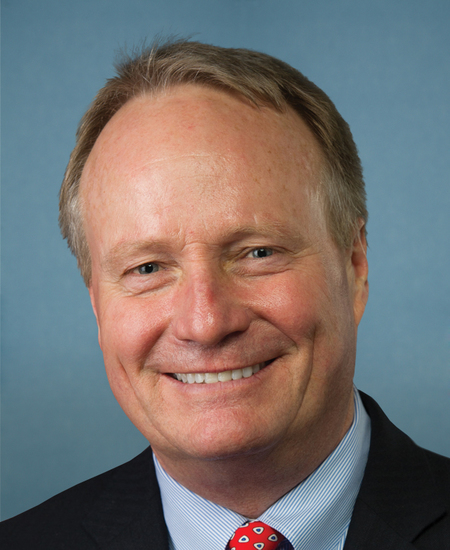
Rep. David P. Joyce
Sponsored bills
Maddy summaryHRES 1566 is a symbolic House resolution honoring all U.S. veterans on Veterans Day 2024. It recognizes the service and sacrifice of the estimated 15.8 million veterans living in the U.S. as of 2023, including those who served in conflicts from World War II to post-9/11. The resolution calls on the American public to observe Veterans Day to acknowledge veterans' role in preserving national freedom. As a non-binding resolution, it has no direct policy impact but formally expresses congressional recognition of veterans' contributions.
Maddy summaryHR 10099 would establish the first national domestic violence prevention action plan for the United States, creating a federal steering committee of agency officials to coordinate prevention efforts across government levels. The plan must include specific goals for primary, secondary, and tertiary prevention strategies, a $25 million public awareness media campaign, and requirements for data collection and evaluation. It would directly affect federal agencies, state domestic violence coalitions, and community organizations working on prevention, addressing the current lack of a coordinated national plan which the U.S. lacks compared to other countries like Canada and the UK. The bill requires the plan to address disproportionate impacts on marginalized communities and be based on evidence-based prevention strategies.
Maddy summaryThe COAST Act amends a 1946 flood control law to increase annual funding for emergency shoreline protection from $25 million to $45.5 million. It expands the types of infrastructure protected to include public recreational assets, public lands, and parks, while maintaining coverage for highways, bridges, historical lighthouses, schools, hospitals, and nonprofit services. The bill directly affects communities vulnerable to coastal erosion by enabling faster repairs to critical infrastructure during emergencies. Key changes are limited to the funding amount and the updated list of protected assets under the existing emergency protection program.
Maddy summaryThe Parity for Tribal Law Enforcement Act would allow tribal law enforcement officers working under federal contracts or compacts (via the Indian Self-Determination Act) to enforce federal law on tribal lands, provided they complete equivalent training, pass background checks, and receive Bureau of Indian Affairs certification. It designates these officers as federal law enforcement officers for legal protections under specific federal laws, such as the Federal Tort Claims Act. The bill requires the Secretary of the Interior to establish a credentialing process within 24 months and directs the Attorney General to coordinate federal public safety efforts in Indian communities through improved data collection and training. This policy change directly affects tribal officers and communities by expanding their enforcement authority and legal recognition.
Maddy summaryHRES 1540 is a ceremonial resolution thanking perinatal nurses and promoting National Perinatal Nurses Week (October 10-17, 2024). It directly recognizes the work of approximately 350,000 perinatal nurses - covering labor/delivery, mother-baby, and neonatal care - who support patients through pregnancy, childbirth, and postpartum. The resolution encourages patients, hospitals, and policymakers to participate in the week to raise awareness of nurses’ critical role in improving maternal health outcomes, especially amid high maternal mortality rates. As a symbolic gesture, it does not create new laws or funding but aims to highlight nurses’ contributions to reducing disparities in maternal care.
Maddy summaryHRES 1537 is a non-binding House resolution condemning Hamas' October 7, 2023, attacks on Israel, which killed over 1,200 people and took 251 hostages, including 7 Americans still held captive. It calls on Hamas to immediately surrender, cease attacks, and release all hostages unconditionally, while reaffirming Israel's right to self-defense. The resolution also urges international organizations to condemn Hamas' actions and address the global surge in antisemitism following the attacks. As a symbolic statement, it does not create new laws or alter policy but expresses congressional position. The bill specifically references the ongoing captivity of seven U.S. citizens: Edan Alexander, Itay Chen, Sagui Dekel-Chen, Gadi Haggai, Judith Weinstein Haggai, Omer Neutra, and Keith Siegel.
Maddy summaryHR 9950, the "Miracle on Ice Congressional Gold Medal Act," authorizes three gold medals to be awarded to the members of the 1980 U.S. Olympic men's ice hockey team for their historic victory over the Soviet Union during the Winter Olympics. The medals, designed by the Treasury Secretary, will be presented by Congress to honor the team's achievement, which revitalized American morale during the Cold War. One medal will be displayed at the Lake Placid Olympic Center, one at the USA Hockey Hall of Fame in Eveleth, Minnesota, and one at the U.S. Olympic Museum in Colorado Springs. The bill also permits the sale of bronze duplicates to cover production costs. This is a ceremonial honor, not a policy change, directly recognizing the team members and their legacy.
Maddy summaryHRES 1518 designates November 12 as Creutzfeldt-Jakob Disease (CJD) Awareness Day. The resolution supports raising public awareness about CJD, a rare, fatal brain disorder affecting approximately 1-2 people per million annually in the U.S., which causes rapid neurological decline and death within months to a year. It highlights the disease's impact on patients and families and emphasizes the need for ongoing research into prion diseases like CJD, which share similarities with Alzheimer's and related dementias. As a symbolic resolution (not a law), it does not create new programs or funding but aims to increase recognition of this rare condition.
Maddy summaryHRES 1489 is a symbolic House resolution designating the week of September 23-27, 2024, as "National Clean Energy Week." It expresses congressional support for recognizing clean energy's role in economic growth (citing 8.35 million jobs in the sector) and encourages voluntary actions like public awareness, investment in clean energy technologies, and supporting local clean energy jobs. The resolution does not create new laws, funding, or obligations - it only formally endorses the week-long observance to highlight clean energy’s economic and environmental benefits. It directly affects no specific group but aims to raise national awareness of the clean energy sector.