

Maddy summaryThe SAFE Banking Act of 2023 would protect banks and financial institutions that provide services to state-legal marijuana businesses and hemp-related businesses by preventing federal regulators from taking adverse actions against them solely for serving these businesses. It clarifies that income from state-legal marijuana businesses can be considered for mortgage applications, and requires regulators to update guidance on suspicious activity reports related to these businesses. The bill does not require financial institutions to serve these businesses, but ensures they won't face penalties for doing so. It extends similar protections to hemp-related businesses, which have faced banking challenges despite being federally legal under the 2018 Farm Bill.
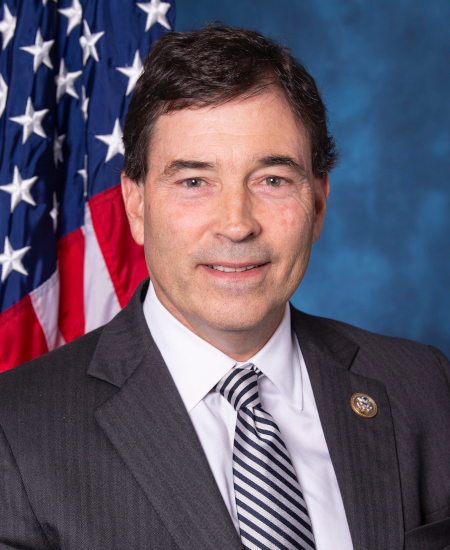
Rep. Troy Balderson
Sponsored bills
This bill allows the child tax credit to be used for stillbirths. A stillbirth is delivery after the involuntary death of an unborn child who was carried in the womb for 20 weeks or more.
Maddy summaryHR 3056, the Research Advancing to Market Production for Innovators Act, aims to improve the commercialization of technologies developed by small businesses through the SBIR and STTR programs. The bill requires federal agencies to consider commercialization potential in peer reviews, designate Technology Commercialization Officials to assist small business awardees, and establish annual commercialization impact assessments measuring outcomes like product sales, outside investment, and patent activity. It also creates a prioritized patent examination program to help small businesses protect intellectual property more efficiently without additional fees. These changes apply to all federal agencies administering SBIR and STTR programs and directly affect small businesses receiving these awards.
Maddy summaryThis bill directs the Federal Communications Commission (FCC) to review its satellite communication rules to identify potential changes that could better support precision agriculture. It specifically requires the FCC, with input from a designated agricultural technology task force, to examine rules for fixed, mobile, and earth exploration satellite services. The FCC must then submit a report within 15 months to Congress with recommendations for implementing any rule changes. This bill does not enact new rules itself but initiates a review process to improve satellite connectivity for farmers using precision agriculture technology.
This resolution expresses U.S. support for Israel and its efforts to defend its right to existence. The resolution also declares that the United States and international community must prevent Iran from acquiring or building nuclear weapons.
Maddy summaryThis bill protects living organ donors from insurance discrimination by prohibiting life, disability, and long-term care insurers from denying coverage, raising premiums, or altering policy terms solely because someone donated an organ while alive. It also updates the Family and Medical Leave Act to include recovery from organ donation surgery as a qualifying health condition, allowing donors to take protected leave for this purpose. Additionally, the bill requires the Health and Human Services Secretary to update public educational materials about living donation benefits, risks, and insurance protections within six months of enactment. These changes directly affect living organ donors, insurers, employers, and healthcare systems by ensuring fair access to insurance and workplace leave.
Maddy summaryHR 2875, the Grid Reliability and Resiliency Improvements Act, requires the Electric Reliability Organization to submit biennial reports to Congress analyzing grid reliability risks. The reports must identify policies affecting power plant retirements, assess the impact of ESG commitments, project facility retirements and electricity demand through 2030, and evaluate if renewable energy growth meets future needs. The bill does not create new regulations but mandates data collection to inform congressional decisions about grid reliability and electricity generation planning. It directly affects the Electric Reliability Organization and federal grid oversight bodies through its reporting requirements.
Maddy summaryThe College Transparency Act requires the National Center for Education Statistics to develop a secure, privacy-protected system that collects and organizes student-level data from colleges and universities. The system will track enrollment patterns, progression, completion rates, costs, financial aid, and post-graduation outcomes, with data disaggregated by characteristics like race, gender, program of study, and credential level. Colleges participating in federal financial aid programs must submit this data, while the system will provide the public with customizable summary information to help students and families make informed college decisions. The bill includes strict privacy protections, prohibiting collection of sensitive data like health information or exact addresses, and requires data minimization to only what's necessary for the system's purposes.
Maddy summaryHR 2928, the Responsible Borrower Protection Act of 2023, blocks the Federal Housing Finance Agency (FHFA) and mortgage enterprises (Fannie Mae and Freddie Mac) from implementing specific changes to mortgage credit fees announced in January 2023. The bill directly affects mortgage borrowers and lenders by reversing a pricing framework update that would have altered fees for single-family mortgages. It prohibits the FHFA from enforcing the January 2023 pricing changes detailed in FHFA's announcement and related lender letters. The bill clarifies that enterprises may still use risk-based pricing for mortgage fees, but the specific fee adjustments from the 2023 framework are canceled. This is a direct policy change to mortgage fee structures, not a broader reform.
Maddy summaryHR 734, the Protection of Women and Girls in Sports Act of 2023, amends Title IX to prohibit federally funded schools and athletic programs from allowing individuals assigned male at birth to participate in women's or girls' sports teams. The bill defines "sex" for this purpose as "reproductive biology and genetics at birth," making it a violation of federal law to permit such participation in designated women's or girls' programs. It allows males to train with women's teams only if no female is deprived of a roster spot, competition opportunity, scholarship, or other benefit tied to the team. This law directly affects public and private schools receiving federal financial assistance that operate athletic programs.