

American Innovation and R&D Competitiveness Act of 2023 This bill eliminates the five-year amortization requirement for research and experimental expenditures, thus allowing continued expensing of such expenditures in the taxable years in which they are incurred.
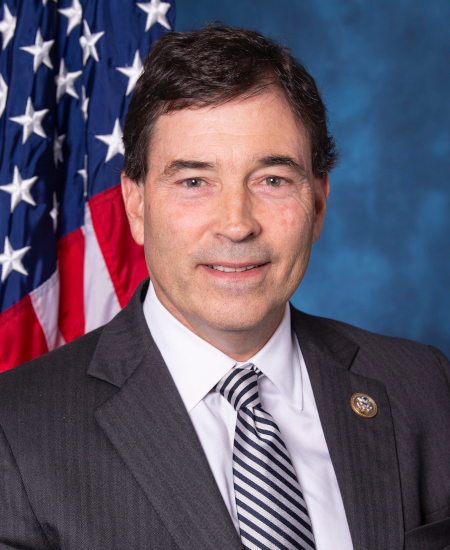
Rep. Troy Balderson
Sponsored bills
Maddy summaryHJRES 27 is a congressional resolution seeking to block a federal rule that redefined which waterways fall under the Clean Water Act's protections. It targets a rule submitted by the Army Corps of Engineers, Department of Defense, and Environmental Protection Agency (EPA) on January 18, 2023, which aimed to revise the "Waters of the United States" definition. The resolution would formally disapprove this rule under a specific federal procedure (Chapter 8 of Title 5), preventing it from taking effect. This would directly affect how federal agencies regulate pollution and development near water bodies, including wetlands and smaller streams.
Maddy summaryHR 2584, the SAVE Act, creates a new federal criminal offense for assaulting or intimidating hospital employees while they're performing their duties, punishable by up to 10 years in prison, with enhanced penalties for using weapons, causing injury, or during public emergencies. The bill authorizes $25 million annually in federal grants to hospitals for violence prevention programs, including staff training, security technologies like panic buttons and video surveillance, and coordination with law enforcement. It defines "hospital" broadly to include various medical facilities such as long-term care hospitals, rehabilitation facilities, and critical access hospitals. The legislation directly affects hospital workers and medical facilities by establishing federal criminal penalties for violence against employees and providing funding to improve workplace safety. The law aims to address the rising problem of workplace violence against healthcare workers, which the bill states has increased since 2011.
Maddy summaryHR 2630, the Safe Step Act, requires group health plans and health insurance issuers to establish a clear, transparent process for patients or their doctors to request exceptions to medication step therapy protocols. These protocols typically force patients to try cheaper drugs first before covering more expensive alternatives. The bill mandates that plans must approve exceptions when prior treatments failed, delay would cause serious harm, a treatment is unsafe, or a patient is stable on a previously approved drug, with strict 72-hour (or 24-hour in emergencies) decision timelines. It also requires plans to publish the exception process online and limit documentation requests to only necessary medical information. This law directly affects health insurers, employers offering health plans, and patients using step therapy for prescription drugs.
Maddy summaryHR 1839, the Combating Illicit Xylazine Act, makes the illicit use and distribution of xylazine a federal crime by adding it to the Controlled Substances Act. The bill broadly defines xylazine to cover numerous chemical variants and prohibits human use or non-licit distribution, while preserving legitimate veterinary and pharmaceutical uses. It requires tracking xylazine in drug supply chains and mandates two reports to Congress within 1 and 4 years on its prevalence, sources, and whether it should be rescheduled. The bill directly affects individuals distributing or using xylazine illicitly, including as an additive to drugs like fentanyl, and aims to address its public health risks. Congress declared illicit xylazine an "emerging drug threat" under existing law.
Maddy summaryHR 2539 permanently extends the New Markets Tax Credit (NMTC) program, which incentivizes private investment in low-income communities. The bill directly affects community development financial institutions (CDFIs) and investors who fund projects in designated low-income areas by ensuring the credit remains available beyond 2025. Key provisions include automatically adjusting the credit amount annually for inflation starting in 2024 and clarifying that the credit can be used to offset alternative minimum tax liability. This maintains the program’s effectiveness in channeling capital to underserved neighborhoods without changing eligibility or funding levels.
Maddy summaryHR 1740 amends the Water Infrastructure Finance and Innovation Act (WIFIA) to require payment and performance security for projects receiving WIFIA assistance. It directly affects water infrastructure projects funded through WIFIA loans or grants by mandating that construction must have security covering at least 50% of the contract value, or accept equivalent state/local requirements. The bill specifies that if state or local law already requires such security, it may be used instead, but the amount must still meet the 50% minimum. This adds a new financial safeguard to ensure project completion without requiring new funding or changing WIFIA’s core structure.
Maddy summaryThis bill amends the Affordable Care Act to allow individuals to enroll in standalone dental plans through health insurance Exchanges without needing to also have a separate health insurance plan. It directly affects consumers seeking dental coverage who may not qualify for or prefer not to enroll in a comprehensive health plan. The key provision removes a federal restriction that previously prevented enrollment in these dental plans solely based on lack of separate health insurance. This change makes it easier for people to access dental insurance options through the same marketplaces used for health coverage.
Maddy summary# Summary of the TAPP American Resources Act This comprehensive legislation, titled the "TAPP American Resources Act" (or "Transparency, Accountability, and Permitting Process for American Resources Act"), is a major overhaul of federal energy and natural resource permitting processes. The key provisions include: 1. **Streamlined Permitting Processes**: - Creates a 50-year term limit for pipeline rights-of-way - Allows oil and gas exploration on non-Federal surface estate without Federal permits - Reduces royalty rates for oil and gas leases from 16.67% to 12.5% - Limits judicial review of permits to cases involving "imminent and substantial environmental harm" 2. **NEPA Reforms**: - Expands categorical exclusions for certain energy projects - Allows use of previously completed environmental assessments for similar projects - Limits environmental reviews to areas directly affected by the proposed action - Reduces consideration of downstream effects of oil and gas consumption 3. **Mining and Mineral Development**: - Designates mining as a "covered sector" for permitting improvement - Creates a memorandum of agreement process for mining projects - Requires mineral resource assessments before land withdrawals - Ensures uranium is considered a critical mineral 4. **Revenue Sharing**: - Changes distribution of Gulf of Mexico revenue to states (37.5% to Gulf states, 62.5% to general fund) - Creates parity in offshore wind revenue sharing with offshore oil and gas - Eliminates administrative fees under the Mineral Leasing Act 5. **Water Quality Certification**: - Limits certification requirements to specific provisions of Clean Water Act sections - Requires states to publish certification requirements within 30 days - Sets 90-day timeline for states to identify additional materials needed The legislation represents a significant shift toward expediting domestic energy production while reducing regulatory burdens, with a focus on oil, gas, and mineral development on federal lands. It includes numerous amendments to existing laws including the National Environmental Policy Act, Mineral Leasing Act, Outer Continental Shelf Lands Act, and Clean Water Act.
Maddy summaryHR 5, the Parents Bill of Rights Act, would require public schools receiving federal funding to provide parents with greater access to educational information. The bill mandates that schools post curricula online or widely distribute it to parents, include school budgets in report cards, and provide specific information about school activities including violent incidents and plans to eliminate gifted programs. It also guarantees parents the right to meet with teachers twice a year, review library materials, and address school boards. These requirements would apply to all local educational agencies and schools covered by the Elementary and Secondary Education Act. The bill amends existing education laws to strengthen parental transparency and involvement in their children's education.