

Maddy summaryH.J. Res. 117 is a joint resolution that would disapprove an Environmental Protection Agency (EPA) rule concerning the reconsideration of National Ambient Air Quality Standards for particulate matter. The EPA rule, published on March 6, 2024, was part of the agency’s process to review these standards, which set limits for harmful air pollutants. This resolution invokes a congressional disapproval procedure under federal law to block the rule from taking effect. If enacted, the rule would have no force or effect, preserving the existing air quality standards for particulate matter.
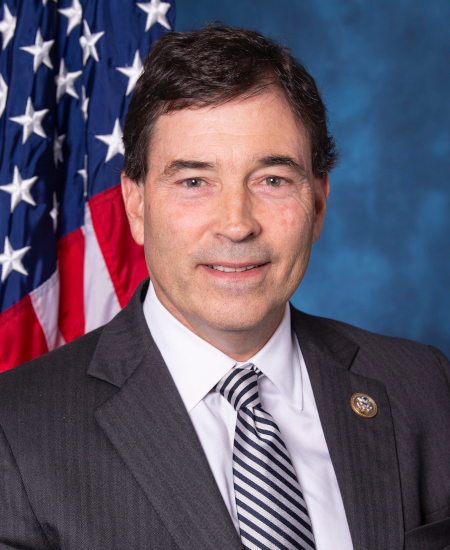
Rep. Troy Balderson
Sponsored bills
Maddy summaryThis bill modifies Medicaid and CHIP rules to let eligible out-of-state healthcare providers enroll without extra state screening. It applies to providers already in Medicare or their home state program, with low fraud risk, serving children under 21 with complex medical conditions. Providers would receive 5 years of enrollment under this streamlined process, eliminating state-level barriers. The change directly affects children seeking specialized care across state lines and the providers who serve them.
Maddy summaryHJRES 204 is a congressional disapproval resolution targeting an EPA rule that would have reclassified certain large pollution sources (like industrial facilities) as smaller, less-regulated "area sources" under the Clean Air Act. If passed, this resolution would block the EPA's September 10, 2024, rule (published in the Federal Register) from taking effect, preventing the regulatory change. The resolution directly affects the EPA's authority to implement this specific reclassification, which would have altered how certain facilities are regulated under Section 112 of the Clean Air Act. It does not create new policy but halts an existing EPA rule through a procedural congressional action.
Maddy summaryHRES 1447 is a non-binding resolution expressing support for designating the week of September 22-28, 2024, as "Gold Star Families Remembrance Week." It directly honors families who lost loved ones while serving in the U.S. military (referred to as "Gold Star Families") and families of veterans. The resolution encourages Americans to observe the week by performing community service and celebrating the sacrifices of fallen service members, without creating new laws or obligations. It aligns with existing recognition of Gold Star Mother’s Day (the last Sunday in September) but expands the focus to all affected families.
This resolution supports the designation of National FFA Week. It also (1) recognizes the important role of the National FFA Organization (Future Farmers of America) in developing the next generation of globally conscious leaders who will change the world; and (2) celebrates the 10th anniversary of the Give the Gift of Blue program, which has donated more than 17,000 FFA blue jackets to FFA members in need.
Maddy summaryThis bill amends the Older Americans Act to explicitly address loneliness among seniors by adding it to existing provisions about social isolation. It requires the federal government to prepare a report within five years, examining how current programs tackle loneliness's health impacts, geographic prevalence, and preventive services. The report must also analyze multigenerational family connections' role in reducing loneliness and recommend policy improvements. The bill directly affects older individuals served by programs under the Older Americans Act, focusing on health outcomes linked to social isolation. It does not create new funding but directs existing programs to coordinate services addressing loneliness.
Maddy summaryThis bill authorizes a Congressional Gold Medal to honor James J. Andrews and William H. Campbell, the only civilian members of Andrews' Raiders during the Civil War. The medal commemorates their 1862 daring raid to sabotage Confederate rail lines by stealing a locomotive, which cut Union supply routes. The gold medal will be struck by the U.S. Mint and displayed at the Smithsonian Institution, specifically at the Charles H. Coolidge National Medal of Honor Museum. Bronze duplicates may be sold to the public to cover costs. This is a purely commemorative act with no policy or funding changes.
Maddy summaryThe SAFER at the Border Act prohibits the U.S. Department of Homeland Security from temporarily admitting (paroling) certain individuals at the border. It defines "known terrorists" (those arrested, charged, or convicted for terrorism), "suspected terrorists" (reasonably suspected of terrorism), and "special interest aliens" (those with potential terrorism links based on travel patterns). The bill explicitly bans parole for these individuals, even for humanitarian reasons or public benefit, and also prohibits parole for refugees. Additionally, it allows states to sue the Department of Homeland Security if they suffer financial harm exceeding $100 from the parole of such individuals.
Maddy summaryThis bill adds "galactose-alpha-1,3-galactose" (alpha-gal) to the list of major food allergens under federal law. It requires food manufacturers to clearly label products containing alpha-gal, which is found in red meat and some other animal-derived foods, directly affecting consumers with alpha-gal syndrome (a meat allergy often triggered by tick bites). The law excludes certain mammal-derived ingredients (like those from alpha-gal-knockout animals) if they fall below a detectable limit. The new labeling requirement will take effect on January 1, 2026, giving manufacturers time to adjust. This change ensures clearer allergen information for people with this specific allergy.
Maddy summaryThis resolution aims to block a rule issued by the National Highway Traffic Safety Administration (NHTSA) that sets new fuel efficiency standards for passenger cars, light trucks (starting in 2027), and heavy-duty pickup trucks/vans (starting in 2030). If passed, it would prevent this specific rule from taking effect by disapproving it under a congressional review process. The rule directly affects vehicle manufacturers by requiring them to meet these updated fuel economy targets for future model years. This is a procedural resolution, not a new law, focused solely on halting the implementation of the existing NHTSA rule.