

Maddy summaryThis bill bans developers and deployers of AI algorithms from using them to deceive voters about election procedures (like voting locations or registration rules) or intimidate people from voting. It requires clear disclaimers - such as "AI Disclaimer: This output was generated by artificial intelligence" - on AI-generated election content, including fake candidate videos or altered voting information. The law sets safety standards for election-related AI, requiring developers to ensure algorithms are "safe and effective" before use. The Federal Trade Commission enforces these rules, with violations potentially leading to fines or up to one year in prison.
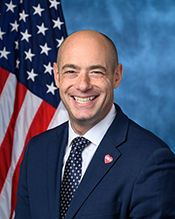
Rep. Greg Landsman
Sponsored bills
Maddy summaryHR 8821, the HOPE with Fertility Services Act, requires group health plans and health insurance issuers that cover obstetrical services to provide comprehensive coverage for infertility treatments and fertility preservation when medical treatments (like cancer therapy) cause or risk iatrogenic infertility. It defines infertility broadly and mandates coverage for procedures like IVF, egg freezing, and ovulation induction, while allowing standard cost-sharing but prohibiting insurers from discouraging or penalizing these services. Insurers must annually submit analyses of their coverage rules for these treatments to the Secretary of Labor for 5 years after enactment, with potential civil penalties for noncompliance. The law applies to all applicable plans starting January 1, 2026.
Maddy summaryThis resolution recognizes June 19, 2024, as Juneteenth Independence Day, acknowledging its historical significance as the anniversary of the end of slavery in the U.S. (specifically referencing Union soldiers' announcement in Galveston, Texas, on June 19, 1865). It does not create new policy but formally encourages all Americans to observe the day through ceremonies and educational activities. The resolution emphasizes Juneteenth's role in honoring African American freedom and its importance to U.S. history and cultural heritage. It follows the 2022 law that established Juneteenth as a federal holiday, focusing solely on symbolic recognition and annual observance.
Maddy summaryHR 8732, the Domestic Workers Bill of Rights Act, would establish new labor protections for domestic workers including nannies, housekeepers, and caregivers who work in private homes. The bill requires written agreements between employers and domestic employees, provides earned sick days, ensures fair scheduling practices, and prohibits unfair wage deductions for cash shortages or communications. It also creates a Domestic Employee Standards Board to recommend workplace standards and establishes a National Domestic Employee Hotline for assistance. The bill specifically targets domestic workers who have historically been excluded from labor protections under the Fair Labor Standards Act and Civil Rights Act, benefiting an estimated 2.2 million domestic workers in the U.S. who are disproportionately women of color and immigrants.
Maddy summaryHRES 1295 is a symbolic resolution expressing the House's support for recognizing Sunday, June 16, 2024, as Father's Day. It does not create new laws or policies but formally acknowledges the role of fathers in families and society. The resolution urges support for existing policy goals like universal paid family leave, affordable childcare, and child tax credits - though it does not mandate any changes. It directly affects all fathers and families in the U.S. by affirming their importance, but has no binding legal effect. This is a procedural resolution, not a legislative bill with concrete policy changes.
Maddy summaryHR 537 authorizes a Congressional Gold Medal to honor 60 diplomats who saved Jewish lives during the Holocaust by issuing visas and passports against their governments' orders, risking expulsion and personal danger. The medal will be presented to the next of kin of these diplomats, alongside representatives from their home countries, and permanently displayed at the United States Holocaust Memorial Museum. The bill also permits the sale of bronze duplicates to cover production costs, with proceeds going to the U.S. Mint. This legislation recognizes the diplomats' humanitarian actions without creating new government programs or altering existing laws.
Maddy summaryHR 8698, the SCREEN for Type 1 Diabetes Act of 2024, directs the CDC to launch a national public awareness campaign about type 1 diabetes detection and screening. The campaign will provide written materials on early symptoms and screening benefits, develop public service announcements across media platforms, and distribute culturally competent resources to healthcare providers, schools, and public health departments. It specifically targets communities with rising type 1 diabetes incidence and requires consultation with health organizations and affected communities. The bill authorizes $5 million annually from 2025-2029 to fund this campaign and mandates a report to Congress on its impact one year after enactment.
Maddy summaryHRES 1279 is a non-binding House resolution expressing support for designating June 2024 as "Black Music Month." It honors Black musicians, creators, and communities whose contributions have shaped American music across genres like blues, jazz, hip-hop, and gospel. The resolution calls on all Americans to recognize the month through actions that elevate Black music's artistry, promote diversity, and spread awareness of its historical impact. It does not create new laws or allocate funding, but serves as a symbolic gesture to celebrate Black music's cultural significance. The resolution was introduced by multiple House members and refers to Black music's role in American history and the civil rights movement.
Maddy summaryHR 8609, the Supreme Court Ethics and Investigations Act, creates two new offices within the Supreme Court: an Office of Ethics Counsel to advise justices on ethical matters like financial disclosures and gift acceptance, and an Office of Investigative Counsel to review formal ethics complaints. The Ethics Counsel provides biannual training to justices and submits annual reports to Congress on ethics advice given, while the Investigative Counsel handles complaints filed only by specific congressional leaders (e.g., committee chairs, Senate leaders) and can issue subpoenas for investigations. If a complaint is validated, the Investigative Counsel submits a report to the Chief Justice (or senior associate justice if the Chief is the subject) with findings and recommendations, which must be shared with relevant congressional committees. The bill establishes specific qualifications, pay rates ($180,000-$225,000 annually), and term limits for both offices’ staff.
Maddy summaryThis bill, the GOSAFE Act, prohibits the sale, manufacture, transfer, and possession of gas-operated semi-automatic firearms and large capacity ammunition feeding devices (those holding more than 10 rounds). It defines "gas-operated" firearms as those using gas from fired cartridges to cycle the action, and requires the Attorney General to maintain a list of prohibited firearms. Manufacturers must seek approval for new semi-automatic firearms before selling them to civilians, and the bill creates a fund to support buy-back programs for prohibited firearms and devices. Violations could result in fines up to $5,000 or 12 months in jail, with harsher penalties for those who commit other federal crimes while in possession of prohibited firearms.