

Maddy summaryHRES 1260 is a non-binding resolution expressing the U.S. House of Representatives' support for designating May 2024 as "Progressive Supranuclear Palsy Awareness Month." It recognizes progressive supranuclear palsy (PSP) as a rare neurodegenerative disease affecting approximately 30,000 Americans, with no known cure and symptoms including cognitive decline, balance issues, and speech difficulties. The resolution specifically supports raising public awareness, encourages research for better treatments and a cure, and commends efforts by patients, families, and organizations working to improve PSP care. As a symbolic gesture, it does not create new laws or allocate funding but aims to increase visibility for this under-recognized condition.
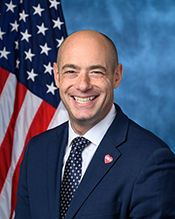
Rep. Greg Landsman
Sponsored bills
Maddy summaryThe Alzheimer’s Accountability and Investment Act (HR 620) requires the National Institutes of Health (NIH) Director to annually submit a budget estimate for Alzheimer’s-related initiatives - including personnel needs - directly to the President for review and then to Congress. This budget must be prepared after public comment and submitted without changes by the Secretary of Health and Human Services or the Advisory Council. The bill directly affects the NIH’s budget reporting process for Alzheimer’s research and programs, mandating transparency in how funds are allocated. It does not change funding levels but establishes a specific annual reporting mechanism to improve accountability.
Maddy summaryThis bill reauthorizes the National Alzheimer's Project Act through 2035 (extending the previous deadline of 2025) and adds new requirements to promote healthy aging and reduce Alzheimer’s risk factors. It mandates the program to provide information on healthy behaviors that may lower cognitive decline risk and expands the advisory group to include representatives from agencies like the Department of Justice, FEMA, and Social Security Administration, plus experts with diverse clinical trial experience. The bill directly affects Alzheimer’s research, care programs, and the federal advisory group overseeing national efforts. Key changes include requiring annual evaluations instead of initial ones and adding a focus on reducing health disparities in Alzheimer’s initiatives.
Maddy summaryThe HELP Act of 2023 provides $550 million annually for 2024-2025 and $450 million for 2026-2030 to strengthen 211 (human services information and referral) and 988 (mental health crisis) services nationwide. It requires states to develop coordinated systems that ensure 24/7 accessibility, reduce non-emergency 911 calls, and connect individuals to appropriate human services and mental health resources. The bill mandates states to create comprehensive service databases, ensure accessibility for people with disabilities, and establish oversight councils with diverse representation to monitor racial equity and service effectiveness. States must also implement diversion programs to connect individuals with mental health responders instead of law enforcement for non-emergency situations. The legislation includes regular reporting requirements and biennial evaluations to measure how effectively the program connects people to needed services and reduces unnecessary law enforcement interactions.
Maddy summaryThis resolution (HRES 616) condemns the Taliban's ongoing human rights abuses in Afghanistan, specifically targeting women, girls, religious minorities (including Hazaras and Sikhs), and ethnic groups. It expresses support for Afghans who assisted U.S. missions and calls for the U.S. government to halt Taliban violence and address systemic repression. Key mechanisms include urging the State Department to assess potential crimes against humanity, developing strategies to support human rights defenders, and expediting refugee processing for Afghans with Special Immigrant Visas. The resolution does not impose new legal requirements but formalizes congressional stance and policy guidance. It directly affects U.S. foreign policy implementation toward Afghanistan.
Maddy summaryHR 8469, the Diverse Cybersecurity Workforce Act of 2024, requires the Cybersecurity and Infrastructure Security Agency (CISA) to establish a new program within its existing education initiative. The program targets underrepresented groups in cybersecurity, including racial and ethnic minorities, women, veterans, people with disabilities, older individuals (40+), those from low-income backgrounds, and people with nontraditional educational paths (like community colleges or HBCUs). CISA must tailor outreach to schools, unions, community colleges, and local workforce offices to promote cybersecurity careers in these communities. The bill authorizes $20 million annually (2025-2030) and mandates annual reports to Congress on the program's impact on workforce diversity.
Maddy summaryThe Public Service Freedom to Negotiate Act of 2024 establishes federal minimum standards for collective bargaining rights for public employees and supervisory employees. The Federal Labor Relations Authority will determine if each state's laws "substantially provide" for these rights, and if not, federal standards will apply to that state. These standards include the right to self-organization, collective bargaining, recognition of labor organizations, and procedures for resolving disputes. The bill preserves existing collective bargaining agreements and excludes certain employee categories like emergency services workers from some provisions.
Maddy summaryThe Rights for the TSA Workforce Act of 2024 would transition Transportation Security Administration (TSA) employees, particularly screening agents, from TSA-specific personnel rules to the standard federal government personnel system under Title 5 of the U.S. Code by December 31, 2024. The bill prohibits changes to current personnel policies for covered employees until the transition date and ensures no reduction in pay or benefits during the conversion process. It preserves certain benefits like law enforcement availability pay for Federal air marshals and maintains collective bargaining rights for screening agents. The bill also requires various reports to Congress on recruitment, implementation, diversity, and workplace safety to be submitted within specified timeframes.
Maddy summaryHR 8358, the Taiwan Allies Fund Act, creates a $40 million annual fund (2025-2027) to support countries that maintain or strengthen unofficial ties with Taiwan despite pressure from China. It targets nations facing Chinese economic or diplomatic coercion for their relations with Taiwan, such as recent diplomatic switchers like Nauru. Funds can be used for specific activities including countering Chinese propaganda, building civil society resilience, diversifying supply chains away from China, and supporting Taiwan's participation in international organizations. The bill limits aid per country to $5 million annually and requires annual reports on fund usage and coordination with Taiwan.
Maddy summaryThis bill authorizes the placement of a memorial honoring women who contributed to World War II efforts on the National Mall or adjacent federal land in Washington, D.C. It specifically removes a location restriction (under 40 U.S.C. § 8908) to allow the memorial - previously authorized by the 2023 Consolidated Appropriations Act - to be situated within Area I of the National Mall or the National Mall Reserve. The memorial would commemorate over 18 million women who worked as pilots, engineers, mechanics, and codebreakers during the war. The bill directly affects the Women Who Worked on the Home Front Foundation, which is tasked with establishing the memorial.