

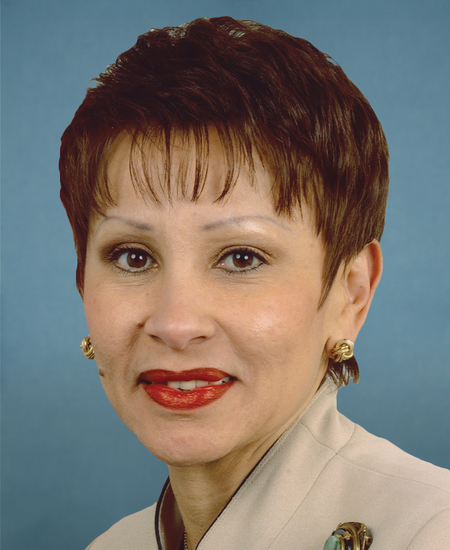
Photo of Nydia M. Velázquez
D United States House · District 7 · New York

Rep. Nydia M. Velázquez

Compare
Total votes
2,837
all sessions
Attendance
97%
92 missed
Lower than 82% of chamber peers
With party
97%
of cast votes
Near the chamber average
Bipartisan score
2%
crosses aisle rarely
Near the chamber average
Sponsored
1,845
bills & resolutions
Higher than 86% of chamber peers
Committees
4
assignments
1,845 bills and resolutions

Sponsored bills

Total
1,845
Primary
150
Co-sponsor
1,695
This page
1,845
matching current filters
Co-sponsor HRES 1061
In committee · Indiana House · Co-sponsor
Recognizing the cultural and historical significance of Lunar New Year in 2026.

Maddy summaryHRES 1061 is a symbolic resolution recognizing the cultural and historical significance of Lunar New Year in 2026. It does not create new laws or policies, but formally acknowledges Lunar New Year's origins (over 4,000 years in China), its celebration as Seollal in Korea and Tết in Vietnam, and its observance by millions of Asian Americans and others in the U.S. The resolution expresses respect for Asian Americans and extends holiday wishes for a "happy and prosperous new year" during the Year of the Horse. As a non-binding resolution, it has no legal effect or direct impact on any individuals or groups.

In committee Feb 12, 2026 1 co-sponsor
Co-sponsor HR 7521
In committee · Indiana House · Co-sponsor
United States-Cuba Trade Act of 2026

Maddy summaryThis bill would remove longstanding U.S. trade restrictions on Cuba by repealing key laws including the Cuban Democracy Act of 1992 and the LIBERTAD Act of 1996. It would allow U.S. businesses to trade with Cuba without restrictions, enable telecommunications services between the U.S. and Cuba, and eliminate limits on U.S. citizens sending remittances to Cuba. The bill also extends normal trade relations to Cuban goods, meaning Cuban products would enter the U.S. market without special tariffs. This would directly affect U.S. businesses, travelers, and Cuban citizens who receive remittances. The changes would take effect 60 days after enactment, with some provisions applying to goods entering the U.S. market 15 days after enactment.

In committee Feb 12, 2026 1 co-sponsor
Co-sponsor HRES 1058
In committee · Indiana House · Co-sponsor
Recognizing that it is the duty of the Federal Government to develop and implement a Transgender Bill of Rights to protect and codify the rights of transgender and nonbinary people under the law and ensure their access to medical care, shelter, safety, and economic security.

Maddy summaryHRES 1058 is a non-binding House resolution recognizing the federal government’s duty to develop a Transgender Bill of Rights. It calls for specific policy changes, including amending civil rights laws to explicitly prohibit discrimination based on gender identity in employment, housing, and public accommodations; protecting access to gender-affirming medical care; and streamlining legal recognition of gender identity on federal documents like passports and voter registration. The resolution also proposes expanding protections for transgender and nonbinary individuals in healthcare, education, immigration, and correctional facilities, while emphasizing community-led policy development. As a resolution, it does not create new law but sets a framework for future legislative action.

In committee Feb 11, 2026 1 co-sponsor
Co-sponsor HR 1742
In committee · Indiana House · Co-sponsor
Access to Reproductive Care for Servicemembers Act

Maddy summaryThis bill requires the military to approve leave for abortion and fertility care without commanders needing to know the specific procedure. It mandates reimbursement for travel, lodging, meals, and transportation costs when care isn't available nearby, and prohibits punishment for using this leave. It directly affects active-duty service members and their dependents who face barriers to reproductive care due to military restrictions or location. The policy change removes command discretion in approving leave for time-sensitive reproductive health services.

In committee Feb 11, 2026 1 co-sponsor
Primary HRES 1056
In committee · Indiana House · Lead sponsor
Calling for the annulment of the Monroe Doctrine and the development of a "New Good Neighbor" policy in order to foster improved relations and deeper, more effective cooperation between the United States and its Latin American and Caribbean neighbors.

Maddy summaryHRES 1056 is a non-binding House resolution calling for the U.S. to formally end the Monroe Doctrine as official policy and develop a "New Good Neighbor" approach to relations with Latin American and Caribbean nations. It proposes specific policy shifts, including ending unilateral sanctions (like the Cuba embargo), reforming international financial institutions to support equitable development, and ending U.S. interference in regional judicial processes. The resolution directly affects U.S. foreign policy toward 34 countries in the region and aims to reshape diplomatic, economic, and security cooperation. As a resolution, it does not create new law but urges the State Department and Congress to adopt these changes.

In committee Feb 10, 2026 0 co-sponsors
Co-sponsor HRES 1035
In committee · Indiana House · Co-sponsor
Condemning Federal workforce reductions that undermine preparedness, response, and recovery, and expressing concern regarding proposed future staffing cuts to the Federal Emergency Management Agency.

Maddy summaryHRES 1035 is a non-binding House resolution condemning recent and proposed workforce reductions at FEMA, which the resolution states endanger the agency's ability to prepare for, respond to, and recover from disasters. It specifically cites a 35% staffing shortage at FEMA (per GAO) and notes that over 2,000 permanent staff left FEMA in 2025, weakening disaster response during events like Hurricanes Helene and California wildfires. The resolution expresses concern that staffing cuts would delay aid, reduce assistance to vulnerable communities (including rural, coastal, and wildfire-prone areas), and undermine counterterrorism programs supporting first responders. It calls for a stable, adequately resourced FEMA workforce to ensure effective disaster management, without proposing new legislation or policy changes.

In committee Feb 4, 2026 1 co-sponsor
Co-sponsor HR 7335
In committee · Indiana House · Co-sponsor
Humanitarian Standards for Individuals in ICE and CBP Custody Act

Maddy summaryHR 7335 establishes comprehensive humanitarian standards for individuals held in U.S. Immigration and Customs Enforcement (ICE) and U.S. Customs and Border Protection (CBP) custody. The bill requires facilities to provide immediate health screenings within 12 hours (6 hours for high-risk individuals like children, pregnant people, or those with medical conditions), ensure access to adequate water, sanitation, food (with 2,000+ calories daily for adults), and age-appropriate shelter. It mandates specific facility standards including separate housing for males and females, accessible accommodations for people with disabilities, daily outdoor access for those detained over 48 hours, and proper medical equipment and personnel on-site. The bill also requires regular inspections, staff training on humanitarian protocols, and public reporting of sexual abuse complaints. These standards directly affect all individuals detained by ICE or CBP, with special protections for vulnerable groups like children, pregnant people, and those with medical needs.

In committee Feb 4, 2026 1 co-sponsor
Co-sponsor HR 5658
In committee · Indiana House · Co-sponsor
Child Care for Every Community Act

Maddy summaryHR 5658, the Child Care for Every Community Act, establishes a federal framework to create universal, high-quality child care and early learning programs available to all young children not yet required to attend school. The bill requires that covered children (children below compulsory school age) be entitled to participate in these programs, with no fees for low-income families and sliding-scale fees for others based on family income. Key provisions include requiring full-working-day, full-calendar-year care; setting national quality standards for staff qualifications and facilities; mandating comprehensive services including health, nutrition, and family support; and requiring coordination with schools to support children's transitions to kindergarten. The bill directly affects families seeking child care, child care providers, and local communities that would administer these programs through designated "prime sponsors."

In committee Feb 4, 2026 1 co-sponsor
Co-sponsor HJRES 144
In committee · Indiana House · Co-sponsor
Providing for congressional disapproval under chapter 8 of title 5, United States Code, of the rule submitted by the Department of Veterans Affairs relating to "Reproductive Health Services".

Maddy summaryHJRES 144 is a congressional disapproval resolution targeting a specific rule issued by the Department of Veterans Affairs (VA) on December 31, 2025, which addressed "Reproductive Health Services" (90 Fed. Reg. 61310). This resolution directs Congress to disapprove the VA rule under Chapter 8 of Title 5, U.S. Code, meaning the rule would have no legal effect if passed. The bill directly affects the VA's implementation of reproductive health services for veterans, as it seeks to nullify the agency's existing policy. This is a procedural measure, not a substantive policy change, aimed solely at blocking the VA's rule through congressional action.

In committee Jan 27, 2026 1 co-sponsor
Co-sponsor HR 7246
In committee · Indiana House · Co-sponsor
Addressing Climate Financial Risk Act of 2026

Maddy summaryHR 7246 establishes two new bodies within the Financial Stability Oversight Council to address climate-related financial risks. It creates a Climate Financial Risk Committee to coordinate agency efforts and an Advisory Committee with 30 members (including climate scientists, financial experts, and consumer advocates, but excluding oil/gas industry representatives) to provide input. The bill requires annual reports assessing climate risks to financial stability, updates to banking supervisory guidance for institutions over $50 billion in assets, and detailed data collection on homeowners insurance underwriting by zip code. These provisions directly affect federal financial regulators (like the Fed, SEC, and FDIC), banks, insurers, and the broader financial system by mandating structured analysis of climate risks.

In committee Jan 27, 2026 1 co-sponsor
Showing 141 to 150 of 1,845 bills
Previous 1 … 14 15 16 … 185 Next