

Maddy summaryThis bill, known as the Guarantee Access to Arts and Music Education Act of 2026, amends the Elementary and Secondary Education Act to expand federal funding for arts and music programs in public schools. It directly affects school districts and educators by allowing Title I funds to support sequential, standards-based instruction in dance, media arts, theater, visual arts, and music. The legislation requires these programs to be taught by certified educators and aligns them with state academic standards to ensure quality instruction. Additionally, the bill allows targeted assistance schools to use federal funds for supplies, professional development, and equipment needed for arts and music education.
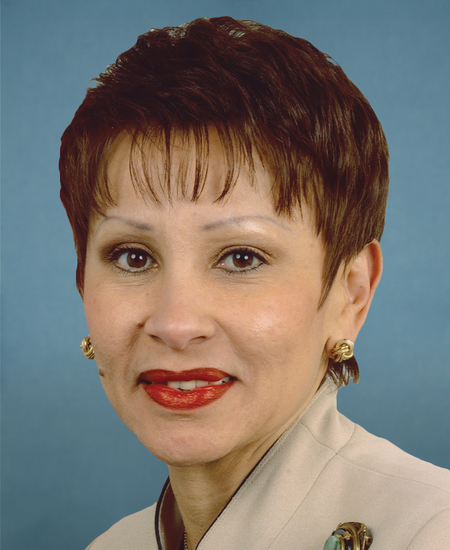
Rep. Nydia M. Velázquez
Sponsored bills
Maddy summaryThis bill, the PrEP Access and Coverage Act of 2026, requires most health insurance plans to cover HIV prevention medication without charging patients any out-of-pocket costs. It directly affects people with private insurance, government health programs like Medicare and Medicaid, military health care, and the Indian Health Service. The law mandates that insurance companies cannot require pre-approval for these medications, cannot charge deductibles or copayments for them, and cannot deny or charge higher premiums for life, disability, or long-term care insurance based on someone taking HIV prevention medication. The bill also creates a new public education campaign to increase awareness about HIV prevention options and provides federal funding to states and community organizations to expand access to these services.
Maddy summaryHRES 1106 is a non-binding House resolution honoring the life and legacy of Rev. Jesse Louis Jackson, Sr., a prominent civil rights leader and activist. The resolution recognizes his lifelong work in advancing equality through organizations like Operation PUSH, his leadership in the anti-apartheid movement, and his historic presidential campaigns in 1984 and 1988. It expresses condolences to his family and calls on all Americans to continue his legacy of promoting civil rights and unity. As a commemorative resolution, it does not create new laws or affect any policies.
Maddy summaryThis bill, known as the Direct File Act of 2026, would establish a government-run online system allowing taxpayers to prepare and file their individual income tax returns for free. The legislation prohibits the Treasury Department from entering into agreements that restrict its ability to provide tax preparation or filing services, and it voids any existing contracts with such restrictions. The program would use IRS data to simplify filing, include customer support, be available in multiple languages, and allow users to file even if they are not required to. It also enables taxpayers in participating states to file state and local returns alongside their federal returns, with funding provided to states that meet certain standards.
Maddy summaryThis bill requires the Bureau of Prisons to employ at least one full-time, board-certified OB-GYN at every federal prison housing female inmates. It mandates specific services including menstrual care, contraception, prenatal care, cancer screenings, and postpartum support, along with patient protections like informed consent and the right to refuse non-emergency care. The bill also requires initial OB-GYN visits within 14 days of incarceration and establishes a process for referrals to other specialists without delays. Annual reports to Congress will track facility compliance, staffing vacancies, and health outcomes like prenatal visits, childbirths, and pregnancy-related deaths.
Maddy summaryThis bill prohibits the Department of Homeland Security from using federal funds to buy or use full-body restraints, which are devices that immobilize individuals. It directly affects DHS personnel and operations by banning the acquisition and utilization of four-point and five-point restraints. The law includes penalties for violations, such as removal from federal service for officers who break the rules or deceive leadership about them. DHS must also submit quarterly reports to Congress detailing compliance status and any instances where restraints were used, including specific information about the individuals restrained and the circumstances involved. Existing contracts for these restraints made before the bill's enactment are exempt from the ban.
Maddy summaryHRES 1080 is a symbolic resolution recognizing and celebrating Black History Month 2026, focusing on its theme "A Century of Black History Commemorations." It highlights historical figures and events central to Black history, including Carter G. Woodson’s founding of Negro History Week (the precursor to Black History Month), Juneteenth, and key moments like the 1865 Charleston commemoration. The resolution emphasizes how Black history commemorations counter historical erasure and affirm Black contributions to U.S. history, referencing figures like Mary McLeod Bethune and W.E.B. Du Bois. As a ceremonial resolution, it has no binding effect but aims to raise awareness of Black achievements through official recognition.
Maddy summaryHR 7685, the Healthy Hair Act, amends the Federal Food, Drug, and Cosmetic Act to classify hair straightening or smoothing products containing formaldehyde (or formaldehyde-releasing substances) as "adulterated" when sold across state lines after an 180-day grace period. It directly affects hair product manufacturers, salons, and workers who use or handle these products. The bill mandates a two-part study by the FDA and NIOSH on health impacts like cancer and respiratory issues for salon workers exposed to formaldehyde, requiring an initial report within one year and a final report within two years and two months. The study will inform future regulatory actions but does not ban formaldehyde products immediately.
Maddy summaryThe Ceasefire Compliance Act of 2026 establishes requirements for Israel to comply with the October 10, 2025, ceasefire agreement, including allowing sufficient humanitarian aid into Gaza, halting military operations in Gaza, preventing settler violence, and supporting Palestinian governance. The bill requires the US government to submit quarterly reports certifying Israel's compliance with these conditions, with potential restrictions on US defense sales to Israel if violations occur. If Israel fails to meet the requirements, the US would prohibit the sale, export, or transfer of US-origin defense articles for use in the West Bank or Gaza. The bill also creates an end-use monitoring group to track if US defense articles are being used in those areas, with a 5-year sunset provision. This legislation directly affects US-Israel defense relations and the flow of military assistance.
Maddy summaryHR 7608, the Southeast Asian Deportation Relief Act of 2026, prevents the deportation of eligible Cambodian, Laotian, and Vietnamese nationals who entered the U.S. before January 1, 2008, and have continuously resided here since. The bill halts removals for these individuals, grants them permanent work authorization with 5-year permits renewable indefinitely, and eliminates in-person check-ins for immigration supervision. It also requires immigration authorities to reopen past deportation cases for eligible individuals, allowing them to seek relief under the Act’s provisions without retroactive penalties. This directly affects approximately 15,000 long-term Southeast Asian residents, many of whom arrived as child refugees following conflicts the U.S. was involved in.