

Maddy summaryHCONRES 68 would require the President to remove U.S. military forces from Venezuela unless Congress has explicitly authorized their use through a declaration of war or a specific law. This applies to any U.S. Armed Forces currently stationed in Venezuela without such authorization. The resolution is based on the War Powers Resolution, which mandates congressional oversight of military deployments. It directs the immediate withdrawal of unapproved forces without adding new time limits or conditions.
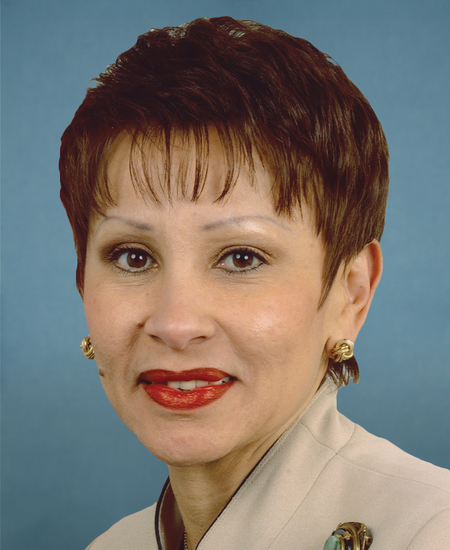
Rep. Nydia M. Velázquez
Sponsored bills
Maddy summaryHRES 1018 is a resolution calling for the U.S. government and international partners to prioritize women's rights in Haiti's crisis response. It specifically demands ensuring at least 30% of Haiti's leadership positions (including security, humanitarian, and election roles) are held by women, funding services for gender-based violence survivors, and requiring gender-disaggregated data collection in all aid programs. The resolution also urges rebuilding U.S. Women, Peace, and Security programs and mandates that all policies address women's distinct needs in Haiti's transition. This resolution directly affects U.S. foreign policy implementation and Haiti's transitional government, emphasizing that women's inclusion is critical for stability.
Maddy summaryHR 7190 would end immigration detention and electronic monitoring by requiring the immediate release of all detained noncitizens on their own recognizance within six months and repealing all federal laws authorizing detention. It prohibits using federal funds for detention facilities, ankle monitors, or immigration enforcement activities after specific deadlines (six months for monitors, two years for detention contracts). Instead, it establishes a new grant program to fund community-based wrap-around services - including housing, healthcare, mental health support, legal aid, and job training - provided voluntarily by non-profit organizations without surveillance or data sharing with federal agencies. The bill directly affects noncitizens currently held in detention or under electronic monitoring.
Maddy summaryHR 7173, the Follow the Science Act, restricts political appointees from influencing National Institutes of Health (NIH) operations and grant decisions. It prohibits most political appointees (defined broadly as those in policy-making roles) from being employed by NIH or participating in grant reviews, funding selections, or policy implementation. The bill requires the NIH Director to report on past political appointee involvement in these activities to Congress within 30 days of enactment. These changes aim to ensure NIH decisions are based on scientific merit rather than political influence, with limited exceptions for other federal agencies.
Maddy summaryHR 7154, the Streamlining Small Business Contracts Act of 2026, raises the maximum dollar limit for certain sole-source contracts awarded to small businesses under the Small Business Act. The bill amends four specific sections (8(a)(1)(D)(i)(II), 8(m)(7)(B), 8(m)(8)(B), 31(c)(2)(A)(ii), and 36(c)(2)) to increase the threshold from $7 million to $10 million for these contracts. This change directly affects small business concerns that qualify for the specified contracting authorities, allowing them to secure larger contracts without competitive bidding. The key mechanism is simply adjusting the dollar limit in the relevant provisions of the Small Business Act.
Maddy summaryThis bill sets minimum annual funding levels for two financial oversight agencies: $124.6 million for the Office of Financial Research (OFR) and $15.3 million for the Financial Stability Oversight Council (FSOC). It requires these agencies to maintain minimum staffing levels (231 and 48 full-time equivalent positions, respectively) and adjusts both funding amounts yearly based on government wage increases. Crucially, the bill prohibits congressional review or reduction of these funding levels, protecting the agencies' independence. The bill directly affects how the OFR and FSOC operate by securing their core resources from legislative interference.
Maddy summaryHR 7089, the PARK Act, prohibits national parks and wildlife refuges from waiving entrance fees to honor the birthday of a sitting U.S. President, unless that birthday falls on a federal holiday. This policy directly affects all national park units and wildlife refuges that charge entrance fees under federal law. The key provision bans fee waivers specifically for presidential birthdays, maintaining standard fees except when the birthday aligns with a designated federal holiday like Independence Day. The bill makes no changes to other fee waivers or park operations, focusing solely on this specific exception.
Maddy summaryHR 7125, the Stop Body Camera Paywalls Act, requires states and local governments seeking certain federal law enforcement grants to certify they do not charge fees for public access to body camera footage, dash camera footage, or prison surveillance recordings. To qualify for Byrne or COPS grant programs, applicants must confirm no financial barriers exist for the public requesting these specific video recordings. The bill makes certification mandatory for grant eligibility, directly affecting law enforcement agencies receiving federal funds under these programs.
Maddy summaryThe Find It Early Act requires most health insurance plans, Medicare, Medicaid, TRICARE, and VA benefits to cover certain breast cancer screenings without cost-sharing for specific at-risk groups. It affects individuals at increased breast cancer risk (as determined by medical guidelines), those with dense breast tissue (as defined by the American College of Radiology), and others requiring screening due to factors like age, race, ethnicity, or family history. The bill mandates coverage for various screening methods including mammograms, ultrasounds, MRI, and other technologies at frequencies recommended by the National Comprehensive Cancer Network. This requirement takes effect for plan years beginning January 1, 2026, removing financial barriers to early detection.
Maddy summaryHRES 996 is a resolution introduced by multiple House members to impeach Kristi Lynn Arnold Noem, the Secretary of Homeland Security, for alleged violations of law and the Constitution. It outlines three articles of impeachment: obstructing congressional oversight by denying access to detention facilities and withholding funds, violating public trust through warrantless arrests and excessive force (including tear gas on children), and self-dealing by awarding federal contracts to associates without competitive bidding. If approved by the House, this resolution would formally charge Noem, triggering a Senate trial to determine her removal from office. The resolution itself does not enact new policy but initiates the constitutional impeachment process against a sitting Cabinet official.