Maddy summaryHR 6751 authorizes the U.S. Mint to produce commemorative coins honoring Roberto Clemente, a Hall of Fame baseball player and humanitarian, including 50,000 $5 gold coins, 400,000 $1 silver coins, and 750,000 half-dollar coins. The coins must feature Clemente's image and inscriptions like "Roberto Clemente" and "2027," with all sales including a surcharge ($5-$35 per coin) paid to the Roberto Clemente Foundation. The foundation, which supports youth sports, education, and disaster relief programs, will use these funds for its mission, while the U.S. Treasury must recover all production costs. The coins will be sold exclusively in 2027, with no net cost to the government.
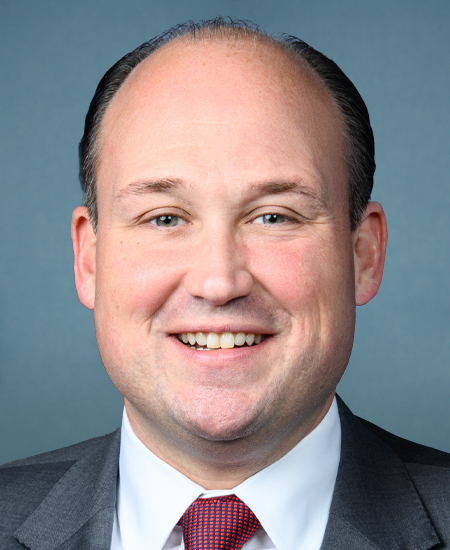
Rep. Nicholas A. Langworthy
Sponsored bills
Maddy summaryHRES 609 is a House resolution expressing opposition to New York City's proposed Central Business District Tolling Program, which would charge drivers up to $23 daily to enter Manhattan south of 60th Street. The resolution highlights that this fee could cost daily commuters about $5,000 annually and disproportionately burden small businesses (still recovering from pandemic lockdowns), low-income families, and students. It disapproves of the program, calls for a public economic impact report, and urges federal and state authorities to halt its implementation. The resolution notes the program is intended to generate $1 billion yearly for the MTA’s capital projects and operations, following the agency’s $690 million 2022 revenue loss.
Maddy summaryThe Working Dog Commemorative Coin Act (HR 807) directs the U.S. Treasury to mint three types of commemorative coins honoring working dogs' service: $5 gold coins, $1 silver coins, and half-dollar coins with specific weight and composition requirements. Each coin will carry a surcharge ($35 for $5 coins, $10 for $1 coins, $5 for half-dollars) that will be paid directly to America's VetDogs to support their programs providing service dogs for veterans, the disabled, and others. The coins will be issued in 2027 with designs reflecting working dogs' roles in military, detection, therapy, and assistance work. The legislation specifies that all surcharge revenue must fund America's VetDogs' operations without creating new government programs. This is a commemorative measure focused on honoring working dogs' contributions through coin sales, with all surcharge funds going to a specific nonprofit organization.
Maddy summaryThis bill establishes a Truth and Healing Commission to investigate the history and impacts of U.S. Indian Boarding School policies on Native American communities, including cultural, emotional, and physical effects on survivors, descendants, and tribal communities. The Commission will document these impacts through research, public meetings, and testimony, working with two advisory committees focused on Native American perspectives and Federal agency coordination. The Commission will operate for six years, with annual reports to Congress and a final report containing recommendations for Federal action. The bill also includes provisions for managing burial sites related to boarding schools and ensures the Native American Graves Protection and Repatriation Act applies to remains found on Federal lands related to these schools.
Maddy summary# Summary of Proposed Higher Education Act Amendments This document outlines significant proposed amendments to the Higher Education Act of 1965, primarily as part of the "College Cost Reduction Act." The key elements include: ## Accreditation Reform - Major overhaul of accreditation standards, requiring accrediting agencies to demonstrate independence from trade associations - New requirements for accrediting agencies to assess student achievement outcomes, including median value-added earnings relative to median total price charged - Introduction of an "Alternative Quality Assurance Experimental Site Initiative" to test non-accredited institutions - Protections for religious institutions, including a new process for appealing accreditation decisions related to religious mission - Removal of "litmus tests" that would require institutions to support specific political viewpoints ## Student Success Initiatives - Establishment of "Postsecondary Student Success Grants" to increase participation, retention, and completion rates for high-need students - Focus on evidence-based practices, with tiered requirements (tier 1, 2, and 3 reforms) - Mandatory inclusion of high-need student populations (low-income, first-generation, military-connected, etc.) - Requirements for institutions to report on completion rates, retention rates, and student demographics ## Regulatory Changes - Repeal of numerous existing regulations including: * Closed school discharges * Borrower defense to repayment * Pre-dispute arbitration * False certification requirements * Ability-to-benefit rules * Financial responsibility regulations - New restrictions on incentive compensation for recruiters - Changes to third-party servicer definitions and regulations ## Transfer and Credit Policies - New requirement that institutions cannot deny transfer credit based solely on the source of accreditation - Requirements for transparent transfer policies - Changes to reverse transfer policies ## Other Key Provisions - Modifications to the National Advisory Committee on Institutional Quality and Integrity (NACIQI) - New definitions for "total price" and "value-added earnings" - Changes to the process for institutions to change accrediting agencies - New requirements for institutions to report on student outcomes The overall focus of these proposed amendments is to reduce regulatory burden on institutions, promote transparency, improve student outcomes (particularly for high-need students), modernize accreditation processes, and protect religious institutions' rights in accreditation decisions.

Maddy summaryHRES 1566 is a symbolic House resolution honoring all U.S. veterans on Veterans Day 2024. It recognizes the service and sacrifice of the estimated 15.8 million veterans living in the U.S. as of 2023, including those who served in conflicts from World War II to post-9/11. The resolution calls on the American public to observe Veterans Day to acknowledge veterans' role in preserving national freedom. As a non-binding resolution, it has no direct policy impact but formally expresses congressional recognition of veterans' contributions.
Maddy summaryHR 10038 directs the Veterans Affairs (VA) Secretary to run a two-year pilot program making naloxone available at no cost and without a prescription to veterans and their VA-registered caregivers at VA pharmacies and medical facilities. The program requires providing information about VA addiction, suicide prevention, and mental health services, along with naloxone use education. The VA must report to Congress within 90 days of the pilot's end, detailing participation numbers, feasibility of expanding to family members or non-VA providers, and budget considerations for potential permanent adoption. This bill directly affects veterans and their registered caregivers by removing barriers to accessing overdose reversal medication.
Maddy summaryThis bill amends the Older Americans Act to require that health promotion and disease prevention services for older adults be "evidence-informed" where applicable. It updates specific sections to mandate that programs use practices likely to improve health outcomes, rather than relying solely on evidence-based approaches. The changes directly affect existing services funded under the Older Americans Act, including falls prevention, chronic disease management, and general health promotion programs. The bill does not create new programs but ensures current services are evaluated using the best available evidence.
Maddy summaryThe Long-Term Care Transparency Act requires the federal government to annually collect and summarize reports from state long-term care ombudsman programs and submit this summary to Congress. Specifically, the Assistant Secretary must aggregate all state reports and provide a summary of findings to the Senate Health, Education, Labor, and Pensions Committee, the Senate Special Committee on Aging, and the House Education and Workforce Committee each year. This bill does not change state program operations but mandates a new federal reporting requirement to increase transparency about long-term care issues. The direct effect is on the federal reporting process, with state programs providing the underlying data for the annual congressional summary.
Maddy summaryThis bill prohibits federal agencies from using the social cost of carbon, methane, nitrous oxide, or greenhouse gases in regulatory decisions. It bans these climate impact estimates from cost-benefit analyses, rulemaking, and agency guidance documents. Agencies must report past use of these metrics since 2009 to Congress. The law removes specific climate cost calculations from energy regulations.