

Maddy summaryThis bill directs the Secret Service to use identical standards for determining protection levels for Presidents, Vice Presidents, and major presidential/vice presidential candidates. It requires the Secret Service Director to conduct a review within 180 days of enactment, reporting findings and recommendations to Congress on protection protocols for current and former leaders. The bill standardizes existing practices without increasing security resources, applying the same criteria currently used for sitting officials to candidates. It references the definition of "major candidates" from existing law (18 U.S.C. § 3056), ensuring consistency with current Secret Service procedures.
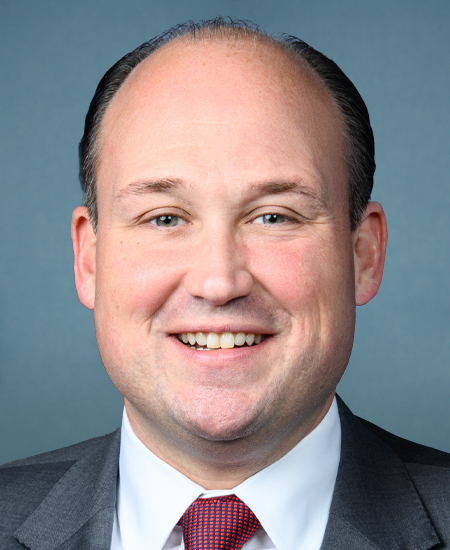
Rep. Nicholas A. Langworthy
Sponsored bills
Maddy summaryThis bill amends VA regulations to require the Department of Veterans Affairs to cover both the purchase price and shipping costs for adaptive vehicles delivered to veterans. It directly affects veterans who receive VA-funded adaptive vehicles under Section 3902 of Title 38, U.S. Code. The key change updates the payment mechanism so veterans no longer bear the cost of shipping the vehicle to their location. This policy change simplifies the process by ensuring full delivery costs are covered in a single VA payment.
Maddy summaryThe CLAWS Act of 2024 requires U.S. federal agencies (like NIH or the Department of Defense) to annually report detailed information about biomedical research projects funded by U.S. agencies but conducted in China or involving Chinese entities. The report must include specifics such as the project's purpose, whether it involves pandemic-potential pathogens or military-linked research locations, funding details, security measures, and any compliance issues. This applies to all federally funded biomedical research - such as disease treatment or vaccine development - carried out in China or with Chinese partners. The goal is to increase transparency about research collaborations with China, focusing on security and oversight.
Maddy summaryThis bill clarifies Medicare rules to allow doctors to provide certain critical medications directly in their offices without extra administrative hurdles. It specifically amends a Medicare provision (Section 1877(b)(2) of the Social Security Act) to remove a requirement that drugs furnished in-office must follow specific administrative rules, effective May 11, 2023. The bill also directs the removal of conflicting Medicare guidance published in 2021 and 2023, which had previously restricted this practice. This change directly affects Medicare beneficiaries (seniors) and doctors' offices that supply covered medications during patient visits. It streamlines access to necessary drugs by eliminating an unnecessary barrier to in-office medication administration under Medicare.
Maddy summaryHR 9757, the "No More Taxpayer Cash for the Taliban Act," bans U.S. federal funds from being used for direct cash assistance to individuals in Afghanistan or for providing U.S. currency to the United Nations to support such aid. The bill specifically prohibits federal agencies from funding direct cash payments to Afghans and stops the Federal Reserve from selling U.S. currency to the UN for this purpose. It aims to prevent billions of taxpayer dollars (as reported by SIGAR) from indirectly funding the Taliban through mechanisms like aid taxation and currency exchange fees at the Taliban-controlled central bank. The law applies directly to federal departments, the UN, and non-governmental organizations receiving U.S. funds for aid in Afghanistan.
Maddy summaryThis bill restricts federal funding for jurisdictions that limit cooperation with federal immigration enforcement. It defines a "sanctuary jurisdiction" as any state or local government that prohibits sharing immigration status information or complying with federal detainer requests (except for crime victims/witnesses). Starting after enactment, such jurisdictions lose eligibility for federal funds intended to provide food, shelter, healthcare, legal services, or transportation to undocumented immigrants. The law directly affects cities and states with specific immigration policies, not the immigrants themselves.
Maddy summaryHR 9715, the "Strengthening our Servicemembers with Milk Act," requires the Secretary of Defense to provide various types of milk - including unflavored, organic, lactose-free, and fat-free options - at military dining facilities for active-duty members of the Armed Forces. The bill mandates that milk must be available in multiple varieties to accommodate dietary preferences and needs. It also prohibits purchasing milk from entities owned or controlled by foreign adversaries, as defined by existing regulations. This policy change directly affects military personnel dining at installations nationwide, ensuring broader milk access while restricting certain procurement sources.
Maddy summaryHJRES 144 is a congressional disapproval resolution targeting a specific rule issued by the Bureau of Alcohol, Tobacco, Firearms, and Explosives (ATF) on April 19, 2024. The resolution seeks to block the ATF's rule that redefined the term "engaged in the business" for firearm dealers, which would have affected how federal licensing requirements apply to certain sellers. If enacted, this resolution would nullify the rule, preventing it from taking effect under procedures in Title 5 of the U.S. Code. The bill directly impacts firearm dealers operating under the current regulatory framework and the ATF's enforcement authority.
Maddy summaryThe Keep Our Streets Safe Act of 2024 requires states receiving federal Byrne grant funds to consider public safety risks when setting bail or pretrial release, and prohibits blanket policies of sealing felony criminal records (excluding juveniles). States failing to comply would lose their Byrne grant funding, which would then be reallocated to local law enforcement agencies within that state. This bill directly affects all states that receive Byrne grants, which fund state and local law enforcement programs. The law changes federal funding conditions by linking access to specific pretrial and record-keeping practices.
Maddy summaryThis bill amends the Justice for United States Victims of State Sponsored Terrorism Act to establish a fifth round of payments for eligible victims of state-sponsored terrorism, requiring all authorized payments to be distributed by December 31, 2024. It directs specific funds into the Victims of State Sponsored Terrorism Fund, including $898 million from the Binance case settlement and 50% of annual unobligated balances from DOJ and Treasury forfeiture funds starting December 1, 2024. The bill mandates annual payments beginning January 1, 2025, for eligible claimants and requires the Special Master to submit annual reports on fund activity to Congress, including detailed deposit and disbursement records. It directly affects victims of state-sponsored terrorism, the Special Master administering the fund, and federal agencies managing forfeiture funds.