

Maddy summaryThe Essential Caregivers Act of 2024 requires nursing homes and similar facilities to allow residents to designate essential caregivers who provide emotional support or assistance with daily activities. During emergencies when regular visitation is restricted, facilities must permit at least one essential caregiver access to residents daily and cannot deny access without following specific procedures. Facilities may deny access for a maximum of 7 days during emergencies (or 14 days with state approval), and must provide a written explanation and appeal process if access is denied. The bill establishes a 48-hour appeal process for residents and caregivers to challenge denials, with facilities required to prove violations during appeals. This law applies to Medicare skilled nursing facilities, Medicaid nursing facilities, intermediate care facilities, and certain inpatient rehabilitation facilities.
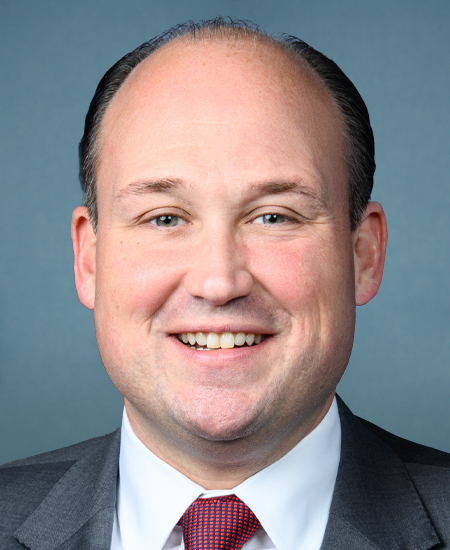
Rep. Nicholas A. Langworthy
Sponsored bills
Maddy summaryHR 8018, the ABC Act, requires Medicare, Medicaid, CHIP, and Social Security Administration to review their eligibility processes, forms, and communications to simplify interactions for family caregivers. It targets reducing duplicate paperwork, improving website accessibility (including ADA compliance), and enhancing staff communication - such as shorter call waits and multilingual support - to better serve caregivers supporting individuals enrolled in these programs. The review must include input from caregivers and organizations, with results reported to Congress within one year. This procedural bill does not change program benefits but mandates systemic improvements to reduce administrative burdens.
Maddy summary# Summary of Proposed Legislation This document outlines a comprehensive U.S. legislative proposal with several key components: 1. **Research Restrictions**: - Requires certification from Federal research grant recipients that they are not Chinese citizens or participants in Chinese talent programs - Prohibits employment of Chinese nationals in federally funded research - Requires institutions receiving Federal assistance to agree not to knowingly employ individuals participating in Chinese talent programs 2. **Foreign Gifts and Contracts Disclosure**: - Mandates disclosure of foreign gifts/contracts over $50,000 to universities - Requires public reporting of restricted/conditional gifts/contracts - Creates a searchable public database of foreign gifts to universities - Requires institutions to maintain policies regarding foreign gifts to faculty and staff 3. **Investment Restrictions**: - Restricts tax-exempt organizations from holding investments in "disqualified Chinese companies" (defined as corporations incorporated in China or with significant Chinese government ownership) - Requires annual reporting on such investments - Allows limited waivers with public disclosure 4. **Taiwan Policy**: - Prohibits U.S. government from recognizing PRC claims to sovereignty over Taiwan without Taiwan's consent - Requires U.S. government to treat Taiwan's democratically elected government as the legitimate representative of the people of Taiwan - Requires a strategy to protect U.S. businesses from Chinese coercion efforts 5. **Additional Provisions**: - Requires participants in Chinese talent programs to register as agents of the Chinese government - Amends economic espionage laws to include education and research - Mandates disclosure of certain funds received by visa holders The legislation represents a significant effort to limit Chinese influence in U.S. academic institutions, research, and business sectors while establishing a more robust policy framework regarding Taiwan.
Maddy summaryThis bill amends the Social Security Act to require states to establish child support obligations for the biological father of an unborn child when the mother requests it. Key provisions include allowing support to begin from the month of conception (as determined by a physician), permitting retroactive payments even if paternity is established after birth, and requiring court determination of payment amounts based on the mother's and child's best interests. It prohibits forced paternity testing for unborn children if it risks harm and explicitly bans any experimental programs from modifying these provisions. The bill directly affects mothers of unborn children and biological fathers, expanding child support enforcement to cover pregnancy.
Maddy summaryThis bill expands Medicare coverage to include additional FDA-approved lung cancer screening tests beyond the current standard. It allows the Medicare program to cover new preventive screening tests for eligible beneficiaries, determined by the Secretary, with frequency and payment limits set by Medicare. The key mechanism updates Medicare's coverage rules to permit these new tests using the existing national coverage determination process, without requiring additional regulatory steps. This change directly affects Medicare beneficiaries who qualify for lung cancer screening, potentially increasing access to newer, evidence-based screening options. The bill applies to Part B Medicare coverage for screenings provided on or after its effective date.
Maddy summaryThe Maximum Pressure Act (HR 6114) is a legislative proposal that would maintain and expand U.S. sanctions against Iran. The bill would codify existing sanctions, require Iran to meet 12 specific conditions before sanctions could be lifted (including ending support for terrorism, releasing hostages, and ending nuclear enrichment), and expand sanctions on Iran's Revolutionary Guard Corps and missile programs. It also establishes new reporting requirements for the U.S. government to monitor Iran's activities and the impact of sanctions. The legislation would require congressional review before any sanctions could be lifted or modified, preventing the executive branch from unilaterally easing restrictions.
Maddy summaryThis bill, HR 5796, prohibits the Department of Health and Human Services from implementing a proposed rule requiring minimum staffing levels in nursing homes. It creates an advisory panel of 15 members - including rural nursing home staff and experts - to study workforce shortages and report on access barriers for seniors, especially in rural areas. The panel must submit an initial report within 60 days, analyzing staffing challenges and recommending solutions to strengthen the nursing home workforce. These provisions directly aim to prevent nursing home closures (like the 129 that occurred in 2022) that threaten rural seniors’ access to care.
Maddy summaryHR 5709 would amend the tax code to allow individuals who qualify for Medicare Part A due to age (typically 65+) to contribute to Health Savings Accounts (HSAs). Currently, Medicare beneficiaries are ineligible to contribute to HSAs, but this bill removes that restriction by updating the Internal Revenue Code. The key change adds a new eligibility category for Medicare Part A beneficiaries to the tax code provisions governing HSAs. This policy change directly affects seniors enrolled in Medicare Part A, enabling them to use HSAs for qualified medical expenses as part of their healthcare savings strategy. The amendment applies to contributions made after December 31, 2023.
Maddy summaryThis bill (HR 5608) allows health insurance issuers in the Affordable Care Act marketplaces to contribute directly to enrollees' health savings accounts (HSAs) instead of reducing cost-sharing (like deductibles) for silver-level high-deductible health plans. It affects individuals enrolled in these specific plans who elect this option, requiring insurers to pay into their HSAs monthly (equal to the cost-sharing reduction they would have received) using a medical-only debit card. Insurers must also offer high-deductible plans as alternatives to standard silver plans and provide public education about this option starting in 2025. The changes apply to months beginning after December 2024, with funds treated as advance payments toward tax credits.
Maddy summaryThis bill changes how Medicare counts hospital stays for coverage of skilled nursing care. It treats time spent in outpatient observation (not admitted as an inpatient) as part of the required 3-day inpatient hospital stay. This means beneficiaries who received outpatient observation services will have that time counted toward the 3-day requirement, potentially making them eligible for skilled nursing facility coverage they might otherwise have lost. The change applies to services beginning January 1, 2024, with limited retroactive appeal options for services completed before the law's enactment. It directly affects Medicare beneficiaries needing skilled nursing care after hospital treatment.