

Maddy summaryHR 7543, the Plastic Pellet Free Waters Act, prohibits plastic pellets and pre-production plastic materials from being discharged into waterways through wastewater, spills, or runoff from specific facilities. It directly affects plastic manufacturing, molding, packaging, and transportation facilities regulated under existing environmental rules. Within 60 days of enactment, the EPA must issue a rule banning these discharges and update all relevant wastewater, stormwater, and performance standards in permits. The law requires all permits and standards for these facilities to reflect the new ban, ensuring plastic pellets cannot enter water systems. This is a concrete regulatory change to prevent plastic pollution at its source.
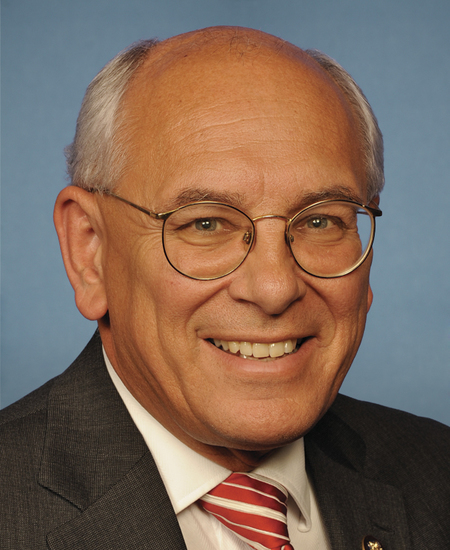
Rep. Paul Tonko
Sponsored bills
Maddy summaryThis resolution (HRES 1063) is a symbolic measure designating February 2026 as "Career and Technical Education Month" to recognize the importance of career and technical education (CTE) programs. It does not create new policies or funding but formally supports CTE's role in preparing students for high-demand jobs by encouraging educators and parents to promote CTE as a valid educational pathway. The resolution references CTE's alignment with workforce needs and cites bipartisan support from past legislation like the 2018 Strengthening Career and Technical Education Act. It affects no specific individuals or programs, serving only as a non-binding statement of support.
Maddy summaryThis bill requires most employers to provide workers with earned paid sick leave. Employees would earn 1 hour of paid sick time for every 30 hours worked, up to 56 hours per year, which can be used for their own illness, medical care, caring for family members (including children, parents, spouses, domestic partners, or other family-like relationships), or addressing domestic violence, sexual assault, or stalking situations. The bill prohibits employers from retaliating against workers who use this leave and requires employers to inform employees about their rights. It ensures that workers who leave and return to the same employer within a year can reinstate their unused sick leave. This law would not override more generous state or local paid leave policies.
Maddy summaryHR 7545 prohibits U.S. security assistance funds from being used to support Israeli military actions that violate international law, specifically targeting the detention of Palestinian minors, destruction of Palestinian property, and unilateral annexation of occupied land. It requires annual certifications from the State Department confirming U.S. funds aren't supporting these activities and mandates detailed reports on Israeli detention practices, property seizures, and settlement compliance. The bill directly affects U.S. security aid to Israel, including Foreign Military Financing and offshore procurement funds for defense articles. Key mechanisms include funding restrictions, annual reporting requirements, and a GAO report analyzing how offshore procurement funds impact Israel’s military budget and settlement activities.
Maddy summaryHRES 1058 is a non-binding House resolution recognizing the federal government’s duty to develop a Transgender Bill of Rights. It calls for specific policy changes, including amending civil rights laws to explicitly prohibit discrimination based on gender identity in employment, housing, and public accommodations; protecting access to gender-affirming medical care; and streamlining legal recognition of gender identity on federal documents like passports and voter registration. The resolution also proposes expanding protections for transgender and nonbinary individuals in healthcare, education, immigration, and correctional facilities, while emphasizing community-led policy development. As a resolution, it does not create new law but sets a framework for future legislative action.
Maddy summaryHRES 1060 is a symbolic resolution designating April 5, 2026, as "Barth Syndrome Awareness Day" in the U.S. House of Representatives. It directly supports individuals and families affected by Barth syndrome, a rare genetic disorder primarily impacting males that causes heart, muscle, and immune system issues. The resolution expresses support for raising public awareness, improving early diagnosis, advancing research, and developing treatments for this condition - though it does not create new funding or policy changes. It serves as a non-binding statement of recognition by Congress, acknowledging the challenges faced by the small patient community (fewer than 160 diagnosed in the U.S.) and the need for greater attention to this ultrarare disease.
Maddy summaryThis bill updates the financial disclosure thresholds for federal employees under Title 5, United States Code. It adds new reporting tiers for certain income types (like dividends and capital gains) and asset categories, setting specific dollar ranges starting at $5 million for income and $50 million for assets. For example, income over $5 million but under $25 million now requires reporting, and assets over $50 million but under $100 million must be disclosed. These changes apply to financial disclosure reports filed on or after the bill's enactment date. The bill directly affects federal employees required to submit financial disclosures, particularly those with significant financial interests.
Maddy summaryHR 7480, the FAIR Act, sets pay adjustments for federal employees in 2027. It increases base pay by 3.1% for most federal workers under standard pay systems and for employees paid according to local civilian wages in high-cost areas. Additionally, it raises locality pay adjustments by 1% for 2027. The bill directly affects all federal employees covered by these pay systems through concrete, formula-based adjustments.
Maddy summaryThe REPAIR Act requires motor vehicle manufacturers to provide car owners and independent repair shops with full access to vehicle data and repair information, prohibiting technological or legal barriers that restrict this access. It mandates that manufacturers share vehicle-generated data, critical repair information, and tools on equal terms with dealers and authorized service providers, without requiring consumers to use specific brands of parts or tools. The law establishes an advisory committee to monitor implementation and ensure fair competition in vehicle repair, while giving the Federal Trade Commission authority to enforce these requirements as unfair or deceptive practices. This legislation directly affects car owners, independent repair facilities, aftermarket parts manufacturers, and motor vehicle manufacturers by shifting control of repair information and data from manufacturers to consumers.
Maddy summaryHR 7417 reauthorizes and expands the WISEWOMAN program to include heart health screenings and education for low-income women. The bill directs the CDC to award grants for blood pressure and cholesterol screenings, health education, and referrals for heart disease prevention, building on existing breast and cervical cancer services. It specifically targets low-income women who are already served by the WISEWOMAN program or meet new eligibility criteria set by the Secretary. The expansion is funded with $250 million over five fiscal years (2027-2031), with services to be provided by current WISEWOMAN grantees or approved alternative providers.