

Maddy summaryThe DISCLOSE Act of 2026 aims to increase transparency in election spending and prevent foreign influence. It expands the ban on foreign money to cover federal, state, and local elections, including ballot initiatives and judicial nominations, and criminalizes using corporations to conceal these funds. The bill mandates that organizations spending over $10,000 on campaign-related activities, such as independent expenditures or judicial nomination advocacy, disclose their beneficial owners and top donors. Additionally, it establishes new "Stand By Every Ad" disclaimers for political communications, requiring the highest-ranking official to approve the message and, for certain ads, list their top funders. These provisions directly affect non-candidate organizations, individuals involved in political and judicial nomination spending, and foreign nationals.
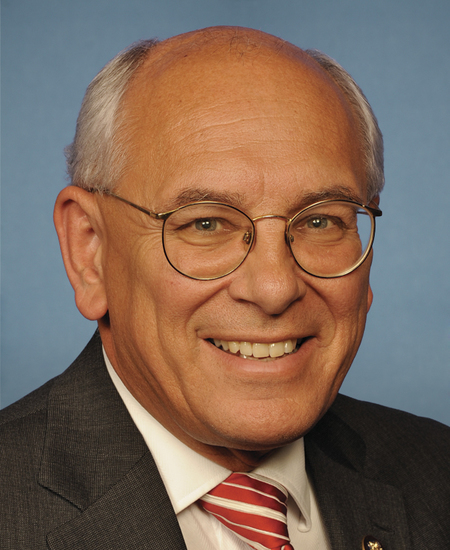
Rep. Paul Tonko
Sponsored bills
Maddy summaryThis resolution (HRES 1098) formally expresses the U.S. House of Representatives' support for designating March 3, 2026, as "National Triple-Negative Breast Cancer Day." It aims to raise public awareness about triple-negative breast cancer - a more aggressive subtype affecting disproportionately young women, Black and Hispanic women, and those with BRCA mutations - which accounts for 10-15% of breast cancer diagnoses and 25% of related deaths in the U.S. The resolution is symbolic, focusing solely on increasing awareness and advocacy efforts, not on creating new programs or funding.
Maddy summaryThis bill directs the Secretary of Health and Human Services to create a program focused on researching how environmental factors, such as air pollution, chemicals, and heavy metals, may contribute to neurodegenerative diseases like Alzheimer's and Parkinson's. The legislation would establish collaborative research centers at universities and medical institutions to study these environmental links, train scientists, and share findings with the public and healthcare professionals. The program includes provisions for creating a national data system and information clearinghouse to track disease patterns and environmental exposures across different communities. Funding of up to $50 million annually through 2031 is authorized to support these research efforts, with biennial reports required to Congress on progress and outcomes.
Maddy summaryThis resolution (HRES 1088) is a non-binding House of Representatives measure recognizing the importance of Black history museums and cultural institutions. It formally acknowledges their role in preserving Black American history and contributions, particularly in relation to the 2026 100th anniversary of Black History Month and the U.S. 250th anniversary. The resolution urges the House to affirm that Black history is foundational to American history and calls for federal agencies to support these institutions through funding and partnerships. It also encourages the public to visit these museums, support them financially, and engage with their educational resources. The resolution does not create new laws or allocate funding, but serves as a symbolic endorsement of these institutions' cultural and historical significance.
Maddy summaryHR 7740, the African American History Act of 2026, authorizes $4 million annually for the National Museum of African American History and Culture to develop educational resources and support teaching about African American history. The bill directs the museum to create digital and print materials, provide teacher training, and expand access to curriculum resources for K-12 and college classrooms. It requires annual reports to Congress on fund usage and expires in 2030. This program directly affects educators and students by enhancing classroom materials and professional development on African American history.
Maddy summaryHRES 1081 is a symbolic resolution (not a law) introduced in the U.S. House of Representatives to raise awareness about chordoma, a rare bone cancer affecting the skull and spine. It states the House's "sense" that chordoma patients need increased funding and support for four specific areas: accurate early diagnosis, new treatments and cures, faster translation of research into therapies, and patient-focused drug development. The resolution highlights chordoma's challenges - such as high recurrence rates, limited treatment options, and no known curative drugs - impacting roughly 300 people annually in the U.S. and over 25,000 globally. As a non-binding resolution, it does not create new laws or allocate funds but formally expresses congressional support for addressing this disease.
Maddy summaryThis bill establishes two new offices within the Supreme Court: an Office of Ethics Counsel and an Office of Investigative Counsel, both authorized by the Chief Justice. The Ethics Counsel office would provide guidance to justices and their spouses on judicial ethics matters including financial disclosures, gift acceptance, political activity, and conflicts of interest, while the Investigative Counsel office would review and investigate ethics complaints filed by congressional leaders against justices. Both offices would be staffed by experienced attorneys with competitive salaries, and the Investigative Counsel would have subpoena power to compel testimony and evidence during investigations. The bill also requires annual reports on ethics advice given and mandates that investigation findings be submitted to the Chief Justice and made available to congressional committees.
Maddy summaryThe ReSCUE Oceans Act establishes a federal program to advance marine carbon dioxide removal (mCDR) research, development, and field trials through the National Oceanic and Atmospheric Administration. It creates designated research areas for mCDR projects that require consultation with Indian Tribes, Native Hawaiian organizations, and coastal communities, while mandating monitoring of environmental and social impacts. The bill develops protocols for measuring carbon removal efficacy and establishes an interagency working group to coordinate federal efforts across NOAA, NASA, the National Science Foundation, and other agencies. It requires biennial reports on mCDR activities, includes special data protections for tribal communities, and aims to support safe, responsible mCDR technologies through science-based research and community engagement.
Maddy summaryThis bill authorizes a Congressional Gold Medal to honor the Freedom House Ambulance Service, which pioneered the first paramedic-based emergency medical system in the U.S. in the 1960s. It recognizes the service's role in establishing professional pre-hospital care standards, training marginalized residents (including the first women paramedics), and influencing national EMS protocols despite being defunded in 1975. The medal will be presented to the National Museum of African American History and Culture for public display, as specified in the bill. The legislation is purely commemorative, with no new policy or funding changes, focusing on preserving the service's historical significance in medical innovation and civil rights.
Maddy summaryHR 7599 creates a federal framework for extreme risk protection orders (ERPOs), allowing family members or law enforcement to petition courts to temporarily prohibit individuals from possessing firearms when they pose a risk of harm to themselves or others. The bill establishes a process for issuing ex parte orders (up to 14 days) followed by a hearing within 72 hours to determine if a longer-term order (up to 180 days) should be issued, requiring respondents to surrender firearms to U.S. Marshals or designated law enforcement. Courts must consider specific factors like recent threats, violence, substance abuse, or cruelty to animals before issuing orders, with no fees for petitioners. The law requires law enforcement training to address bias, includes annual reporting requirements, and ensures firearms are returned once the order expires and the individual is eligible to own firearms under federal law.