

Maddy summaryThis bill establishes a Lung Cancer Task Force within the National Institutes of Health (NIH) to examine key issues in lung cancer research and care. The task force, appointed by the NIH Director, will specifically study differences in research funding and patient access compared to other diseases, assess if federal funding matches lung cancer's health impact, and review current lung cancer screening practices in the U.S. Within 180 days of the bill's passage, the task force must submit a report to Congress with its findings and recommendations for increasing federal funding for lung cancer research. The bill directly affects federal health agencies (NIH and CDC) and aims to inform future policy decisions based on the task force's analysis.
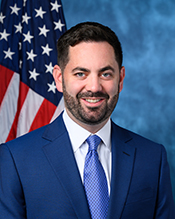
Rep. Michael Lawler
Sponsored bills
Maddy summaryThis bill updates securities laws to expand exemptions for retirement plans used by charities and educational institutions. It specifically modifies definitions in the Investment Company Act, Securities Act, and Securities Exchange Act to include 403(b) plans meeting certain conditions - such as being subject to ERISA, having employer fiduciary oversight, or being governmental plans. These changes reduce regulatory hurdles for organizations offering these plans, making it easier to administer retirement benefits for their employees. The bill directly affects charities, schools, and other non-profits that sponsor 403(b) retirement plans.
Maddy summaryThis bill requires new health warning labels on sugar-sweetened beverages, foods containing non-sugar sweeteners, ultra-processed foods, and products high in certain nutrients like added sugar, saturated fat, or sodium. The labels must prominently display warnings about health risks such as obesity and type 2 diabetes using at least 5% of the front packaging area. It also restricts advertising of these foods using child-directed marketing methods that appeal to children, such as cartoon characters, social media influencers, or children's music. The bill authorizes $5 million annually for the Department of Health and Human Services to implement these labeling requirements and $60 million annually for NIH research on nutrition science. Additionally, it creates a public education campaign to help consumers understand the new labels and make healthier choices.
Maddy summaryHRES 906 would change House rules to require a 60% vote of members present and voting to censure, disapprove, or remove any House member, delegate, or resident commissioner from committee assignments. Currently, a simple majority (50%+1) could trigger these actions, but this bill raises the threshold to a supermajority. The change applies directly to all voting members of the House and affects disciplinary procedures for members. This is a procedural rule change that makes it harder to take formal disciplinary actions against House members.
Maddy summaryThis bill expands Medicare coverage to include genetic counseling services provided by licensed or certified genetic counselors, effective January 1, 2027. It defines "covered genetic counseling services" as those furnished by qualified counselors under state law or certification, with payments set at 80% of the lesser of the actual charge or 85% of the physician fee schedule. Medicare beneficiaries seeking genetic counseling will gain access to these services through covered providers, while preventing balance billing for these specific services. The bill does not restrict physicians from billing for similar services under existing Medicare rules.
Maddy summaryThis bill authorizes Congress to award two gold medals in honor of Charlie Kirk, a conservative activist and founder of Turning Point USA, who was tragically killed in 2025. One medal will go to his family, and the other will be displayed at the Smithsonian Institution to preserve his legacy. The bill does not create new policy or affect any laws - it is purely commemorative, following standard procedures for Congressional Gold Medals. It includes provisions for striking the medals and selling bronze duplicates to cover costs, but contains no substantive legislative changes.
Maddy summaryThe ROTOR Act narrows the definition of "sensitive government mission" for aircraft operations, excluding training flights and flights by officials below Cabinet rank. It requires regular reporting to Congress about exceptions to ADS-B Out requirements, establishes deadlines for requiring ADS-B In equipment on most aircraft, and mandates safety reviews for airports with military operations. The bill also improves coordination between the FAA and Department of Defense on airspace management and safety information sharing. These changes increase transparency around aircraft operations that don't broadcast their location while enhancing safety oversight. The bill directly affects Federal agencies operating aircraft, the FAA, and aircraft operators required to equip with ADS-B technology.
Maddy summaryThis bill modifies eligibility rules for two federal loan programs (TIFIA and RRIF) to better accommodate residential and mixed-use development projects. It requires that such projects meet creditworthiness standards jointly determined by the Transportation and Housing and Urban Development secretaries, ensuring standards protect program finances while aligning with HUD's existing housing requirements. The changes apply to projects seeking loans under these programs after a 180-day effective date. The bill does not create new funding but adjusts how housing projects qualify for existing federal loan assistance.
Maddy summaryThe HOPE Act extends enhanced premium tax credits through 2027, providing income-based subsidies for individuals with household incomes up to 935% of poverty level who purchase health insurance through ACA marketplaces. It imposes civil penalties of $10,000-$50,000 (and criminal penalties) for agents or brokers who provide false enrollment information. The bill requires new verification processes for agent-assisted enrollments, including documentation of consent and delayed commission payments, and mandates quarterly checks to remove deceased individuals from health insurance plans. These changes directly affect subsidy recipients and insurance agents/brokers operating in healthcare marketplaces.
Maddy summaryHR 6212, the Good Samaritan Menstrual Products Act, protects donors and nonprofits from liability when providing menstrual products in good faith. It shields people, manufacturers, distributors, and nonprofits from civil or criminal liability for the condition of "apparently usable" donated products (those meeting all safety standards but not necessarily marketable). The law applies to products like tampons, cups, and liners distributed to individuals in need through nonprofits. Liability protection does not apply if gross negligence or intentional misconduct causes injury or death.