

Maddy summaryThe HEAR Act of 2025 adds Medicare coverage for hearing rehabilitation services and hearing aids. It directly affects Medicare beneficiaries with hearing loss who need new devices or services, requiring a comprehensive assessment and meeting specific criteria (like not having received hearing aids in the past three years). Key provisions include defining "hearing rehabilitation" to cover audiologist assessments, counseling, and device fitting, and specifying that covered hearing aids must meet FDA standards (excluding over-the-counter models). The bill also removes previous exclusions that blocked this coverage. These changes apply to services provided after a date set by the Health and Human Services Secretary, starting no earlier than January 1, 2026.
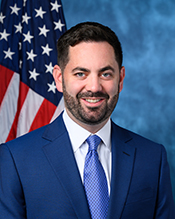
Rep. Michael Lawler
Sponsored bills
Increasing Access to Lung Cancer Screening Act This bill provides for coverage without prior authorization requirements of annual lung cancer screenings under Medicaid, Medicare, and private health insurance for individuals for whom screenings are recommended under U.S. Preventive Services Task Force guidelines. It also expands Medicaid coverage of counseling and pharmacotherapy for cessation of tobacco use to all individuals, rather than only pregnant women. The Department of Health and Human Services must conduct outreach on the importance of lung cancer screenings and who should be screened, and the Government Accountability Office must report on the demographics of those diagnosed with lung cancer and recommend ways the federal government can improve screenings.
Maddy summaryHR 4070, the Tren de Aragua Border Security Threat Assessment Act, requires the Secretary of Homeland Security to conduct a detailed assessment of the criminal threats posed by the Venezuelan gang Tren de Aragua to U.S. borders within 180 days of the bill's enactment. The assessment must cover the group's origins, methods, funding, and specific threats to the southwest, northern, and maritime borders, followed by a strategic plan within one year outlining how federal, state, and local agencies will counter these threats through information sharing, interdiction, and preventing the group's expansion in the U.S. The bill directly affects DHS, intelligence agencies, and border law enforcement partners by mandating these reports and planning processes.
Maddy summaryHR 3965, the PEARL Act, requires U.S. Customs and Border Protection (CBP) to establish a 3-year pilot program adopting dogs from local animal shelters to train as support dogs for CBP’s existing Support Canine Program. The program must begin within 60 days of the bill’s enactment and will terminate three years after its start date. This bill directly affects CBP by creating a new mechanism to source and train support dogs from animal shelters, rather than purchasing or acquiring them through other means. The legislation focuses solely on implementing this specific pilot program with no additional policy changes.
Maddy summaryHR 2259 requires the Secretary of Homeland Security to develop a national strategy for securing K-12 schools against terrorism within one year of enactment. This strategy must coordinate existing federal programs, identify security vulnerabilities in schools, and outline actions to address them, while avoiding duplication with current efforts. The Secretary must annually update the strategy through 2033 and report to relevant congressional committees, including certification if no updates are made. The bill directly affects federal agencies (Homeland Security, Education, and others) responsible for school security coordination, but does not create new funding or alter school operations.
Maddy summaryHR 1560, the Postal Supervisors and Managers Fairness Act of 2025, requires the U.S. Postal Service to formally negotiate pay and benefits changes with supervisors' organizations. It mandates that the Postal Service provide written proposals to these organizations 60 days before pay decisions expire or after new collective bargaining agreements affecting supervisor pay are reached. The bill also shortens dispute resolution timelines, requiring binding final decisions within 15 days of a panel's recommendation. This directly affects postal supervisors and managers covered under recognized bargaining organizations. The law changes the negotiation process but does not alter specific pay rates or benefits.
Maddy summaryThis bill amends federal law to expand appeal rights for certain postal employees to the Merit Systems Protection Board (MSPB). It specifically applies to postal workers in supervisory, professional, technical, clerical, administrative, or managerial roles who are not represented by a union under Section 1203 of federal labor law. The key change clarifies that these employees can now directly appeal personnel decisions (like discipline or termination) to the MSPB, rather than relying solely on internal postal processes. This modifies eligibility criteria for MSPB appeals under Title 39 of the U.S. Code.
Maddy summaryHR 6126 authorizes the minting of commemorative coins to mark the 100th anniversary of the U.S. Foreign Service (established in 1924). It specifies three coin types: up to 50,000 $5 gold coins (90% gold), 400,000 $1 silver coins (90% silver), and 750,000 half-dollar coins, all to be sold during 2029. A surcharge of $35 per gold coin, $10 per silver coin, and $5 per half-dollar is added to the sale price, with all surcharge funds directed to the Association for Diplomatic Studies and Training to support its diplomatic history preservation work. The coins must include standard inscriptions (e.g., "Liberty," "United States of America") and will be legal tender, but the bill does not create new policy or affect government operations.
Maddy summaryHR 6137 would create a new separate job code for "direct support professionals" (DSPs) within the federal Standard Occupational Classification system. This change aims to better recognize DSPs - who provide daily support for people with intellectual and developmental disabilities (like helping with daily living, community participation, and goal-setting) - as distinct from other roles like home health aides. The bill requires the Office of Management and Budget to consider this revision during the next system update, without authorizing new funding. It addresses data gaps caused by high turnover rates (39% nationally) in DSP hiring and retention.
Maddy summaryThis bill establishes a pilot program requiring the Secretary of Defense to partner with certified nonprofit diaper banks to provide free diapers and diapering supplies to military families in need. Covered diaper banks must be nonprofit members of the National Diaper Bank Network with at least five years of experience distributing diapers at no cost. The program will connect these banks directly with military installations to address diaper access gaps, with the National Diaper Bank Network providing technical support and evaluating the pilot's effectiveness. It directly affects military families facing financial barriers to basic necessities like diapers, creating a new federal partnership mechanism for support.