

Maddy summaryHR 7990 increases federal funding for large-scale water recycling projects by raising the annual grant authorization from $450 million to $1 billion under the Infrastructure Investment and Jobs Act, directly affecting water recycling projects that qualify for these grants. The bill also increases another funding cap from $500 million to $1 billion and extends the deadline for project applications from 5 to 6 years after the bill’s enactment. These changes aim to expand investment in infrastructure that treats and reuses wastewater for non-potable purposes like irrigation or industrial use. The policy change provides more financial resources and flexibility for communities and utilities to develop water recycling systems.
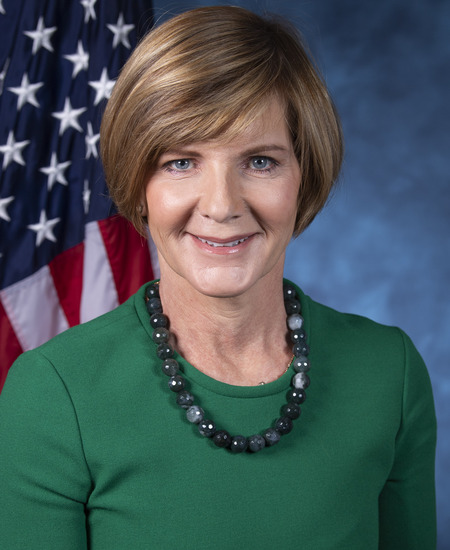
Rep. Susie Lee
Sponsored bills
Maddy summaryThis bill amends U.S. Code to lower the minimum student enrollment required for high schools to establish or maintain a Junior Reserve Officers' Training Corps (JROTC) program, reducing the threshold from 100 to 50 students. It directly affects high schools seeking to start or sustain JROTC units, particularly those with smaller student populations. The key provision changes the existing requirement under Title 10, U.S. Code, making it easier for schools to qualify for JROTC participation. This is a straightforward policy adjustment to existing law, with no additional funding or program changes specified.
Maddy summaryThe PAAW Act prohibits the National Institutes of Health (NIH) from conducting or funding research that causes significant pain or distress to dogs or cats, effective 90 days after enactment. It requires the NIH to publish annual reports detailing all such research projects - including costs, animal numbers, locations, and efforts to phase out these studies - and submit them to Congress. The bill also mandates a Government Accountability Office (GAO) study to evaluate the NIH’s progress in reducing dog and cat testing, compare efforts with other agencies, and recommend improvements. These provisions aim to increase transparency about taxpayer-funded animal research and encourage adoption of alternative methods.
Maddy summaryHR 7944, the Water Systems PFAS Liability Protection Act, exempts public water systems, wastewater treatment facilities, and related entities from liability under federal environmental law for PFAS releases, provided they follow all applicable laws during water treatment and disposal. The bill protects these "protected entities" from lawsuits seeking cleanup costs or damages related to PFAS, as long as their actions were consistent with current regulations during water management. However, entities remain liable if they acted with gross negligence or willful misconduct in handling PFAS.
Maddy summaryHR 7921, the Countering Antisemitism Act, establishes a National Coordinator to Counter Antisemitism within the Executive Office of the President and creates an Interagency Task Force to coordinate federal efforts against antisemitism across multiple agencies. The bill requires federal agencies to report on implementing the U.S. National Strategy to Counter Antisemitism, mandates annual threat assessments of antisemitic violent extremism from the FBI, DHS, and National Counterterrorism Center, and addresses antisemitic discrimination in higher education through a designated Office for Civil Rights Designee. It also includes provisions for a study on Holocaust education by the U.S. Holocaust Memorial Museum, a study on online antisemitism with recommendations for Congress, and amendments to the Nonprofit Security Grant Program to require public reporting on grant applications and awards.
Maddy summaryThis bill corrects retirement benefits for certain U.S. Customs and Border Protection (CBP) officers hired between July 2008. It specifically affects individuals who received a tentative job offer before July 6, 2008, but began duty as officers on or after that date. The bill ensures these officers receive retroactive retirement pay adjustments and exemption from mandatory retirement age rules, as if they had been classified as officers on July 6, 2008. The Department of Homeland Security must identify eligible officers within 120 days and coordinate with the Office of Personnel Management to implement these changes, while the Government Accountability Office will review CBP’s hiring practices related to these benefits.
Maddy summaryHRES 1118 is a symbolic resolution welcoming Prime Minister Fumio Kishida’s upcoming U.S. visit and reaffirming the U.S.-Japan alliance. It does not create new laws or policies but formally recognizes the alliance’s role in regional security, notes Japan’s defense spending goals, and supports trilateral cooperation with South Korea. The resolution specifically endorses Japan’s defense modernization efforts and U.S. security commitments under the 1960 treaty. It affects no specific groups or programs - it is purely a diplomatic statement expressing support for the alliance. (1 sentence, as it is a procedural resolution.)
Maddy summaryThis bill requires the Health and Human Services Secretary to issue guidance within one year on providing Medicare-covered behavioral health services (like mental health counseling) via telehealth to beneficiaries with limited English proficiency. The guidance must cover best practices for using interpreters during telehealth visits, integrating multi-person video platforms, helping patients learn to use telehealth tools, and offering materials (like appointment reminders) in multiple languages. It directly affects Medicare beneficiaries who face language barriers accessing telehealth services. The bill sets standards for providers but does not change Medicare coverage rules.
Maddy summaryHRES 1110 is a symbolic resolution passed by the U.S. House of Representatives in March 2024 to commemorate March 2024 as National Women’s History Month. It formally supports the month’s goals, recognizes women and organizations advancing women’s history education, and highlights the intersectional contributions of Black, Hispanic, Asian, Native American, Pacific Islander, LGBTQ+, and disabled women throughout U.S. history. The resolution has no legal effect or policy changes - it serves solely as a ceremonial acknowledgment of historical milestones and ongoing advocacy for gender equality. It directly affects all Americans by affirming the significance of women’s historical contributions through official congressional recognition.
Maddy summaryHR 7770, the Rosie the Riveter Commemorative Coin Act, authorizes the U.S. Mint to produce and sell three commemorative coins honoring women who worked on the U.S. home front during World War II. It specifies $5 gold coins (max 50,000), $1 silver coins (max 400,000), and half-dollar coins (max 750,000), all to be issued between January 1, 2025, and December 31, 2025. Each coin sale includes a surcharge ($35 for gold, $10 for silver, $5 for half-dollar), with all surcharge funds directed to the Rosie the Riveter Trust for maintaining the Rosie the Riveter WWII Home Front National Historical Park and educational programs. The coins will feature designs reflecting the legacy of diverse women workers and must meet specific weight, diameter, and composition standards.