

Maddy summaryHR 6727 establishes the United States Foundation for International Conservation, a nonprofit organization that will provide grants to support long-term management of protected and conserved areas in eligible countries. The Foundation requires a 2:1 cost match from other sources, demands host country and community consent through binding agreements, and prioritizes areas with high biodiversity or species of significant importance. It will be governed by a Board of Directors including government officials and private sector experts, operate for 10 years with $1 million authorized for 2024 and $100 million annually from 2025-2035, and must follow international conservation standards while prohibiting funding for countries supporting terrorism or violating human rights.
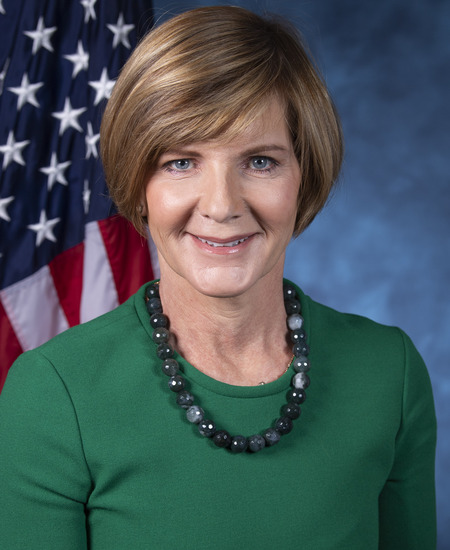
Rep. Susie Lee
Sponsored bills
Maddy summaryHR 5082, the REPORT Act, creates limited liability protections for vendors working with the National Center for Missing & Exploited Children (NCMEC) on child sexual exploitation cases and for minors reporting their own exploitation via NCMEC's CyberTipline. The bill prohibits legal claims against NCMEC-contracted vendors for handling child pornography reports, provided they follow strict data security rules (like end-to-end encryption and limited employee access). It also extends the required preservation period for reports to NCMEC from 90 days to one year and mandates secure storage methods aligned with cybersecurity standards. Additionally, the bill increases civil penalties for large online platforms failing to report such content, with fines up to $850,000 for platforms with over 100 million monthly users.
Maddy summaryThis bill amends budget scoring rules to require the Congressional Budget Office to account for long-term savings from preventive health programs when evaluating legislation. It directs the CBO to assess if a bill reduces future government costs through evidence-based preventive health services (like screenings or vaccinations) and include those savings in budget projections. The change affects how Congress scores the fiscal impact of health-related bills, requiring them to consider savings over 20 years (not just the current budget cycle). It does not create new programs but changes the budget analysis process for preventive health measures.
Maddy summaryThis concurrent resolution (HCONRES 97) recognizes the gender wage gap, noting that women working full-time earn 84 cents for every dollar earned by men. It highlights racial disparities (e.g., Latinas earn 57 cents, Black women 69 cents) and the economic impact of the gap, including $965 billion in annual lost wages for women. As a symbolic resolution, it does not create new laws or policies but formally acknowledges the issue and reaffirms Congress’s commitment to addressing wage inequality.
Maddy summaryHR 7629, the Protect Our Letter Carriers Act of 2024, allocates $1.4 billion annually (2025-2029) to the U.S. Postal Service for high-security collection boxes and replacing physical universal mailbox keys with electronic versions, directly affecting USPS operations and letter carriers. It requires the Attorney General to appoint specialized prosecutors in each district to coordinate investigations and prosecutions of postal-related crimes, such as assaults on carriers or mail theft. The bill also mandates the U.S. Sentencing Commission to adjust guidelines so that assaults or robberies against postal employees are treated with the same severity as assaults against law enforcement officers. These provisions aim to enhance safety through infrastructure upgrades, improved prosecution, and stricter sentencing for crimes targeting postal workers.
Maddy summaryHRES 1053 is a non-binding House resolution reaffirming the U.S.-Canada partnership, not a legislative bill with new policy provisions. It states that the U.S. House of Representatives recognizes the strategic importance of the relationship, citing existing economic ties (e.g., $1.3 trillion in bilateral trade in 2022 supporting 7.5 million U.S. jobs) and security cooperation (including NORAD, border security programs, and shared climate efforts). The resolution emphasizes mutual dependence in areas like energy security, supply chains, and defense, but does not create new obligations or funding. It serves as a symbolic statement of support for the existing partnership, referencing established frameworks like USMCA and joint climate initiatives. As a resolution, it has no legal effect on policy or operations.
Maddy summaryThis bill requires federal agencies that haven't met their annual goal for awarding contracts to service-disabled veteran-owned small businesses to provide staff training on improving those contracts. Within 180 days of enactment, the Small Business Administration must issue guidance to these agencies on best practices for increasing such contracts. Agencies must also report annually to Congress listing those that missed the goal, the number of training sessions provided, and the training content. The law directly affects federal agencies failing to meet the existing contracting target, aiming to improve their performance through structured training and transparency.
Maddy summaryHRES 1032 is a symbolic resolution designating the week of February 26-March 1, 2024, as "Public Schools Week" in the U.S. House of Representatives. It expresses congressional support for public education, highlighting its role in preparing students and communities. The resolution has no legal effect or funding provisions - it solely serves as a formal expression of backing for public schools. It directly affects no individuals or entities but aims to raise awareness about public education. This is a non-binding gesture, not a policy change.
Maddy summaryThe Assad Regime Anti-Normalization Act of 2023 amends the Caesar Syria Civilian Protection Act to expand sanctions against individuals and entities supporting the Assad regime in Syria. It targets those who provide financial or material support to the regime, divert humanitarian aid, seize property, or engage with Syria Arab Airlines or Cham Wings. The bill prohibits U.S. officials from recognizing or normalizing relations with the Assad regime and requires the administration to develop a strategy to counter other countries' engagement with Syria. It also mandates annual reports on diplomatic meetings with Syria, transactions involving Syria, and how the Assad regime manipulates UN operations in Syria.
Maddy summaryThe Uyghur Policy Act of 2023 establishes a U.S. Special Coordinator for Uyghur Issues within the State Department to coordinate policy and advocate for the protection of Uyghur cultural, religious, and linguistic identity in Xinjiang. It authorizes $250,000 annually for Uyghur human rights advocates to speak at public diplomacy events in Muslim-majority countries and mandates Uyghur language training for U.S. diplomats. The bill also directs the U.S. government to support United Nations monitoring of Xinjiang human rights issues and oppose efforts to block discussions of Xinjiang at the UN. These provisions focus on diplomatic advocacy and information-sharing, not direct sanctions or enforcement actions against China.