

Maddy summaryHR 1089, the VA Medical Center Facility Transparency Act, requires each VA medical center director to submit annual and quarterly fact sheets to the VA Secretary, Congress, and the public. The annual reports must include statistics on veterans treated, appointments, common conditions, veteran satisfaction, facility comparisons, improvements made, specialized services (like mental health or women's care), and ongoing deficiencies. Quarterly reports must detail average wait times for veterans seeking care. These fact sheets must be posted publicly both at facilities and online, using a standardized format, to help veterans and Congress understand facility performance and access.
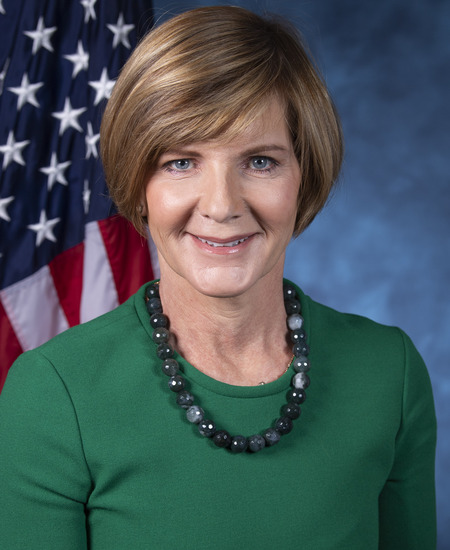
Rep. Susie Lee
Sponsored bills
Maddy summaryThe Autism CARES Act of 2024 reauthorizes and enhances federal programs supporting individuals with autism spectrum disorder. It requires the National Institutes of Health to expand research to include more fields like gerontology and psychiatry, and to ensure research reflects the full range of needs of people with autism, including those with co-occurring conditions. The bill mandates regular reports to Congress on progress, mental health needs, and transition services for young adults with autism, while increasing funding for autism-related programs from fiscal year 2025 through 2029. This legislation directly affects individuals with autism, their families, caregivers, and healthcare providers by improving access to evidence-based services and research.
Maddy summaryHR 4385, the Drought Preparedness Act, extends the funding authorization for the Reclamation States Emergency Drought Relief Act of 1991 through 2028. It modifies two provisions: changing the expiration date from 2022 to 2028 for both the drought program (Section 104(c)) and the authorization of appropriations (Section 301). This extension directly affects federal drought relief programs serving Western states that rely on Bureau of Reclamation water projects. The bill makes no new policy changes but ensures existing drought assistance funding remains available until 2028.
Maddy summaryThis bill, HR 1097 (Everett Alvarez, Jr. Congressional Gold Medal Act of 2023), authorizes the award of a Congressional Gold Medal to Everett Alvarez, Jr., in recognition of his service as a U.S. Navy pilot and Vietnam War prisoner of war. It directly honors Alvarez, who was the first U.S. pilot shot down in the Vietnam War, spent over 8.5 years in captivity, and later served in the Peace Corps and Veterans Administration. The bill’s key mechanism is directing the U.S. Mint to strike a gold medal bearing his name and image, with bronze duplicates available for sale to cover costs. It does not create new policies or affect any group beyond the honoree.
Maddy summaryThis bill approves new agreements that amend the Compact of Free Association between the United States and the Federated States of Micronesia, the Republic of the Marshall Islands, and the Republic of Palau. It incorporates related agreements including fiscal procedures and trust fund agreements that govern how U.S. funding is managed and distributed to these nations. The bill provides funding for 2024-2043 to support programs like healthcare, education, veterans' services, and economic development in the Freely Associated States. It establishes reporting requirements and oversight mechanisms for federal agencies implementing these agreements. The bill directly affects U.S. federal agencies, the Freely Associated States, and U.S. funding mechanisms for these Pacific Island nations.
Maddy summaryHR 6070 clarifies the Department of Defense's authority to conduct specific military activities at Nevada's Test and Training Range. It explicitly authorizes emergency response, construction of up to 15 small electronic tracking sites (max 150x150 feet), and maintenance of existing roads for threat emitters. The bill also requires the Department of Defense and the Department of the Interior to jointly establish an interagency committee to coordinate activities and minimize conflicts with the Desert National Wildlife Refuge. This update ensures military operations align with wildlife refuge protections under existing law.
Maddy summaryHR 2367, the Truck Parking Safety Improvement Act, creates a federal grant program to address commercial truck parking shortages on highways. It provides competitive grants (totaling $175M-$320M over three years) for projects like building new rest areas, expanding parking at ports or truck stops, or improving safety at existing facilities. The program requires all funded parking to be free, publicly accessible to all truck drivers, and maintained without user fees. This directly affects commercial truck drivers, motor carriers, and highway safety by aiming to improve parking access, reduce traffic congestion, and enhance safety on federal-aid highways.
Maddy summaryThis bill requires the Secretary of Agriculture or Interior (depending on land type) to issue federal guidance within 18 months recognizing recreational rock climbing, fixed anchors, and necessary climbing equipment as allowable activities in designated wilderness areas. The guidance must align with the Wilderness Act and other applicable laws, while ensuring public notice and comment for significant management changes (except short-term emergencies). It directly affects climbers and federal land managers overseeing National Forest System lands and Interior Department lands within wilderness areas. The bill does not alter existing wilderness regulations but mandates agencies to formally acknowledge climbing as a permitted activity.
Maddy summaryHR 10495, the Physicians for Underserved Areas Act, amends Medicare's rules for redistributing physician residency slots when a hospital closes. It requires that redistribution plans must now consider the likelihood of starting to utilize the positions within two years and filling them completely within five years. This change applies to hospitals closing on or after the bill's enactment date. The bill directly affects Medicare and closing hospitals by establishing specific timeframes for residency slot utilization, aiming to improve efficiency in filling these positions.
Maddy summaryThe MAPWaters Act requires federal agencies managing public waters (like the National Park Service, Bureau of Land Management, and Forest Service) to create standardized, digital maps and databases about water access rules. It mandates publishing online details on seasonal closures, equipment restrictions (e.g., motorized boats), fishing zones, boat ramp locations, and navigation data within 4 years. This directly helps recreational users - such as boaters, anglers, and hikers - by making complex access rules easier to find and understand. The bill does not change existing fishing or waterway regulations but requires agencies to update data regularly and allow public feedback on the information.