

Maddy summaryHR 5401, the 9/11 Memorial and Museum Act, provides a one-time federal grant of $5 million to $10 million to the National September 11 Memorial & Museum (operated by the World Trade Center Foundation). The grant funds the museum's operations, security, and maintenance, with specific requirements including free admission for veterans, first responders, and victims' families, dedicated weekly free public hours, and annual financial audits. The museum must also report annually to Congress on how the funds were used. This bill directly affects the museum's financial operations and access policies, not broader legislative changes.
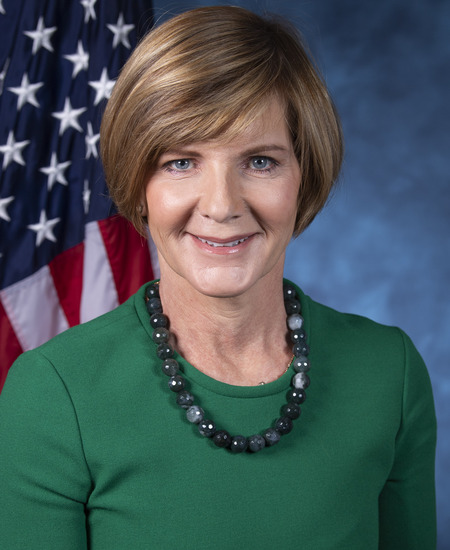
Rep. Susie Lee
Sponsored bills
Maddy summaryThe Save Our Sequoias Act establishes a coordinated approach to protect giant sequoia groves in California from wildfires, insects, and drought. It creates a Giant Sequoia Lands Coalition including federal agencies, state governments, and the Tule River Indian Tribe to assess grove health, develop protection projects, and recommend forest management activities. The bill streamlines implementation of certain projects through categorical exclusion from environmental reviews, authorizes $10-40 million annually for conservation efforts, and establishes a fund for philanthropic support of sequoia protection.
Maddy summaryThis bill directs the Secretaries of the Interior and Agriculture to identify at least 10 existing long-distance bike trails (80+ miles, natural surfaces) and 10 new development areas for such trails on federal lands within 18 months. It requires public comment on trail identification, ensures new trails don’t conflict with existing uses like hiking or wilderness designations, and mandates maps, signage, and a public report within two years. The law specifically applies to mountain biking on federal recreational lands managed by these departments. It focuses on facilitating existing and planned trails without altering current land use rules or funding new construction.
Maddy summaryHR 10027, the Advanced Border Coordination Act of 2024, requires the Department of Homeland Security to establish at least two Joint Operations Centers along the southern U.S. border within six months of enactment. These centers will serve as unified hubs for federal, state, local, and tribal agencies to coordinate border operations, including deterring transnational crime, drug trafficking, human trafficking, and illegal crossings. Key provisions mandate centralized communication, personnel deployment tracking, and annual reporting to Congress on coordination effectiveness, resource use, and identified communication gaps. The bill directly affects border law enforcement agencies and aims to improve interagency collaboration on border security matters.
Maddy summaryThe PROVE IT Act of 2024 directs the U.S. Energy Secretary to study and publicly report on the greenhouse gas emissions intensity of key U.S. manufactured products (like steel, aluminum, lithium batteries, and critical minerals) compared to those produced in "covered countries" (including the EU, China, and major trading partners). It requires a transparent methodology for calculating emissions data, identifies gaps in existing data, and establishes a public online database showing U.S. emissions advantages for these products. The bill also mandates an annual report on foreign countries using forced labor or human rights abuses in the production of critical minerals or rare earths. Importantly, it clarifies the study does not create new taxes, fees, or mandatory reporting requirements.
Maddy summaryHR 8796, the "Stop Comstock Act," removes outdated restrictions from federal law that previously banned the distribution of materials related to contraception and abortion as "obscene" or "indecent." The bill amends Title 18 and the Tariff Act by deleting references to "indecent," "immoral," "unlawful abortion," and "procuring abortion" from provisions governing obscene materials. It clarifies that the law only prohibits "obscene materials" in commerce, eliminating broad restrictions on reproductive health information. This directly affects internet platforms, healthcare providers, and individuals sharing reproductive health resources by removing legal barriers to their distribution.
Maddy summaryThe Essential Caregivers Act of 2024 requires nursing homes and similar facilities to allow residents to designate essential caregivers who provide emotional support or assistance with daily activities. During emergencies when regular visitation is restricted, facilities must permit at least one essential caregiver access to residents daily and cannot deny access without following specific procedures. Facilities may deny access for a maximum of 7 days during emergencies (or 14 days with state approval), and must provide a written explanation and appeal process if access is denied. The bill establishes a 48-hour appeal process for residents and caregivers to challenge denials, with facilities required to prove violations during appeals. This law applies to Medicare skilled nursing facilities, Medicaid nursing facilities, intermediate care facilities, and certain inpatient rehabilitation facilities.
Maddy summaryHR 8227 removes Medicare's requirement for an initial in-person visit before covering mental health services delivered via telehealth. It directly affects Medicare beneficiaries seeking mental health care, allowing them to receive these services remotely without first needing an in-person appointment. The bill amends Medicare rules to eliminate geographic restrictions for telehealth mental health visits, effective July 1, 2019, or after the end of the public health emergency period. This change applies to services provided through rural health clinics and federally qualified health centers as well, streamlining access to mental health care via technology.
Maddy summaryThe EASE Act of 2024 requires the Centers for Medicare & Medicaid Services (CMS) to test a new model improving access to specialty health care for Medicare and Medicaid beneficiaries in rural or underserved areas. It mandates CMS to partner with selected provider networks - comprising at least 50 community health clinics, nonprofits with proven community health work, and commitment to research - to deliver specialty care via telehealth and remote technology, coordinated with patients’ primary care providers. This model directly affects Medicare Part A/B beneficiaries and Medicaid enrollees living in designated underserved regions. The bill establishes specific criteria for network selection and defines "eligible individuals" based on coverage type and geographic location.
Maddy summaryThis bill, the EMPSA Act (Eliminating the Marriage Penalty in SSI Act), changes Social Security Income (SSI) rules for married adults with intellectual or developmental disabilities. It directly affects married individuals aged 18+ who have these disabilities and meet income and resource limits. The key change removes the "marriage penalty" by ensuring their spouse’s income and resources no longer count against their SSI eligibility or benefit amount, allowing them to receive the full individual benefit rate. This update modifies specific sections of the Social Security Act to eliminate the previous disadvantage faced by married couples under these disability conditions.