

Maddy summaryHRES 1437 is a ceremonial resolution designating the week beginning September 9, 2024, as "National Hispanic-Serving Institutions Week." It recognizes Hispanic-serving institutions (HSIs) - colleges and universities with at least 25% Hispanic enrollment - and their role in educating low-income students, advancing economic mobility, and serving 31.7% of all undergraduate students. The resolution calls for the public and organizations to observe this week with ceremonies and activities during Hispanic Heritage Month. It does not create new laws, allocate funding, or change existing policies - it is purely a symbolic gesture of recognition.
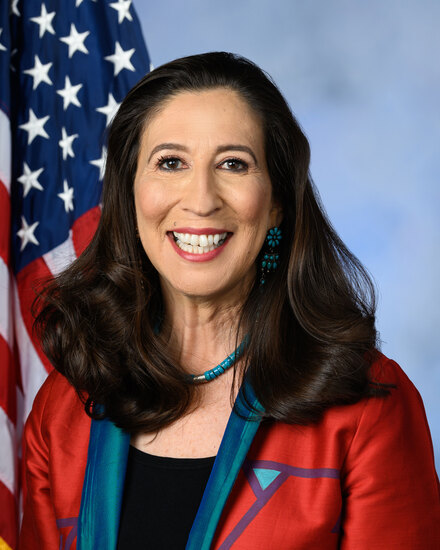
Rep. Teresa Leger Fernandez
Sponsored bills
Maddy summaryHRES 1419 is a symbolic resolution recognizing Overdose Awareness Day and committing the House to strengthen efforts against the opioid crisis. It does not create new law but formally: (1) recognizes Overdose Awareness Day, (2) pledges to advance bipartisan policies reducing stigma around substance use disorders, and (3) commits to collaborating with states, communities, and organizations to support prevention, treatment, harm reduction, and recovery services. The resolution highlights the crisis' severity - including 932,000 overdose deaths since 1999 and a $1 trillion annual economic burden - but focuses on shared goals rather than specific policy changes. It directly affects congressional action and public messaging, not individual citizens or programs.
Maddy summaryThis bill authorizes a Congressional Gold Medal to recognize individuals who defended Bataan, Corregidor, Attu, and other Pacific locations during World War II. It specifically honors U.S. and Filipino military personnel who fought or were held as prisoners of war by Japan between December 1941 and August 1945, as well as the impacted Saskinax̂ people (indigenous Attu residents). The medal will be struck by the U.S. Treasury, displayed at the Smithsonian Institution, and made available for research. Duplicate bronze medals may be sold to cover costs, with proceeds deposited into the U.S. Mint fund. This is a commemorative measure with no new benefits or policy changes.
Maddy summaryThis resolution expresses the House of Representatives' sense that the U.S. Postal Service should issue a commemorative stamp honoring Lt. Col. Charity Adams Earley. It specifically directs the Citizens' Stamp Advisory Committee (a USPS entity) to recommend such a stamp to the Postmaster General. The resolution highlights her historic role as the first Black officer in the Women’s Army Corps and her leadership of the 6888th Central Postal Directory Battalion during WWII, which cleared critical mail backlogs in Europe. This is a symbolic measure with no binding effect on USPS policy.
Maddy summaryHR 9274, the SHAWL Act, establishes two new Smithsonian museums: the National Museum of the American Latino and the American Women’s History Museum. It authorizes both museums to be located within the National Mall’s "Reserve" area, overriding prior restrictions, and requires federal agencies managing potential sites to transfer jurisdiction to the Smithsonian after notifying congressional committees. The bill mandates that both museums accurately represent diverse cultures, histories, and viewpoints within Latino and women’s communities through exhibits and programs, requiring input from a broad range of community experts. It also requires the Smithsonian to submit biennial reports to Congress detailing compliance with these representation requirements.
Maddy summary# Summary of Proposed Workplace Discrimination and Harassment Prevention Bill This comprehensive legislative proposal aims to strengthen protections against workplace discrimination and harassment through multiple interconnected provisions: 1. **Expanded Protections**: Broadens coverage to include sexual orientation, gender identity, and other protected categories in workplace discrimination laws. 2. **Nondisclosure Agreement Restrictions**: Prohibits employers from requiring nondisclosure or nondisparagement clauses that would prevent workers from reporting harassment or discrimination, with limited exceptions for settlement agreements meeting specific requirements. 3. **Arbitration Prohibition**: Bans mandatory pre-dispute arbitration agreements for work-related disputes and imposes strict requirements for post-dispute agreements. 4. **Federal Contractor Requirements**: Mandates that federal contractors disclose labor and civil rights violations from the previous three years and requires corrective actions for violations. 5. **Grant Programs**: - National grants to prevent and address workplace discrimination through education, outreach, and complaint assistance - Grants for legal assistance to low-income workers facing employment discrimination - State-level advocacy systems with funding allotments to support worker rights protection 6. **Enforcement Mechanisms**: Establishes clear enforcement procedures, with the Equal Employment Opportunity Commission (EEOC) having authority to enforce these provisions with powers similar to those under existing civil rights laws. The bill also includes definitions, implementation details, and provisions for state and federal coordination to create a comprehensive system for preventing and addressing workplace discrimination and harassment across all sectors of employment.
Maddy summaryThis bill amends the Higher Education Act to require colleges and universities receiving federal funds to implement evidence-based programs preventing alcohol and substance misuse among students and staff, replacing outdated terms like "drug abuse" with "substance misuse." It creates a new $15 million annual grant program (for fiscal years 2025-2030) to fund recovery services, peer support, integrated health care, overdose prevention, and crisis training. Grants can support campus-based services like counseling, re-entry assistance for students on academic probation due to substance use, and coordination with community health providers. The bill also mandates interagency coordination between education and health agencies to develop best practices and requires institutions to certify compliance with prevention program requirements.
Maddy summaryThe LET'S Protect Workers Act increases civil penalties for employers who violate labor and workplace safety laws. It significantly raises fines for child labor violations (up to $700,000 for serious injuries/deaths), wage and hour violations (up to $50,000 per violation for repeated/willful violations), and workplace safety violations (up to $800,000). The bill also increases penalties for farmworker protections (to $30,000), mine safety violations, and unfair labor practices (up to $100,000). New provisions require employers to pay penalties, with withdrawal orders for mines that fail to pay fines. These changes apply to violations occurring on or after January 1, 2025, with some provisions taking effect immediately.
Maddy summaryH.J. Res. 193 proposes a constitutional amendment to eliminate legal immunity for federal officials, including the President, from criminal prosecution for actions taken while performing official duties. It also prohibits the President from granting a pardon to themselves. The amendment would apply to all federal officers (such as the President, Vice President, and members of Congress) except for Congress members acting in their legislative role as defined in the Constitution. If ratified by 38 states, this change would become part of the U.S. Constitution, requiring no further congressional action.
Maddy summaryHR 9108, the Judicial FOIA Expansion Act, expands public access to specific records held by the U.S. judicial branch under the Freedom of Information Act (FOIA). It requires courts to make available attorney disciplinary records (excluding deliberations), judge complaints, meeting calendars, Federal Judicial Center research, jury forms, judge performance reports, PACER system updates, and annual congressional reports. The bill excludes ongoing case details and information not in a court's possession. It also mandates that all disclosed information be machine-readable and authorizes $10 million for implementation, without affecting existing public access rights to judicial records.