

Maddy summaryThis bill establishes a water rights settlement for the Navajo Nation regarding the Rio San José Stream System in New Mexico. It ratifies an agreement between the Navajo Nation, the State of New Mexico, and other parties to resolve longstanding water rights claims, creating a $200 million trust fund to support water infrastructure and management. The bill confirms that Navajo water rights will be held in trust by the U.S. government, ensures these rights cannot be lost through non-use, and includes waivers of certain water claims in exchange for the settlement. The settlement becomes effective only after specific conditions are met, including court approval and deposit of funds into the trust fund. The bill also protects the water rights of individual land allottees within the system, ensuring their rights remain separate from the Navajo Nation's water rights.
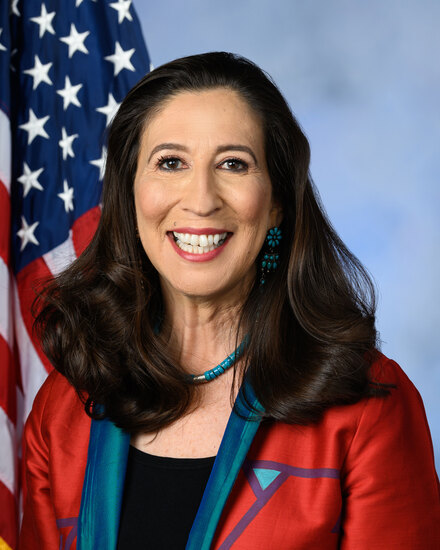
Rep. Teresa Leger Fernandez
Sponsored bills
Maddy summaryThis bill establishes a final settlement for the Zuni Indian Tribe's water rights in the Zuni River Stream System, directly affecting the Tribe, the State of New Mexico, and federal agencies. It ratifies a 2023 agreement, creates a $655.5 million Trust Fund for water infrastructure development and management, and withdraws federal land to protect Zuni Salt Lake and Sanctuary. The bill confirms tribal water rights held in trust by the United States, includes waivers of past claims by the Tribe and the U.S. as trustee, and specifies how water rights will be managed for the Tribe and allottees. It also establishes environmental compliance requirements and land management provisions for the protected areas.
Maddy summaryThe Ohkay Owingeh Rio Chama Water Rights Settlement Act of 2024 resolves long-standing water rights claims for the Ohkay Owingeh Pueblo (a federally recognized Native American nation) in New Mexico's Rio Chama Stream System. The Act ratifies a settlement agreement between the Pueblo, the State of New Mexico, and other parties, establishing a $745 million Trust Fund to support water infrastructure, bosque restoration, and water rights management. It includes a release of most historical water rights claims by the Pueblo in exchange for recognized water rights, while reserving certain environmental and water quality claims. The settlement requires specific conditions to be met by an Enforceability Date before implementation can begin.
Maddy summaryHR 6599 authorizes specific interest payments to three existing water settlement funds established under previous laws. It directs $6.36 million to the Navajo Nation Water Resources Trust Fund, $7.79 million to the Taos Pueblo Water Development Fund, and $4.31 million to the Aamodt Settlement Pueblos’ Fund. These payments correct technical errors in the original settlement acts and cover costs related to water system operations and maintenance. The bill does not create new programs or change existing obligations - it only adjusts funding for previously authorized settlements.
Maddy summaryThis bill amends the Navajo-Gallup Water Supply Project Act to update definitions, expand the service area to include additional communities in New Mexico and Arizona, and establish a "Deferred Construction Fund" for delayed project facilities. It increases the authorized funding to $2.175 billion for fiscal years 2009-2029 and creates three trust funds to manage water resources development, operations/maintenance, and specific needs of the Jicarilla Apache Nation. The bill directly affects the Navajo Nation, Jicarilla Apache Nation, and the City of Gallup by changing how water infrastructure is funded, managed, and expanded. It updates environmental review terminology to "Final Environmental Impact Statement" and clarifies tax treatment for water facilities on tribal versus non-tribal land.
Maddy summaryHR 1304, the Rio San José and Rio Jemez Water Settlements Act of 2023, settles water rights claims for the Pueblo of Acoma, Pueblo of Laguna, Pueblo of Jemez, and Pueblo of Zia in New Mexico. The bill establishes settlement trust funds totaling $1.1 billion (with $296 million for Acoma, $464 million for Laguna, $290 million for Jemez, and $200 million for Zia) to fund water infrastructure, management, and related projects. It requires the tribes to waive historical water rights claims against the United States and other parties, while preserving their ability to enforce current water rights and protect environmental quality. The settlement will become effective once specific conditions are met, including state law changes to allow water rights leases up to 99 years.
Maddy summaryHRES 1355 is a non-binding resolution supporting the designation of July 10 as Journeyman Lineworkers Recognition Day. It honors lineworkers who maintain electrical infrastructure under hazardous conditions, including during disasters, and commemorates Henry Miller, the first president of the International Brotherhood of Electrical Workers, who died on July 10, 1896, while troubleshooting an electrical outage. The resolution encourages public recognition of these workers' contributions but does not create new laws or policies.
Maddy summaryHCONRES 118 is a symbolic congressional resolution recognizing the wage disparity faced by Black women in the U.S. It specifically highlights that Black women earn 69 cents for every dollar earned by White, non-Hispanic men, as noted in Census Bureau data. The resolution marks July 9, 2024, as Black Women’s Equal Pay Day to symbolize how long into 2024 Black women must work to earn what White men earned in 2023. It does not create new laws or policies but formally acknowledges this disparity and reaffirms congressional support for equal pay for equal work.
Maddy summaryHR 8944, the Financial Fitness Act, creates a free, interactive online resource for federal student loan borrowers. The portal, to be established by the Department of Education within 3 years, provides practical guidance on budgeting, loan repayment options, retirement savings, and distinguishing federal vs. private loans. It directly affects millions of borrowers struggling with student debt, including high-risk groups highlighted in the bill's findings (e.g., Black, Hispanic/Latino, and first-generation graduates). The portal requires content on managing debt while saving for retirement and will be reviewed every three years, funded by $5 million annually through 2027.
Maddy summaryThis bill amends the Federal Employees' Compensation Act to include physician assistants and nurse practitioners as eligible providers for injured federal workers. It defines "other eligible provider" as a nurse practitioner or physician assistant within their state-authorized scope of practice. The law updates key sections to replace "physician" with "physician or other eligible provider" for treatment, certification, and claim processes. The Secretary must finalize implementing regulations within six months of enactment.