

Maddy summaryThis bill establishes a "quantum sandbox" program to accelerate near-term quantum applications. It requires the Commerce Secretary and NIST to create a public-private partnership where U.S. businesses and developers can test quantum computing, communication, and sensing solutions for real-world problems within 24 months. The program will engage industry groups and national labs to develop and pilot applications, focusing on practical uses like optimizing supply chains or materials science. It directly affects businesses and researchers working on quantum technologies seeking to deploy solutions faster.
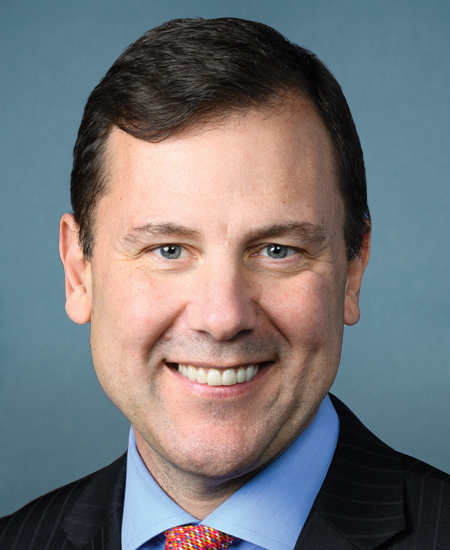
Rep. Thomas H. Kean, Jr.
Sponsored bills
Prevent Family Fire Act of 2023 This bill allows through 2030 a new tax credit equal to 10% of amounts received from the first retail sale of a safe firearm storage device, not to exceed $400 per device. The bill defines safe firearm storage device as a device that is designed and marketed to deny unauthorized access to, or render inoperable, a firearm or ammunition, and is secured by a combination lock, key lock, or lock based on biometric information.
Maddy summaryHR 2785, the REEF Act, amends a 2020 law to change when certain payments from the Railroad Unemployment Insurance Account take effect. It retroactively applies changes to these payments as if they had been in place before the national emergency related to the COVID-19 pandemic ended. This directly affects railroad workers who receive unemployment benefits through this account, ensuring they receive payments under the revised timing. The bill's key change is making the effective date of these payment rules apply retroactively from before the pandemic emergency period.
American Innovation and R&D Competitiveness Act of 2023 This bill eliminates the five-year amortization requirement for research and experimental expenditures, thus allowing continued expensing of such expenditures in the taxable years in which they are incurred.
Maddy summaryHJRES 27 is a congressional resolution seeking to block a federal rule that redefined which waterways fall under the Clean Water Act's protections. It targets a rule submitted by the Army Corps of Engineers, Department of Defense, and Environmental Protection Agency (EPA) on January 18, 2023, which aimed to revise the "Waters of the United States" definition. The resolution would formally disapprove this rule under a specific federal procedure (Chapter 8 of Title 5), preventing it from taking effect. This would directly affect how federal agencies regulate pollution and development near water bodies, including wetlands and smaller streams.
Capital Loss Inflation Fairness Act This bill increases the allowance for capital losses and adjusts the increased allowance amount for inflation after 2023.
Maddy summaryThe VA Same-Day Scheduling Act of 2023 requires the Department of Veterans Affairs to schedule appointments for enrolled veterans during the same phone call when they request care. This applies to veterans enrolled in the VA healthcare system who contact the VA by phone to request appointments. The law mandates that the VA must complete the scheduling during the call - without delay or future scheduling - regardless of the appointment date. The requirement takes effect 120 days after the bill is enacted.
Maddy summaryThe Optimizing Postpartum Outcomes Act of 2023 requires the Health and Human Services Secretary to issue guidance within one year on covering pelvic health services (like pelvic floor exams and physical therapy) during the postpartum period under Medicaid and CHIP programs. This guidance will include best practices for payment models, financing options, and standardized terminology to improve access for postpartum women. It also mandates a GAO study on coverage gaps for postpartum services and funds a new CDC-led education campaign to train healthcare providers and inform postpartum women about pelvic health care. The bill directly affects postpartum women enrolled in Medicaid or CHIP, aiming to standardize and expand access to these specific health services.
Maddy summaryThe Panama Canal Zone Veterans Act of 2023 creates a presumption that veterans who served in the Panama Canal Zone between 1958 and 1999 (or until the last military member left) and developed specific illnesses are automatically eligible for VA benefits without needing to prove a direct link between their service and the condition. It lists 16 illnesses, including prostate cancer, lung cancer, diabetes, Parkinson's disease, and several other cancers, as qualifying for this presumption due to presumed exposure to herbicides like Agent Orange during service. The VA will use regulations based on medical evidence to determine which illnesses qualify under this provision. This change directly affects veterans who served in the Panama Canal Zone during the covered period and later developed one of the listed conditions.
Maddy summaryHR 2630, the Safe Step Act, requires group health plans and health insurance issuers to establish a clear, transparent process for patients or their doctors to request exceptions to medication step therapy protocols. These protocols typically force patients to try cheaper drugs first before covering more expensive alternatives. The bill mandates that plans must approve exceptions when prior treatments failed, delay would cause serious harm, a treatment is unsafe, or a patient is stable on a previously approved drug, with strict 72-hour (or 24-hour in emergencies) decision timelines. It also requires plans to publish the exception process online and limit documentation requests to only necessary medical information. This law directly affects health insurers, employers offering health plans, and patients using step therapy for prescription drugs.