

Maddy summaryThis bill removes a previous exclusion that prevented temporary federal employees (including U.S. Postal Service staff and Members of Congress) from counting service after January 1, 1988, toward their retirement benefits. It allows these workers to have their post-1988 temporary service counted toward retirement eligibility if they pay a deposit to the retirement system. The change applies to anyone employed by the federal government on or after the bill's enactment date. The Office of Personnel Management must notify affected employees and create rules to implement this change.
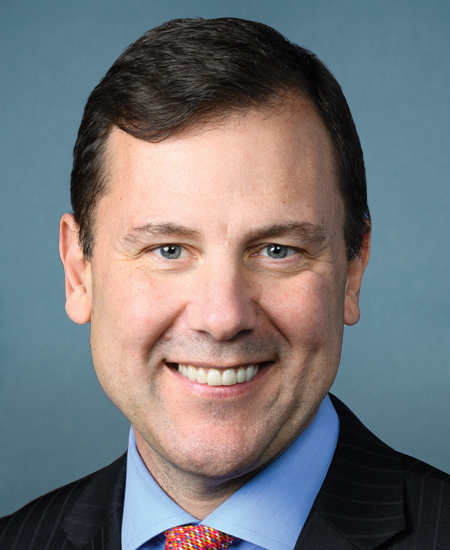
Rep. Thomas H. Kean, Jr.
Sponsored bills
'Operation Swords of Iron' Iron Dome Supplemental Appropriations Act This bill provides $2 billion in appropriations for the Department of Defense to provide to the government of Israel for the procurement of the Iron Dome defense system to counter short-range rocket threats. The funds must be provided to address emergent requirements in support of Operation Swords of Iron.
Maddy summaryHR 995 directs the U.S. Department of Energy to conduct a study on the global civilian nuclear energy industry and its supply chains, including environmental benefits, U.S. foreign policy roles, and security implications, with a report to Congress due within six months. It establishes a program to train foreign nuclear experts on U.S. safety practices and creates a new Nuclear Regulatory Commission branch to coordinate international reactor exports and innovation. The bill also prohibits licenses for nuclear fuel from Russia or China unless the Energy and State Secretaries jointly certify it poses no threat to U.S. national security. These provisions aim to strengthen U.S. leadership in nuclear energy diplomacy and supply chain security.
Maddy summaryHR 2973, the MARITIME Act of 2023, directs the Secretary of Defense (with the Secretary of State) to develop a coordinated maritime security capability in the Middle East to protect allies' people, infrastructure, and shipping lanes from Iranian naval threats and groups like terrorist organizations or pirates. The bill requires a detailed strategy report within 60 days, assessing existing partnerships (like the Combined Maritime Forces), Israel's integration, and intelligence coordination gaps, plus a feasibility study for a funding mechanism within 90 days. It focuses on enhancing U.S.-led efforts already underway, not creating new forces or funding. The bill directly affects U.S. allies and partners in the Middle East, particularly those under U.S. Naval Forces Central Command's responsibility.
Drone Research and Innovation for Law Enforcement Act of 2023 This bill directs the Federal Aviation Administration (FAA) to study, and create an approval process for, nonlethal de-escalation unmanned aircraft (i.e., drones). Under the bill, nonlethal de-escalation unmanned aircraft means an unmanned aircraft that is equipped with one or more nonlethal weapons or devices and is used by law enforcement personnel in scenarios (1) that present significant risk to human life, and (2) in which the suspected criminal is in a position to potentially escalate the situation and expose human life to a high level of risk. Specifically, the FAA must initiate a pilot research program to study the potential use of nonlethal de-escalation unmanned aircraft by law enforcement agencies. As part of the study, the FAA must enter into interagency agreements with various federal, state, and local agencies. The FAA must submit a report on the results of the research program to Congress. The report must include a plan outlining a proposed FAA application process for law enforcement to seek permission to operate nonlethal de-escalation unmanned aircraft. Within 90 days of submitting the report, the FAA must initiate rulemaking to create a process through which the FAA may provide approval to operate these unmanned aircraft.
Maddy summaryThis bill appropriates $300 million in additional funding for the Ukraine Security Assistance Initiative to support Ukraine's military and security forces resisting Russian aggression. It provides funds for lethal and non-lethal aid, including training, equipment, logistics, and intelligence support, with specific requirements for Congress to be notified 15 days before using funds and for quarterly reporting on fund usage. The bill also establishes an Office of the Special Inspector General for Ukraine Assistance to oversee spending and prevent waste, fraud, or abuse, with $20 million allocated to this office. The funding is intended to replace U.S.-provided equipment and support ongoing or new programs, subject to strict oversight mechanisms.
Maddy summaryThis resolution designates the week of September 25-29, 2023, as "National Clean Energy Week" to recognize the growing role of clean energy in the U.S. economy. It expresses support for clean energy jobs and innovation, noting the sector employed about 8.1 million people in 2022. The resolution encourages federal, state, and local investment in affordable clean energy technologies and promotes "commonsense solutions" for energy needs. As a symbolic gesture, it has no legal force or funding implications - it simply urges recognition of clean energy's economic and environmental contributions.
Maddy summaryThe Mobile Mammography Promotion Act of 2023 provides tax relief for mobile mammography service providers by refunding federal excise taxes on fuel used in their vehicles and exempting that fuel from future taxation. It amends the tax code to require the IRS to refund excise taxes paid on fuel used in highway vehicles designed exclusively for delivering mammography screenings within the vehicle. This directly lowers operational costs for mobile mammography providers, who operate vehicles serving patients on-site. The refund and exemption apply to fuel purchased for these specific mobile units, reducing their expenses. The provisions take effect upon the bill's enactment.
Maddy summaryHR 5641, the Pay Our Troops Act, ensures military personnel and their support staff continue receiving pay during fiscal year 2024 if Congress fails to pass regular budget appropriations. It appropriates existing Treasury funds to cover pay and allowances for active-duty troops, reserve components, and civilian employees or contractors supporting military operations. The bill automatically terminates on January 1, 2025, or earlier if Congress enacts a regular budget or continuing resolution. This provision directly affects service members, Department of Defense staff, and Coast Guard personnel (when not under the Navy) during budget implementation gaps.
Maddy summaryThis bill requires the Department of Veterans Affairs (VA) to review all veteran suicides occurring between 2018-2023 (the five years before enactment) for veterans who received VA care. The review must analyze demographics, medications (including those with strong safety warnings like "black box" labels), prescribing patterns, mental health diagnoses, and facility-level data. The VA must complete the review within 18 months and publicly submit a detailed report to Congress and the public within 30 days of completion. This law directly affects veterans' families, VA healthcare providers, and policymakers by mandating transparency around suicide risk factors and prescribing practices.