

Maddy summaryThis bill extends existing aviation programs and tax authorities through December 2023. It modifies deadlines for airport improvement grants (extending $842 million in funding for Q4 2023), unmanned aircraft regulations, FAA operations, and key tax collections like fuel and ticket taxes. These changes maintain current funding levels for airports, airlines, and FAA programs relying on the Airport and Airway Trust Fund. The bill does not create new programs but ensures continuity of existing authorizations. It directly affects airports receiving federal grants, airlines paying aviation taxes, and FAA operational activities.
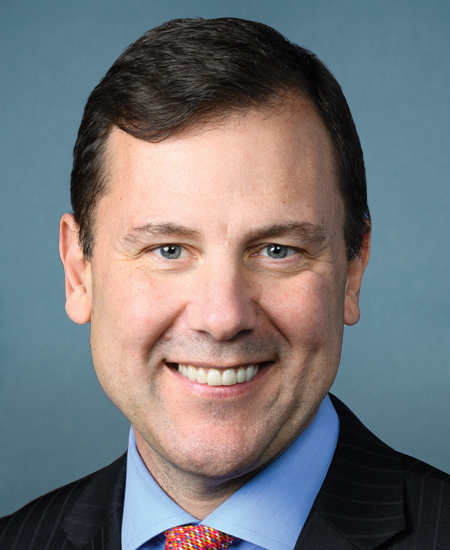
Rep. Thomas H. Kean, Jr.
Sponsored bills
Pay Our Border Patrol and Customs Agents Act This bill provides FY2024 appropriations for the salaries and expenses of certain U.S. Customs and Border Protection (CBP) employees who are required to work during a lapse in appropriations (i.e., government shutdown) in FY2024. Specifically, the bill provides appropriations to CBP for the salaries and expenses of agents of the U.S. Border Patrol and officers of the Office of Field Operations who are excepted from furlough (i.e., required to work) during a lapse in discretionary appropriations in FY2024.
Maddy summaryHRES 720 designates the week of September 24-30, 2023 (and annually thereafter) as "Gold Star Families Remembrance Week" to honor families who have lost loved ones in military service. It specifically recognizes the sacrifices of families of fallen service members and veterans, and encourages Americans to observe the week through community service and celebrating the lives of those who died protecting the nation. This resolution is procedural and symbolic, with no new funding, regulations, or policy changes - only a formal designation to honor these families. It directly affects Gold Star families (those with members who died in military service) and the broader public through its call for observance.
Maddy summaryHR 4739, the Protecting America’s Orchardists and Nursery Tree Growers Act, amends the Agricultural Act of 2014 to improve assistance for orchardists and nursery tree growers experiencing tree loss. It lowers the mortality threshold from 15% to "normal mortality," requires replacement activities within 12 months (or as needed for tree survival), and allows growers to use assistance for alternative replanting options like different tree varieties, stand densities, or locations - without exceeding the original assistance amount. The bill also excludes growers with 75%+ farming income from gross income limits and mandates the Secretary to notify applicants within 120 days of application status. This directly affects growers facing tree loss due to pests, disease, or other causes, streamlining program access and flexibility.
Maddy summaryHRES 697 is a non-binding resolution expressing the U.S. House of Representatives' concerns about China's "Made in China 2025" (MIC2025) industrial plan and associated actions. The resolution cites alleged Chinese practices - including state-backed intellectual property theft, forced labor, unfair subsidies, and cyber espionage - as undermining U.S. competitiveness in key technology sectors like semiconductors, AI, and clean energy. It directly affects U.S. businesses, researchers, and government entities operating in these MIC2025 priority areas, urging them to strengthen security measures against foreign interference. The resolution calls for coordinated U.S. public-private efforts to protect innovation but does not impose new legal requirements.
Maddy summaryThe Humane Cosmetics Act of 2023 bans cosmetic animal testing in the United States, prohibiting companies from conducting or contracting such testing after its enactment (effective 1 year later). It also bans selling or transporting cosmetics developed using animal testing conducted after that date within U.S. interstate commerce. The law directly affects cosmetic manufacturers, retailers, and suppliers operating in the U.S. market, requiring them to use non-animal testing methods for safety evaluations. Exceptions exist for foreign regulatory requirements or when no alternative testing methods are available for specific ingredients.
Maddy summaryThis bill requires parties in civil lawsuits to disclose any foreign entities funding their case - including names, addresses, and countries of origin - within 30 days of filing or signing funding agreements. It specifically prohibits foreign governments and sovereign wealth funds from funding litigation where payment depends on the case outcome, banning such agreements entirely. Parties must also certify if foreign money is used and submit annual reports to Congress detailing foreign funders, judicial districts involved, and case types. The law applies to all civil cases filed after enactment, aiming to increase transparency about foreign influence in U.S. courts.
Maddy summaryHR 3152, the "Fight CRIME Act," aims to maintain international restrictions on Iran's missile-related activities by requiring diplomatic efforts to extend these restrictions before they expire in October 2023. The bill mandates annual reports detailing U.S. diplomatic strategies, potential impacts of expiration, and measures to deter missile technology transfers to Iran. It establishes sanctions against foreign individuals or entities that knowingly support Iran's missile or drone programs, including asset freezes and visa restrictions. These sanctions apply regardless of whether UN restrictions remain in effect after their expiration, directly affecting foreign entities involved in these activities.
Maddy summaryHRES 677 is a symbolic House resolution condemning Russia for actions that worsen global food insecurity. It specifically targets Russia's invasion of Ukraine, including its blockade of Ukrainian Black Sea ports, attacks on grain infrastructure, and suspension of the Black Sea Grain Initiative - measures that disrupted Ukraine's role as a major global grain exporter (supplying 11% of world cereals). The resolution demands Russia cease targeting grain facilities, resume participation in the Grain Initiative, and stop weaponizing food shortages. It affirms that Russia's actions, not sanctions, are the cause of rising global food insecurity, which the resolution links to U.S. national security. This resolution does not enact new laws but formally expresses congressional opposition to Russia's tactics.
Maddy summaryThe Fire Grants and Safety Act of 2023 reauthorizes and increases funding for key federal fire safety programs. It extends the Assistance to Firefighters Grants Program and Fire Prevention and Safety Grants Program through 2030 (from 2024) with $750 million annually for fiscal years 2024-2028. The bill also reauthorizes the United States Fire Administration at $95 million per year (including $3.42 million for specific activities) and mandates a GAO audit within three years to assess barriers to accessing federal funds and the U.S. Fire Administration's operations. These provisions directly affect state and local fire departments eligible for federal grants.