

Maddy summaryThe Global Respect Act (HR 6151) requires the U.S. President to publicly list foreign officials responsible for severe human rights violations against LGBTQI individuals, including torture, prolonged detention, or violence based on sexual orientation or gender identity. It mandates denying visas and entry to listed individuals and requires annual reports on the list's updates and impacts. The bill also directs the State Department to track global violence against LGBTQI people and update annual human rights reports to include discrimination based on sexual orientation or gender identity. These provisions directly affect foreign government officials and entities implicated in such abuses, aiming to increase accountability through U.S. visa restrictions.
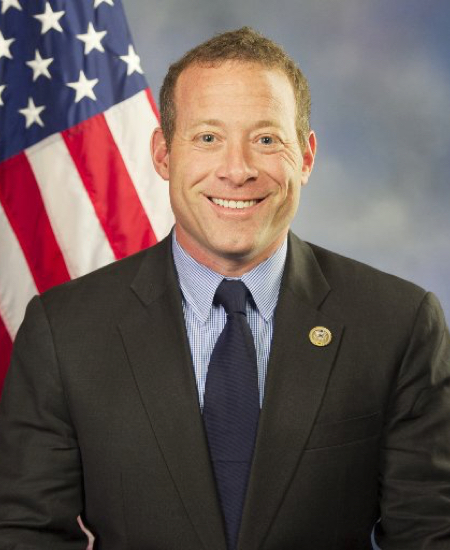
Rep. Josh Gottheimer
Sponsored bills
Maddy summaryHR 6161, the SEC Data Protection Act, requires the Securities and Exchange Commission (SEC) to establish policies protecting sensitive nonpublic data provided by investment advisers. The bill mandates that within one year of enactment, the SEC create rules addressing when it requests such data, safeguarding it based on sensitivity, restricting access to authorized staff, and preventing unauthorized use or disclosure. These policies must be developed through a notice-and-comment rulemaking process. The law directly affects investment advisers who share proprietary information with the SEC, ensuring their data is handled securely under new federal standards.
Maddy summaryThe Water Infrastructure Modernization Act of 2025 amends federal water law to define and support "intelligent water infrastructure technology," including real-time monitoring systems, AI-driven wastewater optimization tools, leak detection sensors, and advanced metering for conservation. It directly affects municipal water systems and utilities by expanding eligible uses for federal grants - allowing funds for implementing these technologies (like predictive aquifer recharge systems) while prohibiting grants for planning or maintenance. The bill increases annual grant funding from $25 million to $50 million (starting in 2028) and requires annual reports to Congress on funded projects and their resiliency improvements. This creates a clear pathway for communities, especially disadvantaged ones, to access federal support for modernizing aging water infrastructure through data-driven solutions.
Maddy summaryThe HEAL-AI Act (HR 6077) establishes a federal grant program to fund medical schools and teaching hospitals in training medical students, residents, and faculty on using artificial intelligence in healthcare. It requires grantees to develop curricula covering AI diagnostics, ethical issues (like bias and patient privacy), and clinical integration, while limiting administrative costs to 10% of funds. Schools must report annually on program progress and publicly share educational materials, with priority given to institutions serving underserved communities. The program allocates $1 million annually from 2026-2030, totaling $5 million over five years, to support competency-based AI literacy in medical education.
Maddy summaryThis bill regulates healthcare platforms that help patients find providers (like online appointment directories). It prohibits these platforms from steering patients toward specific providers based on payment, requiring full disclosure of financial ties between platforms and healthcare providers. Platforms must use objective criteria for listing providers, cannot offer medical services or collect patient data improperly, and must set fair, pre-agreed compensation rates. It directly affects health tech companies operating these platforms and healthcare providers using them to connect with patients.
Maddy summaryHR 6120, the SROS Act, exempts retirement income from taxable income for qualifying school resource officers. It directly affects retired military members or law enforcement officers who later work as school resource officers, provided they meet background checks and state training requirements. The bill excludes pension, annuity, or retirement plan payments from taxable income during their employment as school resource officers. Additionally, officers with 10+ years of service in this role receive a lifetime exemption for all retirement income after leaving the position. The tax change applies to taxable years beginning after the bill's enactment.
Maddy summaryHRES 882 is a symbolic House resolution expressing support for Kazakhstan's planned accession to the Abraham Accords, making it the first Central Asian country to join the agreement. The resolution welcomes Kazakhstan's announcement of joining the Accords (noted as occurring November 6, 2025), calls for stronger people-to-people ties between Israel and Kazakhstan, and urges other nations to deepen relations with Israel. It does not create new laws or policies but formally endorses this diplomatic development through congressional support. The resolution directly affects Kazakhstan-Israel relations by affirming U.S. backing for their expanding partnership.
Maddy summaryHRES 880 is a symbolic House resolution recognizing the strategic U.S.-India partnership, not a bill with new policy or funding. It reaffirms longstanding cooperation on defense, counterterrorism, technology, and people-to-people ties, citing historical milestones like the 2008 nuclear agreement and recent Quad collaboration. The resolution has no binding effect but formally supports continued partnership through existing mechanisms like the U.S.-India Transforming Relationship Utilizing Strategic Technology initiative. It highlights shared priorities including Indo-Pacific stability and counterterrorism efforts, with no new legislative requirements or changes to law.
Maddy summaryHR 6056, the International Human Rights Defense Act of 2025, establishes a permanent Special Envoy at the State Department to lead U.S. foreign policy efforts addressing discrimination and violence against LGBTQI+ people globally. The bill requires the U.S. government to develop and update a biannual global strategy to prevent criminalization and violence against LGBTQI+ individuals, mandate detailed reporting on such abuses in annual country reports, and ensure all U.S. foreign assistance programs include inclusive nondiscrimination policies. This legislation directly affects U.S. foreign policy implementation, federal agencies receiving funding, and LGBTQI+ communities facing persecution worldwide. The bill aims to coordinate U.S. government efforts across departments and with international partners to advance LGBTQI+ rights globally through concrete policy mechanisms.
Maddy summaryHR 6054, the Fairness to Kids with Cancer Act of 2025, requires federal cancer research funding to allocate pediatric research dollars proportionally based on the U.S. child population. Specifically, for fiscal years 2026 and beyond, the percentage of cancer research funds dedicated to pediatric cancer must match the ratio of children under 18 to the total U.S. population, as determined by the Census Bureau. This directly affects how federal cancer research dollars are distributed, ensuring pediatric cancer research receives funding aligned with the proportion of young patients. The bill mandates this calculation annually, shifting funding allocation toward pediatric research without specifying new programs or budget increases.