

This bill requires the Department of Veterans Affairs (VA) to increase the amounts payable for wartime disability compensation, additional compensation for dependents, the clothing allowance for certain disabled veterans, and dependency and indemnity compensation for surviving spouses and children. Specifically, the VA must increase the amounts by the same percentage as the cost-of-living increase in benefits for Social Security recipients that is effective on December 1 of each year. The bill requires the VA to publish the amounts payable, as increased, in the Federal Register. The VA is authorized to make a similar adjustment to the rates of disability compensation payable to persons who have not received compensation for service-connected disability or death.
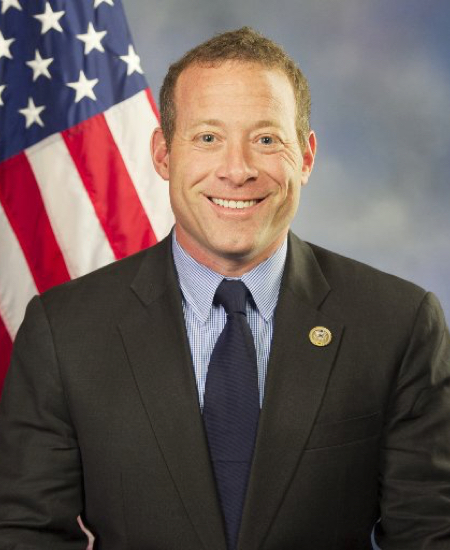
Rep. Josh Gottheimer
Sponsored bills
Maddy summaryHR 6026 requires the Secretaries of Veterans Affairs and Education to jointly submit a report to Congress within 180 days of enactment, focusing on childcare availability, accessibility, and affordability for veteran families. The report must assess current childcare options, identify gaps in services, and evaluate specific barriers like cost, geographic distance, and eligibility requirements. This procedural bill does not create new benefits or mandates but aims to gather data to inform future policy decisions for veteran families.
Maddy summaryHR 6011, the VA Work-Study Improvement Act, expands opportunities for veterans and military members participating in the VA's work-study program. It allows them to work on activities with state/local governments or nonprofits that benefit veterans (e.g., community service or job training), and sets a new wage standard requiring payments to be the highest of federal employee rates, state minimum wage, or local minimum wage. The bill also requires electronic tracking of work hours and annual public reporting on program participation, including demographics, wages, hours worked, and participating schools. These changes apply to work-study payments made on or after January 1, 2028.
Maddy summaryHR 6000, the Veterans’ Sentinel Act, requires the Department of Veterans Affairs (VA) to improve data collection and analysis of suicides and attempted suicides occurring on VA property. It mandates an annual evaluation of trends and prevention recommendations, establishes a working group to review root cause data (including Behavioral Health Autopsy Program findings), and standardizes data collection across VA facilities. The working group must develop unified reporting systems, modify incident forms to include on-campus suicide data, and coordinate with medical centers. The VA must submit annual briefings to congressional committees and a final report detailing the working group’s effectiveness and data management improvements. This bill directly affects VA facilities and veterans who experience suicide-related incidents on VA property.
Maddy summaryHRES 864 is a ceremonial resolution honoring U.S. veterans on Veterans Day 2025. It does not create new laws or policies but formally recognizes veterans' service and sacrifice, calling on all Americans to observe Veterans Day. The resolution references historical context about Veterans Day's origins (from Armistice Day to honoring all veterans) but contains no concrete policy changes. It directly addresses the general public, urging them to participate in the observance. As a non-binding resolution, it affects no specific individuals or groups through legislative action.
Maddy summaryHR 5965, the Student Veteran Work Study Modernization Act, expands work-study eligibility for veterans pursuing education or rehabilitation programs at least half-time (instead of the current three-quarter-time requirement). The bill creates a 5-year pilot program allowing veterans to receive a work-study allowance from the VA while studying part-time, directly affecting veterans enrolled in qualifying programs. It requires the VA to submit annual reports tracking participation rates, four-year degree attainment, and full-time VA employment outcomes for participants. The law modernizes existing VA work-study rules without altering benefit amounts or creating new funding streams.
Maddy summaryThis bill ensures continuous funding for SNAP (food assistance) and WIC (nutrition program for mothers/children) during government funding gaps. It authorizes emergency Treasury funds to cover SNAP/WIC benefits and reimburse states for costs if Congress fails to pass regular appropriations for the Department of Agriculture by September 30, 2025. The funding covers missed payments retroactively from September 30, 2025, through the bill’s enactment date, and continues until either regular appropriations pass or September 30, 2026. It directly affects low-income households relying on these programs and state agencies administering them during funding lapses.
Maddy summaryHR 5913, the Community Investment and Prosperity Act, amends two existing banking regulations by increasing a percentage threshold from 15% to 20% in two specific legal provisions. It revises the Revised Statutes (12 U.S.C. 24) and the Federal Reserve Act (12 U.S.C. 338a), specifically altering the fifth sentence of designated paragraphs. These changes directly affect how national banks and financial institutions calculate certain regulatory requirements under federal law. The bill makes a technical adjustment to existing banking rules without creating new programs or altering broader community investment policies.
Maddy summaryThe Merchant Banking Modernization Act (HR 5291) requires bank holding companies to maintain merchant banking investments for a minimum of 15 years. This applies to all new investments and retroactively to existing investments held on the bill's enactment date. The bill modifies the Bank Holding Company Act to establish this 15-year holding period as a regulatory standard, directly affecting financial institutions engaged in merchant banking activities. It sets a clear, minimum timeframe for holding such investments without altering other regulatory requirements.
Maddy summaryHRES 846 is a symbolic resolution designating October 2025 as National Domestic Violence Awareness Month. It expresses the House's support for raising awareness about domestic violence and its impacts, and calls for continued congressional attention to ending domestic violence through existing programs. The resolution does not create new laws, allocate funding, or directly affect any specific groups - it is purely a statement of support. It references statistics on domestic violence prevalence but focuses on awareness rather than policy changes.