

Maddy summaryHR 7506, the "Decreasing Russian Oil Profits Act of 2026," imposes sanctions on foreign companies and individuals involved in purchasing or facilitating the trade of Russian crude oil or petroleum products. It requires the U.S. President to block financial transactions involving such entities after a 90-day delay, targeting those responsible for Russian oil imports or related financial activities. The bill includes limited exceptions for countries that reduce Russian oil purchases (with funds used for agriculture/medicine), countries supporting Ukraine via dedicated accounts, or nations providing significant military/economic aid to Ukraine. Sanctions expire automatically five years after enactment.
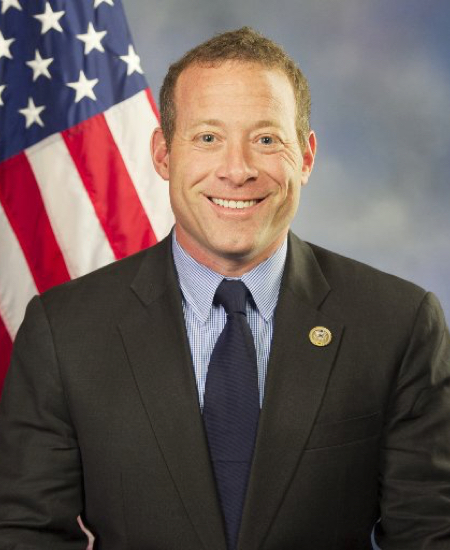
Rep. Josh Gottheimer
Sponsored bills
Maddy summaryHR 7516, the "No Funds for Forced Labor Act," requires the U.S. Treasury to direct American representatives at international financial institutions (like the World Bank) to oppose loans for projects that use or risk using forced labor, particularly those involving state-run entities in Xinjiang. It mandates these institutions to vet projects for forced labor risks, explain their vetting process, and detail mitigation steps before funding. The bill directly affects international financial institutions and the projects they fund, especially those linked to Xinjiang. It does not ban all loans but targets projects with documented forced labor concerns, requiring annual reports to Congress on implementation. The law focuses on policy changes to prevent U.S.-aligned financial support for forced labor practices.
Maddy summaryThis bill directs the Comptroller General to conduct a comprehensive study on housing affordability challenges facing middle-income American families. The report will identify specific geographic areas where housing is most unaffordable for these households and examine existing federal programs that currently exclude middle-income families from benefits available to lower-income groups. Additionally, the study will analyze how to define workforce housing based on income parameters and provide recommendations for expanding federal housing assistance to include middle-income households. The legislation focuses on gathering data and making policy recommendations rather than implementing immediate changes to housing programs.
Maddy summaryThe LymeX Authorization Act authorizes $5 million in federal funding to support prize competitions aimed at accelerating innovations in Lyme disease prevention, diagnosis, and treatment. It directs the Health and Human Services Secretary to use these competitions - modeled on existing frameworks - to spur breakthroughs from stakeholders like researchers, industry, and patient groups. The bill directly affects Lyme disease patients and medical innovators by creating a structured funding mechanism for developing faster, more effective diagnostic tools and care. Key provisions include requiring collaboration with diverse stakeholders and focusing prize efforts on "patient-centered" solutions as outlined in the bill's policy statement.
Maddy summaryThe Housing for Heroes Act of 2026 expands eligibility for the Good Neighbor Next Door Sales Program to include members of the Armed Forces, firefighters, and law enforcement officers. Under this bill, these eligible individuals can purchase single-unit properties through the program even if the properties are not located in designated revitalization areas. The Department of Housing and Urban Development will update its regulations to implement these expanded eligibility rules. This change allows first responders and military personnel to access discounted housing opportunities in a broader range of locations.
Maddy summaryThis bill amends the process for the Financial Stability Oversight Council (FSOC) when considering actions against U.S. nonbank financial companies. It requires the FSOC to first determine that alternative solutions - such as new regulatory standards, agency actions, or a company's written plan - are not possible or insufficient to protect financial stability before voting on a formal determination. The change directly affects the FSOC and large nonbank financial companies that could face regulatory scrutiny. The key provision adds a new step to ensure the Council explores other options before taking significant action. (Procedural bill; summary limited to 3 sentences as specified.)
Maddy summaryThis bill requires the military to approve leave for abortion and fertility care without commanders needing to know the specific procedure. It mandates reimbursement for travel, lodging, meals, and transportation costs when care isn't available nearby, and prohibits punishment for using this leave. It directly affects active-duty service members and their dependents who face barriers to reproductive care due to military restrictions or location. The policy change removes command discretion in approving leave for time-sensitive reproductive health services.
Maddy summaryThis bill establishes a federal grant program to fund mobile vaccination units in states, directly affecting state health departments and local communities. It authorizes the Secretary to award grants for states to establish or expand mobile units that provide recommended childhood, adolescent, and adult immunizations, covering vehicle acquisition, equipment, and vaccine costs. States must submit applications and use funds solely for these mobile units, with the Secretary required to report on the program's effectiveness to Congress by September 2027. The program is funded for fiscal year 2027 with no specified budget amount.
Maddy summaryThe SECURES Act of 2026 requires the U.S. Department of Transportation to propose new federal safety standards for seat belts on all new school buses within 180 days of the bill becoming law. The proposed rule must consider evidence showing lap/shoulder belts provide the highest passenger safety benefit, including findings from the National Transportation Safety Board and past guidance from the National Highway Traffic Safety Administration. It specifically directs the rulemaking to evaluate seat belt detection systems and existing state requirements for school bus seat belts. This bill affects all manufacturers of new school buses and school districts purchasing new vehicles, setting the stage for potential future federal seat belt mandates.
Maddy summaryThis bill amends disaster preparedness funding rules to better support companion animals during emergencies. It adds a new 90% federal funding option for specific pet-related preparedness activities, alongside the existing 50% option. States, localities, and tribes receiving disaster grants can now use funds for items like collapsible crates, mobile pet trailers, veterinary supplies, emergency generators, and animal response team training. The law directly affects government entities managing disaster response by expanding allowable uses of existing grant money for pet safety.