

Maddy summaryThis bill would amend federal law to strengthen penalties for organized retail crime by expanding definitions of theft to include digital goods, gift cards, and setting a $5,000 aggregate value threshold for charges over a 12-month period. It would establish a new "Organized Retail and Supply Chain Crime Coordination Center" under Homeland Security to coordinate Federal, State, local, and Tribal law enforcement efforts against cross-jurisdictional theft groups. The Center would share information with retailers, transportation companies, and law enforcement agencies, track crime trends, and produce annual reports on organized retail crime. This legislation directly affects retailers, supply chain businesses, and law enforcement agencies, while targeting organized crime groups responsible for a 93% increase in larceny incidents and rising safety concerns for retail employees. The bill aims to address significant financial losses and supply chain disruptions noted in the National Retail Federation's 2023 data.
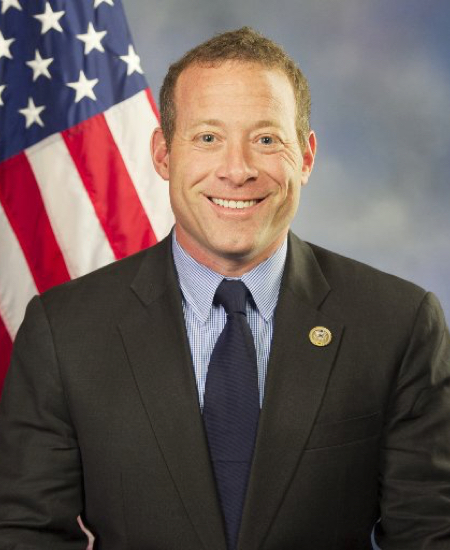
Rep. Josh Gottheimer
Sponsored bills
Maddy summaryThe COPS Reauthorization Act of 2026 extends funding for the COPS ON THE BEAT grant program through fiscal year 2031, allowing the Department of Justice to continue providing grants to local law enforcement agencies for hiring and retaining officers. The bill also formally establishes the Office of Community Oriented Policing Services as a separate office within the Department of Justice, headed by a Director appointed by the President. These changes aim to maintain and clarify the administrative structure and financial support for community policing initiatives across the United States.
Maddy summaryThe Feed Our Kids Act of 2026 mandates that all children enrolled in participating schools receive free breakfasts and lunches, removing previous eligibility requirements based on family income. Under this legislation, schools are prohibited from collecting unpaid meal debts from parents or guardians and are forbidden from using tactics like special tokens or public lists to identify students who owe money. The bill also establishes specific reimbursement rates for free meals, introduces incentives for using locally sourced farm products, and extends free meal access to summer and afterschool programs. Additionally, the act requires a report to Congress within two years to evaluate the program's impact on student academic outcomes and access to nutrition.
Maddy summaryThis resolution expresses support for designating July 15, 2026, as Glioblastoma Awareness Day to raise public awareness about this aggressive and deadly form of brain cancer. The bill honors patients and caregivers while encouraging greater understanding of the urgent medical needs associated with the disease, which currently has a low survival rate and limited treatment options. It also calls for increased collaboration among government, private, and nonprofit organizations to advance research and develop better therapies for those affected.
Maddy summaryThis bill expands the review authority of the Committee on Foreign Investment in the United States to include real estate transactions involving specific foreign nations and entities linked to them. It designates certain locations, such as military bases, agricultural land, and critical infrastructure, as "sensitive sites" where purchases or leases by foreign adversaries face stricter scrutiny. Under the new rules, these transactions are presumed to pose an unresolvable national security risk unless the committee provides clear evidence that the threat can be mitigated. The legislation also ensures that existing state laws restricting foreign ownership of farmland remain in effect and requires the committee to issue new regulations within 120 days of enactment.
Maddy summaryThe Guard the Skies Act allows the National Guard to protect specific facilities and assets from unmanned aircraft when requested by a state's chief executive officer. This law authorizes the Secretary of Defense to deploy National Guard members to take actions normally reserved for federal agencies, such as the Department of Transportation and the Federal Aviation Administration, during these security missions. The bill also adjusts existing rules to ensure that selected Reserve and Individual Ready Reserve members can be ordered to active duty specifically for these protection efforts. By clarifying the roles of the Department of Defense and other agencies, the legislation aims to streamline coordination for safeguarding critical infrastructure against drone threats.
Maddy summaryThe Assault Weapon Financing Accountability Act prohibits the use of "Buy Now, Pay Later" loans to purchase semiautomatic assault weapons. This ban applies to both lenders offering these short-term credit products and dealers who accept such loans for firearm sales. The bill defines "semiautomatic assault weapons" based on specific physical features like pistol grips, forward grips, and high-capacity magazines, and sets a civil penalty of $100,000 for violations by lenders or sellers.
Maddy summaryThe Vote by Mail Protection Act of 2026 directly affects the federal government by nullifying Executive Order 14399, which previously required citizenship verification in federal elections. This legislation prohibits any federal agency from enforcing the order or using taxpayer funds to carry out its activities. By repealing the executive order, the bill removes the mandate for agencies to verify citizenship as a condition for voting in federal elections.
Maddy summaryThis resolution expresses the House of Representatives' support for designating May 2026 as National Brain Tumor Awareness Month. The bill does not create new laws or change federal policy but serves as a symbolic gesture to raise public awareness about brain tumors. It highlights the severity of the condition by noting high diagnosis numbers and low survival rates, while encouraging better research and treatment efforts.
Maddy summaryThis resolution formally recognizes the week of May 4 through May 8, 2026, as "Teacher Appreciation Week" to honor the work of public school educators. It highlights the importance of teachers in the education system and notes that a majority of them support various policies, including protections for students and funding for public schools. The document also expresses the view that teachers should have a direct role in education policymaking at federal, state, and local levels. By issuing this designation, the House of Representatives aims to acknowledge the value of teachers and encourage government leaders to engage with them on issues affecting the classroom.